“Beyond the Door” Cast/Crew Screening Last Night

23 05 2011

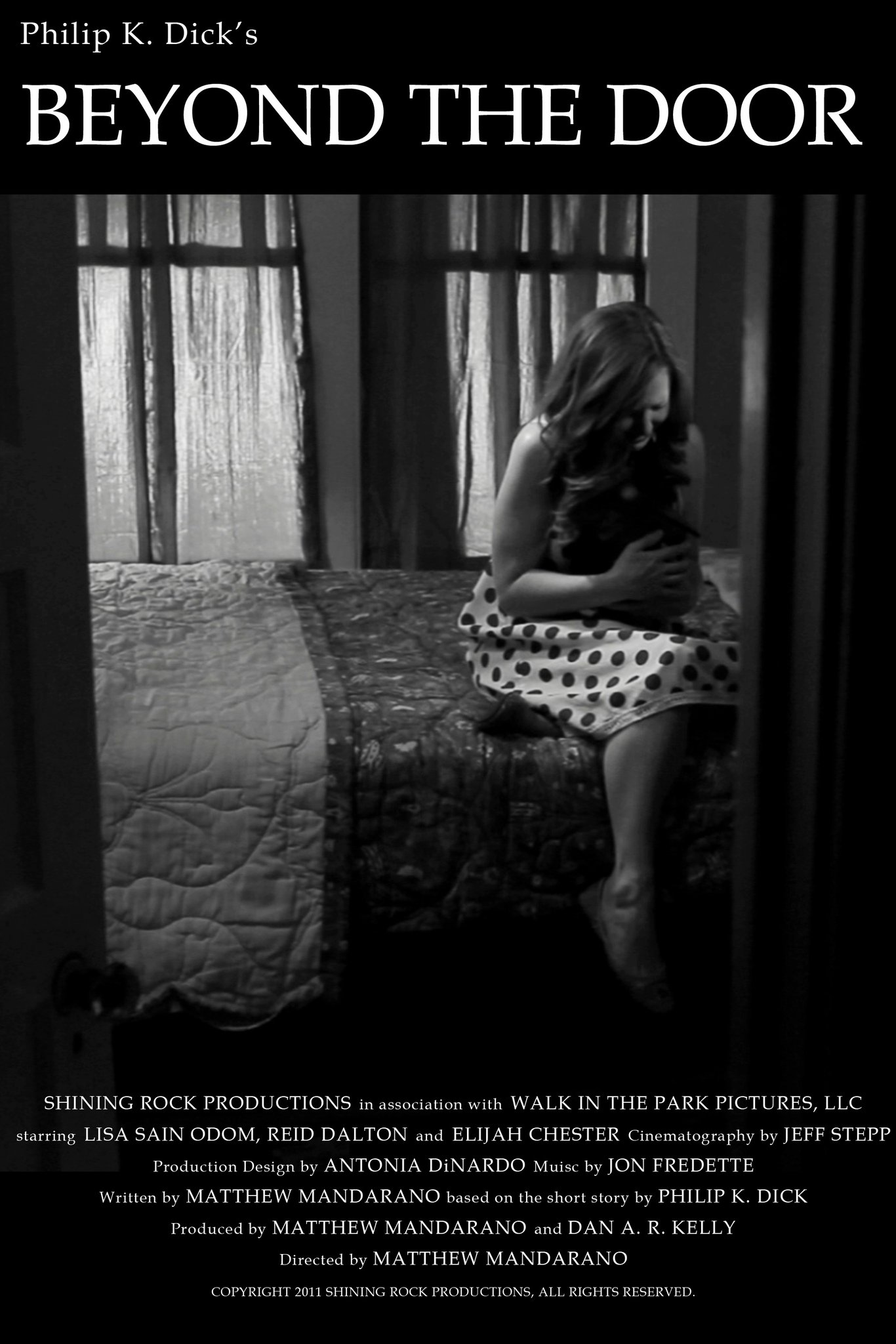
"Beyond the Door" Official Poster Copyright 2011 Shining Rock Productions

Last night was the first semi-public screening of the short I directed last fall, Beyond the Door.  Invites were sent to all the cast and crew of the film, as well as to select supporters, local filmmakers and other industry personnel for a premiere screening of the film.  Being that the film itself is still in the process of festival submissions, many of which have strict guidelines for screenings, this event was not wholly open to the public and was a free screening for only those closely involved with the project.

The event was held at Aperture Cinema in downtown Winston-Salem which is a small, independent movie theatre that shows arthouse films, foreign movies and other selections that the area multiplexes usually don’t screen.  It was a perfect atmosphere for the screening and I strongly urge anyone who is thinking of a Piedmont, North Carolina screening to consider this quaint two-screen theatre.

Needless to say, my nerves were at an all time high.  For projects that I shoot I usually get anxious, but nothing compares with being a producer/director in the hot seat during a first screening.  The screening was to start at 8:30 p.m. and I think I started feeling butterflies in my stomach about noon yesterday.  Relaxation didn’t fully set in until the opening title credit appeared on the screen.

Before the screening, I took some time and thanked the many people involved with helping get this film made.  I feel the silliest and most pretentious thing a film can promote is the “A film by ____” credit, because filmmaking is most definitely a collaborative effort from many technical and creative personnel.  As a director, it is my job for a singular vision to be achieved; however, this film is not “my” film, it is “ours”.

I was elated to sense an overall warm reception of the film last night and am greatly looking forward to its continued life.  The film, which is based on Philip K. Dick’s public domain short story of the same name, has already been submitted to a handful of festivals and more submissions are going out with each passing week.  After a festival run, a limited DVD edition will be available for sale to the general public and, eventually, marketing through various outlets on the internet.

A sincere “thank you” to all of those who were able to make it out last night for your kind words and support!  I look forward to continued life in this project for the next year to year and a half and am already bouncing around ideas for future films.  Don’t be mislead, however, as I am still a DP at heart and am continuing to shoot projects.  I will be shooting with a team for this year’s 48-Hour Film Project in Greensboro in June and in talks with several other directors about upcoming short and feature length projects as a Director of Photography.


Slacker (1991) Review

19 05 2011

Copyright 1991 Detour Filmproduction

★ ★ ★ ★ 1/2

I’ve said it before and I’m sure I’ll say it again, but great characters are really what make a great film.  Slacker is a perfect example of this concept.  Why?  Because it is essentially a plotless film with an ensemble cast that is really, really good.

Made on a $23,000 budget on 16mm, this was Richard Linklater’s (Dazed and Confused, Waking Life, Scanner Darkly) first well-received feature on a large scale.  It was shot in and around Austin, Tx., and is largely just a series of vignettes centered around various 20-somethings.  Some of the various characters include a man who has just run over his mother, a crazy old conspiracy theorist who assaults people verbally with his views, a JFK assassination enthusiast, some guys who work on cars all day long, a girl trying to sell Madonna’s pap smear, etc.  It’s definitely a bizarre mix of characters, but the film manages to keep you intrigued throughout.  Early musings on later concepts explored in Linklater’s Waking Life also seem to be taking root in this early film with several pontifications on dreams.

The direction is very straight forward with minimal cuts; this, most likely, is due to budget constraints.  However, it works for the type of film being told.  The story, though plotless, has extremely sharp dialog that, in my opinion, is what makes the movie so damn entertaining.  A lot of the actors are obviously amateur, but bring a level of naturalism to the parts that really sell the roles.  Even Linklater himself makes an appearance as the main character in one of the vignettes at the beginning of the movie.

I really enjoyed Slacker.  It’s bizarre, comedic and witty, all elements of comedy that intrigue me the most in this genre of film.


Anatomy of a Murder (1959) Review

16 05 2011

Copyright 1959 Carlyle Productions

★ ★ ★ ★ 1/2

This film is the epitome of courtroom dramas.  It’s epic, at two hours and forty minutes, and includes a huge cast of characters that centralize around a single murder case.

Paul Biegler (Jimmy Stewart) is a former District Attorney who has recently lost his post in election and has reverted back to private practice.  Seemingly upset over loosing his post, he spends most of his time fishing or drinking with his old lawyer friend Parnell McCarthy (Arthur O’Connell).  One day Biegler receives a call from Laura Manion (Lee Remick) about taking on the case of her husband, Lt. Frederick Manion (Ben Gazzara), who is currently awaiting trial for murdering a bar owner, Barney Quill, who supposedly raped Laura.  McCarthy tells Biegler to take the job, and he does.  Being that Lt. Manion was able to premeditate the murder, the best defense they have is a plea for temporary insanity.  The last two hours of the film are intense courtroom drama between Biegler as the defense and Asst. State Atty. Gen. Claude Dancer (George C. Scott), who is helping the local prosecuting attorney in the trial.  Witness after witness come through and the tides seem to change back and forth until the final verdict is given at the end of the film.

Wendell Mayes wrote the screenplay based on the book by John D. Voelker.  The script is extremely tight and has very realistic dialog for the era it was produced, which sometimes tended to be a bit melodramatic for modern tastes, especially in films of this nature.  Austrian born Otto Preminger directed the film and boy did he direct the heck out of this movie.  There are lots of dollies and other various motions in almost every shot that keep the film visually interesting.

The acting across the board is awesome.  Gazzara, O’Connell and Scott as a supporting cast are tremendous.  Remick as the flirty victimized wife really gives a great performance and is dazzlingly beautiful in this film.  The real kudos here, however, belong to Jimmy Stewart.  His portrayal of the relentless Biegler is a standout performance and, in a career as illustrious as Stewart’s, that’s saying a lot.  Every minute he is on screen is captivating.

At the time this movie came out in 1959, it was very risque because of the taboo subject matter of rape and murder.  It definitely has lost a little bit of the shock and awe from what 1950s audiences felt, but the film overall still holds up amazingly well.  If only films like this could be released these days, then there might be a reason to make it to the theater more often.


5 Buddy Films You Must See

13 05 2011

Buddy films have been chosen as the next entry in the “5 Films You Must See” series.  What constitutes a buddy film?  Well, really nothing other than the story revolves around two or more really good friends, with their friendship being a major motivator of the plot.  My girlfriend wanted me to add in that my list below is distinctly guy buddy films and, honestly, it is.  What I would consider a girl buddy film would most likely fall under “chick flick” for me, of which, I doubt I will create a list for, though I did strongly consider including Thelma and Louise.

Copyright 1996 Independent Pictures

5. Swingers dir. Doug Liman (1996) – This movie is absolutely hilarious and was the star-making roles that really started off the careers of Vince Vaughn, John Favreau and Ron Livingston.  Favreau plays Mike(y), a down-on-his-luck comedian, who recently moved to Los Angeles from New York, ending a six year relationship with his girlfriend.  Mike can’t get his ex out of his head and refuses to get back in the game.  His friends, Trent (Vaughn), Rob (Livingston) and Sue (Patrick Van Horn), try to get him to loosen up and let her go.  Much of the film is the different buddies interacting or gambling in Las Vegas, going to clubs or trying to cheer Mike up.  The dialog in the film is so sharp, however, that the easy flowing plot really doesn’t matter.  Accompanied by an upbeat jazz score, this is 1990s comedy at its best.  Also, after a first viewing, don’t be surprised to find yourself referring to everything as “money” in your personal life.  I’ve seen this film at least 10 times and it never gets old – definitely a must see!

Copyright 1987 Handmade Films

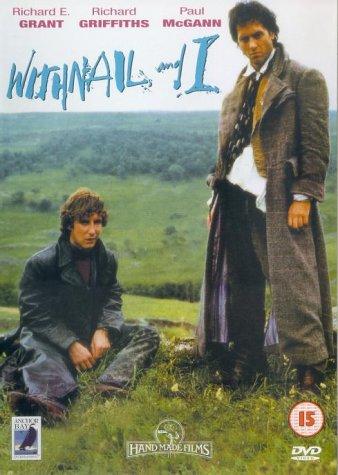
4. Withnail and I dir. Bruce Robinson (1987) –  This seminal British comedy is one of my personal favorites on this list, though I love them all.  A semi-autobiographical film from writer/director Robinson, this film follows the lives of Withnail (Richard E. Grant) and I (Paul McGann) in 1969 London town.  Living in a small, rundown apartment, the two out-of-work actors spend their days drinking, doing drugs and going on weekend benders.  For a change of pace, the two take up Withnail’s flamboyantly gay uncle, Monty (Richard Griffiths) on a trip to his country cottage.  Thinking it will be a relaxing getaway to the country, the two find it to be anything but.  They have a hard time getting food, it is cold and raining and the cottage itself is in shambles.  Unexpectedly, Monty shows up at the cottage in the middle of the night and begins hitting on Paul McGann’s character during their stay because Withnail told Monty he was closeted.  In the end, the relaxing getaway turns out to be anything but and challenges the relationship between the two protagonists.  Having had a period myself where I spent many nights in the bar and out of work, this is a very relatable film for me and, coincidentally, I have a friend that is very reminiscent of Withnail who was a frequent drinking buddy.  Watching this film always makes me nostalgic about that time in my life; though it wasn’t productive, it was a lot of fun.  Everything about this film works: the writing is great, the direction is precise and the acting is brilliant by all involved.  Like Swingers, this film will also give you many quotable lines to use in daily life.  Scrubbers!!!
Copyright 1980 Universal Pictures

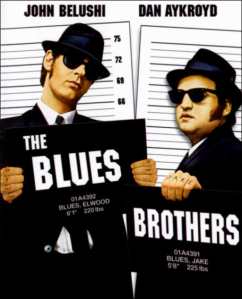
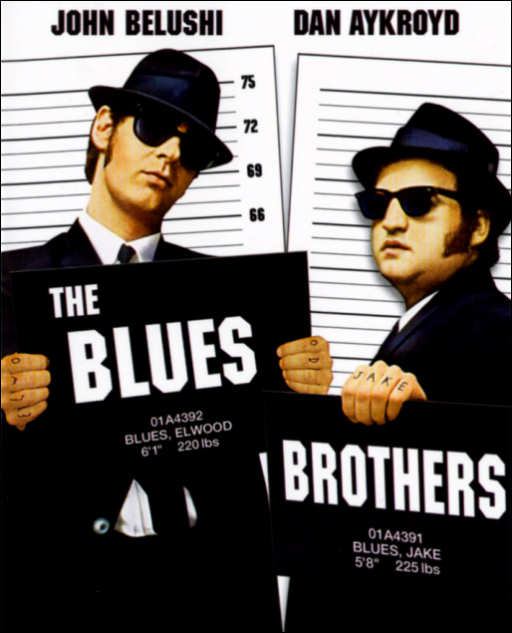
3. The Blues Brothers dir. John Landis (1980) – I’m sure most of you have probably seen this film at some point in your lives.  Starting out as a Saturday Night Live skit with John Belushi and Dan Aykroyd, the feature film version is the definitive story of Jake and Elwood Blues.  When Jake (Belushi) gets out of a three year stint in prison, him and his brother Elwood (Aykroyd) visit the Roman Catholic orphanage where they grew up.  They find that the orphanage will close unless $5,000 of property taxes are collected within 11 days.  The brothers decide they should get their old Rhythm and Blues band back together to help the church with benefit concerts.  Being on a “mission from God”, the two set out recruiting all the old musicians.  Over the course of the film, they run into all sorts of precarious situations with the police, a crazy ex-girlfriend, rowdy country bars and other situations.  Guest appearances by many famous musicians including Ray Charles, Aretha Franklin, John Lee Hooker and Chaka Chan, among others, appear throughout.  The final chase scene is probably one of the biggest chases and car pile ups committed to film.  This film is infinitely entertaining and has so many great scenes and musical numbers that it easily ranks as one of the best movies from an SNL skit beginning.

Copyright 1969

2. Butch Cassidy and the Sundance Kid dir. George Roy Hill (1969) – This is a perfectly formatted buddy film because almost everything revolves around the friendship of the two main characters, Butch (Paul Newman) and Sundance (Robert Redford).  The leaders of the Hole-in-the-Wall Gang, the whole film follows the two and their gang going through successful and unsuccessful robberies of trains and banks.  As a side story is the relationship between Sundance and school teacher Etta Place (Katherine Ross).  Going from one robbery to the next, the two eventually find themselves cornered by the Bolivian calvary and the film ends with on of the most memorable and climatic endings of the 1960s.

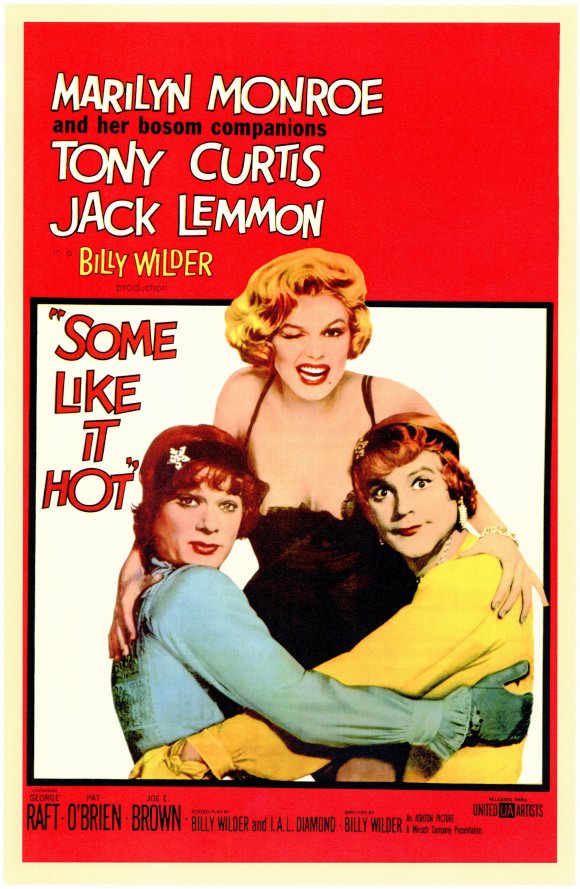
Copyright 1959 Ashton Productions

1. Some Like it Hot dir. Billy Wilder (1959) – Billy Wilder constantly ranks as one of my favorite filmmakers.  If you look at a list of his credits, you will be astounded by the many classic films that were made under his helm.  This one is probably my favorite comedy of his.  It revolves around two struggling musicians, Jerry (Jack Lemmon) and Joe (Tony Curtis), who witness the St. Valentine’s Day Massacre.  The leader of the gang who authorized the massacre, “Spats” Colombo (George Raft in a role parodying his former roles in 1930s and 1940s gangster dramas), see the two of them at the scene of the crime and they run for their lives.  They join an all-female band heading to Florida in disguise as Josephine and Daphne.  The all-female band is lead by bandleader “Sugar” Kane (Marilyn Monroe).  Joe falls for her deeply and tries to romance her in yet another disguise as a wealthy businessman with Cary Grant-like mannerisms, all the while keeping up the female disguise as Josephine when needed to not blow his cover.  When the gangsters show up to Florida at the hotel the band is playing, the disguises become harder and harder to keep up.  The final scenes of the film are filled with hilarious chases and mishaps and the final line of the film, “Well, nobody’s perfect” has become one of cinema’s most famous closing lines.


The Accused (1988) Review

12 05 2011

Copyright 1988 Paramount Pictures (Canada)

★ ★ 1/2

This film was recently added to the instant queue and, since its got an Academy Award-winning performance in it, I decided to give it a try.  I can’t say that I was too impressed overall and, don’t get me wrong, it’s not because of the delicate subject matter being a put off; I just don’t think this was a very good movie.

Directed by Jonathan Kaplan, the movie is loosely based on a true story that happened in Massachusetts in 1983.  Jodie Foster plays Sarah Tobias, a low, working class waitress, who is gang raped at a dive bar by three different men during a late night of drinking and doing drugs.  The prosecutor for her case, Kathryn Murphy (Kelly McGills), agrees to a plea bargain with each of the three men and they get 3-5 years in prison; however, in the plea bargain their crime is not listed as rape, but as a lesser offense.  Tobias is, understandably, upset over not getting to tell her story in court and the light punishment the three men receive for the heinous crime they committed against her.  Soon after, in a video store, a man starts to taunt her and associate her with the rape victim from the bar.  She wrecks her car into his truck out of frustration and it is found that this man was in the bar that night as one of the cheering crowd who watched the rape.  Murphy, determined to bring justice and make up for the plea bargain of the assailants, brings a case against three patrons of the bar who cheered the other men on, trying to convict them as accessories to the crime.  A court case is held and Tobias gets to tell her story, as well as a key witness who is a friend of one of the assailants.  Is retribution achieved?  I’ll let you watch the film if you want to find out, though I’m sure you can probably guess and figure it out.

The story for this film is a decent premise for a courtroom drama, but it just kind of fizzles out over the course of the movie.  The whole film seems like a good premise for a movie, but just doesn’t fully work in execution.  Kaplan’s direction was completely and utterly boring.  Every shot felt as if it were out of a filmmaking 101 textbook.  Furthermore, the one supposed shining moment of the film, the Academy Award-winning performance by Jodie Foster, didn’t really knock my socks off.  Sure, she had some great scenes and it was an impressive performance, but I wouldn’t call it electrifying or stand-out as some critics have suggested.  It most certainly is not the caliber of performance she delivered for her second Oscar in Silence of the Lambs.

Maybe I saw this film on a bad night or something, but I just couldn’t get into it.  It’s rated pretty well by IMDB and most critics seemed to generally like it.  For me, it’s not terrible, but it’s nothing to write home about either.


NEW RATING SYSTEM

11 05 2011

After much deliberation, I have decided to revise the rating system for the movies I review slightly.  With just the 5-star system, I feel it has been difficult to accurately quantify my feelings for several films without undercutting them or giving them the benefit of the doubt.  To help alleviate this problem, I have decided to introduce a half star increment to my ratings that will better reflect my true feelings towards a given film.  The new rating system is as follows:

★ – GOD AWFUL

★ 1/2 – VERY BAD

★ ★ – BAD

★ ★ 1/2 – SUB PAR

★ ★ ★ – DECENT

★ ★ ★ 1/2 – GOOD

★ ★ ★ ★ – VERY GOOD

★ ★ ★ ★ 1/2 – GREAT

★ ★ ★ ★ ★ – AMAZING

If, by chance, you ever want to go back and review the rating system for clarification on a particular review, I have added this rating system as a page.  It is viewable as one of my main headers now.  All previous films will be slightly revised to this scale by the end of this evening and all films following will be reviewed with the half star additions on the 5-star scale.

It’s been two months since I started this blog and I have been really happy with all the positive feedback it has received!  Thank you for your continued patronage and, as always, I love to hear your opinions!


Blue Valentine (2010) Review

10 05 2011

Copyright 2010 Hunting Lane Films and Silverwood Films

★ ★ ★ ★

So, this movie was kind of what I was expecting in a lot of ways, but in a lot of other ways a lot different than I would have imagined.  I knew it was going to be a low-budget indie flick, but I was not expecting the level of emotion presented in the film.  Based on the ads, it seemed like it was being marketed as a light romantic comedy; that assessment couldn’t be further from the truth.  This film is definitely an emotionally charged drama in every sense of the definition.

The premise is fairly simple: Dean (Ryan Gosling) and Cindy (Michelle Williams) are a couple; their relationship is told in a series of flash forwards to the present day and flash backs from when they first met.  Honestly, that’s exactly what the logline of this film would have to be; it’s that simple.  In present day, Dean, a painter with no education and sort of “from the streets”, and Cindy, a nurse who once had aspired to be a doctor, live a fairly normal lower-middle to middle class life.  They have a kid, Frankie (Faith Wladyka), between them and seem to have a very stressed relationship together, though they both very much love their daughter.  In the flash back sequences, we see student, Cindy, and mover, Dean, falling in love.  The two characters are vastly different from their past selves to their present selves in how they behave in general and towards each other.  Essentially, this film is the tale of Dean and Cindy falling in love and, much later, falling out of love.

Like I said, this is a very straight forward plot.  Story-wise, direction-wise and cinematography-wise, there isn’t really anything stand out about this film from any other well-made indie drama/romance.  What sets this film apart and what makes it so well revered by critics, in my opinion, are the performances by Gosling and Williams.  They truly make this film; each of them portray the characters with such vital realism that you truly feel like you are experiencing the emotions they are going through on screen.  By the time the film was done, both Maddie and I were literally mentally and physically exhausted.

This is not a perfect film, but definitely a jewel of independent cinema.  It’s films like these that come along and make the careers of some young director, this time Derek Cianfrance, that keep all the rest of us in the game, constantly forcing ourselves to create a better and better product to compete.


Freakonomics (2010) Review

9 05 2011

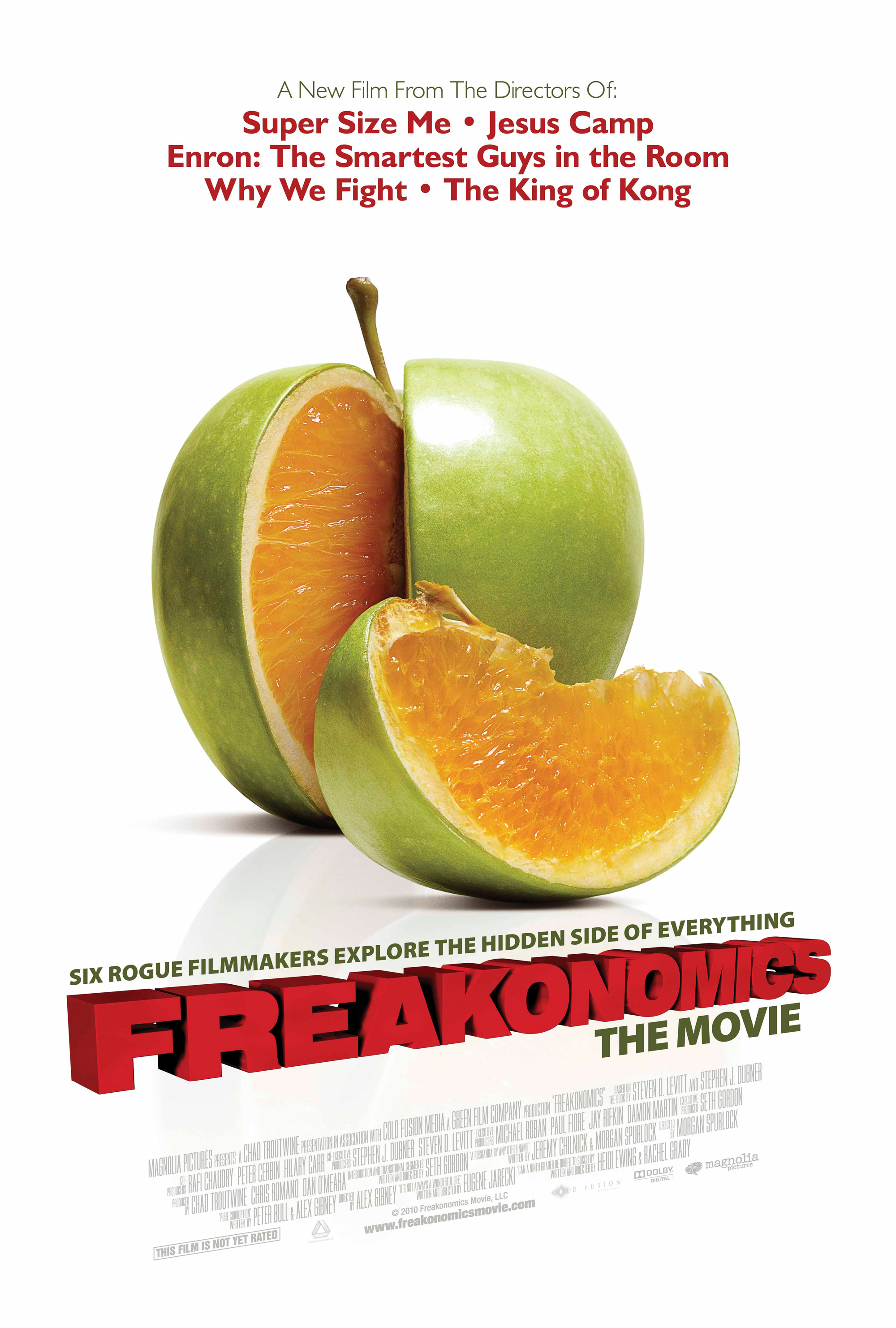
Copyright 2010 Cold Fusion Media Group

★ ★

Apparently the book that this documentary is based on by economist Steven Levitt and journalist Stephen Dubner sold nearly 4 million copies.  For the sake of reader’s interest, I hope the book was more entertaining and informative than this movie was.

As an interesting concept, the film was divided into four segments and written and directed by several different well-known documentarians including: Morgan Spurlock, Eugene Jarecki, Alex Gibney and Rachel Grady, among others.  There were four major sections overall: one segment on names entitled “A Roshanda By Any Other Name”; one segment on cheating entitled “Pure Corruption”; one segment on crime called “It’s Not Always a Wonderful Life”; and one segment on incentives entitled “Can a Ninth Grader be Bribed to Succeed?”

Going in order that they appeared, I found the first segment on naming to be marginally interesting and somewhat entertaining.  However, the majority of the information provided could have been summed up in a sentence rather than 25 minutes of screen time.  The second segment, which featured information on cheating in sumo wrestling, was the worst and it was the longest segment!  I didn’t care at all about sumo wrestling, the economic data they presented or anything else this segment had to offer.  To be honest, I fast forwarded through about 20 minutes of this segment because it was brutal.  The third segment, which dealt with crime in early 1990s, was by far the most interesting of the entire film.  If this segment would have been a stand alone short film, it would have probably won some awards and gotten rave reviews because it was very well presented.  Then, like the first, the fourth segment was only marginal.

Interspersed between the four segments are various interviews with the two authors, Steven Levitt and Stephen Dubner.  Both of them seem really arrogant and condescending in how they present their information.  It’s a shame, because some of the material seemed like it could be really interesting.  After seeing the guys who came up with it, however, it makes it feel like it could loose validity.

I would not recommend wasting your time with this film.  The only part I can recommend would be the third segment.  So, if you are interested in this film, just go to Netflix instant watch and fast forward to about an hour in for that and then just be done with this movie after that.  There are too many other good documentaries to waste your time on this one.


Ryan’s Daughter (1970) Review

7 05 2011

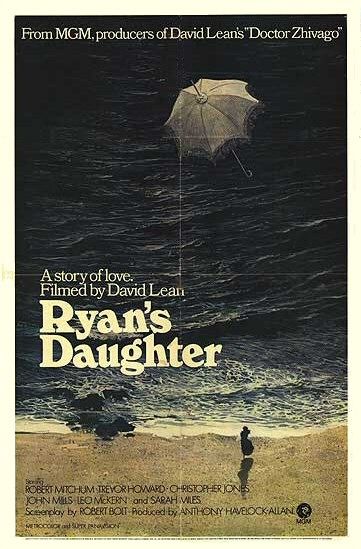
Copyright 1970 Faraway Productions

★ ★ ★ 1/2

This was the final of David Lean’s epics made after 1955 that I had yet to see.  The accompanying films in the bunch were Bridge on the River Kwai, Lawrence of Arabia, Dr. Zchivago and A Passage to India.  A huge Lean fan, I had always heard that this was his least impressive effort.  Actually, because of Pauline Kael’s scathing review of this film upon its release, Lean would wait 14 years to direct another motion picture.  The film itself, however, though very long, is not a bad movie by any means.  In relation to David Lean films it might not stand out, but in relation to other movies in general, it’s actually a pretty good movie.

The story takes place in a small town in Ireland in 1916, as British troops are just beginning to occupy the Irish countryside.  On a grand scale, the film tackles plot points of the rebel’s fight towards arming themselves under the lead of Tim O’Leary (Barry Foster).  Yet, the real crux of the story as the title suggests is focused on the bar keep’s, Thomas Ryan ‘s (Leo McKern), daughter (Sarah Miles).  A spoiled young girl, constantly referred to as “princess” by her father, falls in love with the kind, mild-mannered school teacher, Charles Shaughnessy (Robert Mitchum).  Though he is much older than she, they eventually marry and settle into the schoolhouse quarters on the edge of town.  At first a happy marriage, she soon starts to look for more in life.  When a crippled British officer (Christopher Jones) comes to the local British camp, she immediately falls for him.  Their torrid affair dominates the middle portion of the film.  So, essentially, you have a love affair set to the back drop of political turmoil in 1910s Ireland.  In the end, the affair proves a terrible mistake for everyone invovled.

As usual with a late Lean film, everything about this movie is epic.  The production design, the locations and the sweeping camera movements are amazingly well put together.  To top it all off is the beautiful, Academy award-winning cinematography by Freddie Young.  I could go on for paragraphs about Young’s work; every shot in this three hour film is just absolutely breathtaking.  I can only hope one day to possess the creative and technical brilliance that he exuded behind the camera.  But, I must say, that this type of film does lend itself quite well to cinematography with its locations and period setting.

The acting, on a whole is very well-handled.  Sarah Miles and Robert Mitchum both did incredible jobs in their leading roles.  Christopher Jones, who played the British officer, I had heard was very hard to deal with on set and they had to dub his lines over in post.  All in all, they must have done a good job cutting around his performance because I didn’t really notice it being that bad.  John Mills, who played the village idiot, as Tropic Thunder would suggest actually went pretty much full retard, and won Best Supporting Actor for it.  He plays the part with such childlike wonder though, that I can easily see how he pulled off such an award even though his character never spoke a word in the film.  Another fine turn was made by British actor Trevor Howard as the patriarchal preist who brought equality to the small town with an iron fist.

All in all, I don’t see why people give this film such bad reviews.  Yes, I agree that it could have probably been 30 minutes or so shorter than its three hour and fifteen minute running time.  Yet, for such a long running time, the movie carries interest and entertains surprisingly well.  To me, this was definitely as good as  A Passage to India.  Sure, it wasn’t Lawrence of Arabia or Bridge on the River Kwai, but you can’t strike brilliance too many times in a row in one lifetime.


Go (1999) Review

6 05 2011

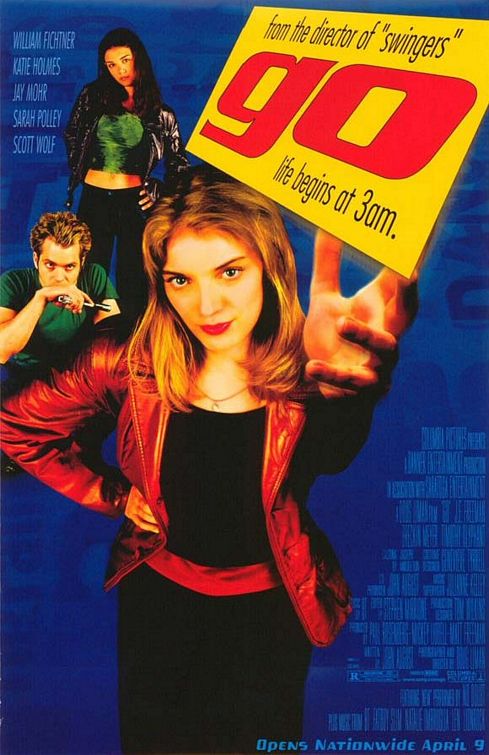
Copyright 1999 Columbia Pictures

★ ★ ★ ★

Doug Liman’s previous effort, Swingers, is one of my favorite comedies of all-time.  I think every time a relationship ends, I watch that movie for moral support and to remember that I’m money baby.  Anyway, I’d had this film sitting in my queue for quite some time with a definite interest to watch it, but for some reason always passed it over for something else.  I’m glad I finally sat down and watched it last night, it was well worth the watching.

The story, by John August, kind of plays out like Pulp Fiction; however, rather than hoodlums and gangsters occupying the intertwining stories, it’s a group of teenagers and 20-somethings.  There are three main stories in the film which follow the characters of Ronna (Sarah Polley), who is a cashier at a local grocer who cons a drug dealer; Simon (Desmond Askew), a fellow cashier who gets involved way over his head on a trip to Las Vegas with his buddies; and Adam (Scott Wolf) and Zack (Jay Mohr), a couple of television detectives who are having to help a real detective to get a drug charge dropped.  All three of these stories flow into and out of one another in a very cohesive and entertaining script that takes place over the course of one night.  There’s comedy, drama and action all bundled into one in this one and it actually pulls it all off quite well.

Like Swingers, Liman shot this film in addition to directing it.  It has the same raw quality with lots of handheld shots and a grainy, pushed negative look.  For this type of film, that kind of direction and camerawork actually works really well.  To me, this is where Liman as a director succeeds the most, and I’d love to see him come back and make some more films like this one and Swingers at some point in his career.

The ensemble cast all do a great job and, as previously mentioned, the script is very tight and solid.  I could understand some people not liking the multiple intertwining storyline structure here, but I fall flat for them.  I loved it in Pulp Fiction, loved it in Short Cuts, love it in this film and love it in many others.  I’ve said before that I feel characters are the real crux of what make good stories and, in my opinion, films like this with large, developed ensembles interacting with each other on multiple levels, makes for a great film.

So, if you like Swingers and think you would like something that is kind of Pulp Fiction Lite, then I would highly recommend this film.  It’s not necessarily a deep movie, but it is a hell of a lot of fun to watch.