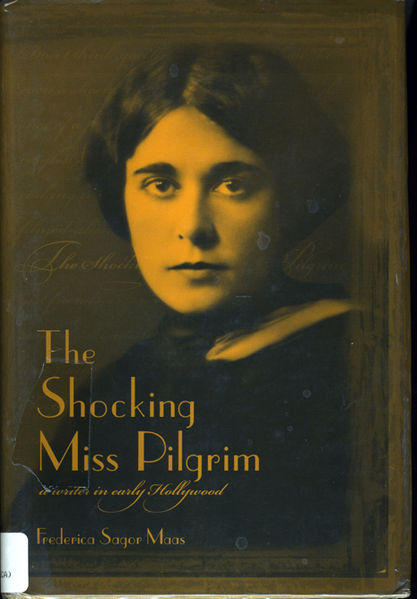
Frederica Sagor Maas 1900-2012

16 01 2012

Usually when someone is a super-centenarian (110+), that is their biggest claim to fame.  However, for Frederica Sagor Maas, she was also a trail blazing female screenwriter in early Hollywood.

Born on July 6, 1900, Frederica Sagor obtained a degree in journalism from Columbia University before taking a position as a story editor for Universal Pictures, and then as a screenwriter for Preferred Pictures in 1924.  Two of her most prominent titles were the Clara Bow and Garbo vehicles The Plastic Age and Flesh and the Devil.  Following solid work in the industry for several years, like many in the silent era, her workload declined in the 1930s.  Her last credit was for The Shocking Miss Pilgrim was in 1947.

She married fellow screenwriter, Ernest Maas, in 1927; the couple would remain married until his death in 1986 at the age of 94.  After many rejections of both her and her husband’s screenplays, coupled with the stock market crash of 1929, Maas and her husband became disillusioned and impoverished.  Eventually, however, she started a second career as a stenographer for an insurance agency, in time moving to the role of adjuster due to “adjusting” her age by 10 years on her resume.

Never one particularly fond of the movie industry or how it treated its employees, she wrote her tell all memoir “The Shocking Miss Pilgrim” in 1999 at the age of 99.  Perhaps her greatest feeling of satisfaction was being able to tell her story and knowing that all those that did her wrong or whom she despised were in the ground.  In an interview with Salon in 1999, she said, “I can get my payback now. I’m alive and thriving and, well, you S.O.B.’s are all below.”

It is with some personal sadness to hear of Frederica’s passing last week at the age of 111.  In 2008, I contacted her about the possibility of doing an extensive on camera interview about her life and times in Hollywood.  I was contacted back by her niece, Phoebe, who told me that, though Frederica’s mind was sharp many days, that would be a taxing thing for her and that some days were better than others.  Being 108 at the time, that is not a shocker at all and I completely understood.  I further found out that famed film historian Kevin Brownlow had beat me to the chase so to speak by doing a series of interviews with Maas in 1999, though I don’t know that any of the footage has been released or used as of this time.  I’m sure Mr. Brownlow is waiting for the most opportune medium to present the footage.

Though we didn’t end up doing an interview, Frederica’s niece Phoebe was extremely kind and said there were several boxes full of correspondence and other items from Maas’s time in Hollywood that she would be happy to look through if any of the information was helpful for any of my writing efforts.  Furthermore, nearly a year later, Phoebe sent me a wonderful article from the San Diego Times regarding Frederica’s solidification as one of the oldest inhabitants of California.  I sent a gracious “thank you” note and Christmas card that year.  According to Phoebe, Frederica was ready for her time to come; after a certain age, it becomes difficult to go on when all your friends, family and loved ones are gone and it’s hard to do the things you once loved.  Though it’s always tough to see someone go, I’m sure Frederica is at peace now with her husband and other friends and family with an eternally youthful mind and body.  We are so lucky, as a film historian community, to have had someone with her knowledge so willing to share her experiences and stories of that early time in cinema’s history.



Golden Globes!

16 01 2012

So, last night was the Golden Globes Awards presentation, likely the second most prestigious awards show and a usual pre-cursor and foreshadower of what usually occurs at the Oscars ceremony a couple months later.  I have to be completely honest here, I missed the show; however, I did have a good reason, as I spent the entire weekend moving into my new house.  This morning, I’m mentally and physically exhausted, compounded by lack of sleep due to an anxious dog and two anxious cats in a new place, but I still want to take a brief moment to recap the wins.  Being that I’ve been in the moving process for the past couple weeks, I’ve failed to see as many of the top contenders as would have hoped.  Now that I’m a little more settled, I’ll be catching up in time for the Oscars, so come back soon when I can have a more formulated opinion.  Anyway, here is the entire list of winners from last night’s ceremony:

Best Drama
The Descendants

Best Comedy/Musical
The Artist

Best Animated Film
The Adventures of TinTin

Best Actor in a Drama
George Clooney, The Descendants

Best Actor in a Comedy or Musical
Jean Dujardin, The Artist

Best Supporting Actor in a Motion Picture
Christopher Plummer, Beginners

Best Actress in a Drama
Meryl Streep, The Iron Lady

Best Actress in a Musical or Comedy
Michelle Williams, My Week with Marilyn

Best Supporting Actress in a Motion Picture
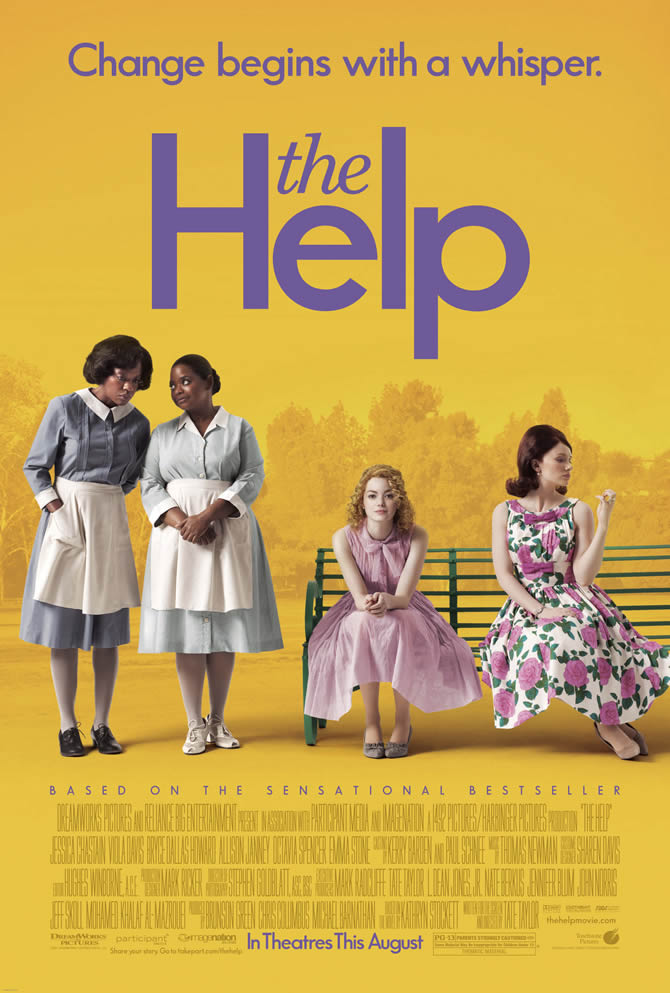
Octavia Spencer, The Help

Best Director

Martin Scorsese, Hugo

Best Screenplay
Midnight in Paris, Woody Allen

Best Score – Motion Picture
The Artist – Ludovic Bource

Best Original Song – Motion Picture
“Masterpiece” – Madonna

Best Foreign Language Film
A Separation, Iran

Cecil B. Demille Award
Morgan Freeman

Television

Best TV Comedy or Musical
Modern Family

Best Television Series – Drama
Homeland

Best Mini-Series
Downton Abbey

Best Actor in a TV Drama
Kelsey Grammer, Boss

Best Actor in a TV Musical or Comedy
Matt LeBlanc, Episodes

Best Supporting Actor in TV Series, Mini-Series, or Made-for-TV Movie
Peter Dinklage, Game of Thrones

Best Actress in a TV Drama
Claire Danes, Homeland

Best Actress in a TV Musical or Comedy
Laura Dern, Enlightened

Best Supporting Actress in TV Series, Mini-Series, or Made-for-TV Movie

Jessica Lange, American Horror Story

Best Actor in a TV Movie
Idris Elba, Luther

Best Actress in a TV Movie
Kate Winslet, Mildred Pierce

I’ll take a moment to comment where I can.  The two biggest films of the year, I’ve yet to see; one because of the moving, the other because it still hasn’t been released in my city yet.  Those two movies are The Descendants and The Artist.  The Artist is actually my most anticipated film of 2011, so I am ecstatic that it will be opening at the local indie theater this coming week.  I will likely see it and Tinker, Tailor, Soldier, Spy as a double feature this coming weekend.  I can’t wait!

Though I haven’t seen the film yet, I was very excited about its (The Artist) wins – it’s shaping up to possibly be the first silent film since 1929 to win a Best Picture Oscar.  Being a silent film aficionado, that’s music to my ears.  Maybe more silents will be hitting the modern cineplexes because of its success.  The next on the list I can comment on was for Best Supporting Actress for Octavia Spencer; I think this was definitely a deserved award for her incredible performance.  In my review of the film from a couple weeks ago, I made special note of her and Viola Davis’s wonderful performances.  Scorsese winning Best Director, but no Best Picture Comedy/Musical is a bit of a surprise, but I loved Hugo and his direction of the film was expertly handled, so this was a pleasant surprise as well.  Now, for my most pleasant surprise…Woody Allen winning Best Writing!  I haven’t written a ton about Allen on the blog, partly because I’ve seen all his films and most of the films I review here are recent watches.  However, Allen is in my top five favorite filmmakers of all-time, and to see him win so much recognition after nearly a decade of lackluster films, is a good feeling.  The only other win I can wholeheartedly support is Downton Abbey.  I’m currently working through the second series with an iTunes season pass.  So far, it’s been as good as series one, and that’s saying a lot.

Well, those are my views on what I feel I can comment on.  Hopefully, within the coming week or two I’ll have a chance to catch up on my film going and have a little more informed opinion on this year’s best films.  Stay tuned!


No More Kodak Moments?

6 01 2012

Kodak considers the possibility of Chapter 11 filings.

The struggle for film and film technology in the motion picture industry has been slowly giving way to the digital spectrum for nearly 20 years.  Actually, video formats were said to be the way of the future as far back as 40 years ago.  But, like a faithful canine companion, film has managed to stay its ground in the industry much longer than anyone expected, and we are just now seeing the “new kid in town” gaining the reigns.

In regards to still photography, I think it is safe to say that the battle between digital and film has been over for some time.  Even up until 10 years ago, I could remember bringing my film to a processor more often than using a digital format.  However, the business of photo processing has all but disappeared over the past decade.  A once booming industry now only caters to the nostalgic interest of hobbyists and diehard enthusiasts.  However, in the motion picture realm, though the cost efficiencies of shooting on a digital format are generally cheaper, the quality had always been the point of contention and the largest reason to opt for 35mm motion picture film in a production.  With the development of cameras like the RED One, ARRI Alexa, Sony F65 and other large format, high resolution digital cinema cameras however, the motion picture industry too is finally giving way to the digital takeover.

Undoubtedly. the consumer still photography market collapse is likely the largest culprit, but the compound effects of loosing out on motion picture stock and printing as well, might be the death knell for the longtime champion of the celluloid image.  According to an article released this past Wednesday from The Wall Street Journal, Kodak is preparing to seek bankruptcy protection as it continues to struggle with finding buyers for parts of its patent portfolio.

With the recent appointment of Laura Quatela as co-president, it seems that the company is trying to do its best to stay above water.  Yet, even with the possibility of major restructuring, the long gold standard for what Kodak produced, still and moving image film, will likely not continue to be the focus from a corporate standpoint.

It hurts to see an industry giant die, especially when it is one that gave us as many memories as Kodak.  We all were given the medium to capture our family and life moments, see places we may never have the opportunity to travel or images of people long dead before we were born because of this company.  Furthermore, many of the movies over the past 100 years that have brought us laughter, joy, romance, anger, excitement and tears were captured because of the product that this company built as its foundation.  Long on lists of companies that will likely soon become insolvent, I guess it was only a matter of time before these drastic measures were on the table.  I will say, however, that I feel the world will be a little less bright without the magic of a “Kodak Moment.”


Heathers (1988) Review

3 01 2012

Copyright 1988 New World Pictures

★ ★ ★

Knowing of the cult status of this film for some time, I’d long had a certain level of curiosity as to what it was all about.  Not finding anything else interesting on Netflix Instant Watch last night, Maddie and I decided to give this film a go.  The first 20 or so minutes were a bit concerning as to where the film was going, if anywhere, but, eventually, the movie smoothed itself out for an interesting and enjoyable viewing experience.

In a nutshell, this is a surreal and bizarre analysis of the cliques and daily interactions of high school life, and when I say surreal and bizarre, I mean very much so.  Veronica (Winona Ryder in her first leading role) is a newly initiated popular girl with her friends, the three Heathers (Kim Walker, Lisanne Falk and Shannen Doherty, respectively).  They wreak havoc on the unpopular kids and do the usual things that stereotypical “sassy” popular high school girls would, but Veronica is more disenchanted with their behavior than the others.  After meeting the mysterious new kid, J.D. (Christian Slater), they form a relationship and, subsequently, a pact to dissolve the school of the tortures of high school societal pressures by systematically killing the culprits (i.e. jocks, popular girls, etc.).  As time goes by, however, Veronica realizes the wrongs they are committing are worse than the day-to-day life of high school hierarchy, so she cuts things off with J.D.  Yet, this only fuels his need to “show them all,” leading to his magnum opus to blow up the school and commit such a huge disaster that it will set precedence in high schools across the country.  Though a dark comedy at heart, watching this after the atrocities at Columbine and other schools in America over the past 15 years, the scenes play out a lot more eerily than originally intended.

Every scene of this film elicits a dream-like, spooky feeling; the camera movements, lighting, direction and acting all add to this disjointed mood.  I think it helps keep the point of dark comedy in perspective, as too realist a handling of this subject matter would just be macabre.  Structurally, the film suffers from some unevenness and doesn’t fully pull off what it is trying to achieve I don’t think, but it does clean itself up in the last half and, as mentioned earlier, provided an enjoyable, though not completely satisfying, viewing experience.


The Help (2011) Review

30 12 2011

Copyright 2011 Dreamworks SKG

★ ★ ★ ★

I have to be honest, this was not a film I was expecting to enjoy.  Usually, when the girlfriend and mother are excited about a movie, that means that it will definitely not be my cup of tea.  However, I am pleasantly surprised to report that I enjoyed this movie; I wouldn’t say it is a masterpiece as lauded by some critics, but it’s definitely an enjoyable and solid film.

The story takes place in Jackson, Miss. in 1963, a place where racial intolerance was at an all-time high.  Many African-American women were employed as maids to white families, a job that offered little appreciation and even less pay/benefits.  Aibeleen Clark (Viola Davis) and Minnie Jackson (Octavia Spencer) have been maids, raising and feeding white children, for as long as they can remember.  Free spirited Skeeter Phelan (Emma Stone) is one of the white children that was raised by an African-American maid.  Unlike her blatantly racist “friends”, Hilly Holbrook (Bryce Dallas Howard) and Elizabeth Leefolt (Ahna O’Reilly), she doesn’t agree with Jim Crow laws and the under appreciation and maltreatment of African-Americans as a lower class.  Wanting to become a novelist, Skeeter takes a job at the local paper, but has higher aspirations of working for Harper and Row in New York.  She gets the idea about interviewing African-American maids in Jackson as a way to tell their story, while also helping her writing career.  Harper and Row are interested in the idea and Skeeter enlists the help of Aibeleen and Minny.  Through the process of writing, Skeeter learns a lot about the life these maids lead and, likewise, within the town, becomes more aware of the racial intolerance and two-sided ways of her peers.

The story has many more plot points than the brief synopsis above, and elicits a well-woven tale of history, friendship, civil action and triumph of the human spirit.  From what I hear from my girlfriend, the book is even more in depth and interesting.  Directed aptly by relative newcomer Tate Taylor and beautifully shot by seasoned veteran Stephen Goldblatt, this is a very solid film; however, the top accolades go to the cast, primarily Viola Davis and Octavia Spencer, who give some real knock out performances.

As stated at the beginning of this review, this is not the typical type of film I usually enjoy.  So, if I enjoyed it as much as I did, I’m sure it will fit the bill for anyone looking for a well-written, tightly put together drama.


How to Work with a Creative Person

24 12 2011

Photo by Johnny Magnusson

After years of working freelance and producing content for a wide range of clients, witnessing a barrage of content that is excruciatingly below par both on a micro and macro level and the recent headlines regarding such decisions as CNN firing photojournalists in favor of iReport, I have decided to create a handy guide on how to work with creative people to elicit the best end user products.  I think a lot of left brainers have a hard time working with creative people, and, in turn, the same can be said vice versa.  I’m not trying to put you down or declare the left brain way wrong, I’m just trying to help you all get good quality of work from the money you spend on us to produce the said work.   So, without further adieu, here are things to keep in mind when working with a “creative type”:

1. Let us do our job

This is probably the biggest problem in the creative industry.  As a videographer, editor, graphic designer, musician or visual artist, you hire us because you want a certain calibre of quality brought to the project you are trying to produce.  Henceforth, you feel that our skill level, resume and portfolio speaks for itself to a degree that we can make sound judgements producing content of such a form as you desire.  The worst thing you can do is hire us and then try to take over all the creative decisions.  We want to make your ideas come to life and we want them to be the best they can possibly be!  After all, we take as much pride in our work as I’m sure you do in yours.  Here’s an analogy: if you went to the doctor for an illness, you would be paying for his expertise in the problem that was ailing you.  If he recommended you do x, y and z, wouldn’t you heed his instructions?  You wouldn’t second guess his work, education or treatment plan; a plan he has no doubt likely given to many other patients with similar symptoms.  We are the same way, though on a much less life or death scale.  This is what we do day in and day out and we have encountered scenarios similar to yours hundreds of times.  We know what works and what doesn’t, so if you hire us to do a project, please accept our professional opinions.  We know what we are doing and we promise it will help your business if you can trust in our advice and let us implement the look and feel of the design.  After all, what else are you paying us for?  We are technicians to a degree, but the skill is only part of the package – the vision is the rest.

2. Our dressing the part is different from yours

I understand how important a professional attire is in any professional situation.  However, each job has specifics for suitable dress depending on various circumstances.  For instance, it would be a bit off putting if I hired a carpenter to build a house, and he showed up in a three piece suit to complete the job.  For certain creative professionals whose work is primarily computer driven, the concern about wearing slacks and collared shirts is not too big a deal.  However, for videographers that are out in the field with two to three tons of gear in the middle of the summer in the desert, or musicians that are on stage under bright lights with 20 lbs. of instrument strapped around their necks, the requirement for “formal dress code” is a bit unreasonable.  It isn’t that we are all just a bunch of hippies who can’t stand cutting our hair and wearing a tie (though to be fair, there are some of us out there that fit this bill), it’s that to do our job at times, we need to have the option of wearing a tee shirt and jeans to maneuver properly and be somewhat comfortable.

3. We have bills too

Believe it or not, most of us actually have the same bills you do every month.  We have to keep a roof over our heads, pay for our car when it breaks down, put food in our mouths, enjoy having pets, etc.  So, when I see ads for freelance opportunities asking for creative services that offer little to no money, I am very disheartened.  Most of the creative professionals I know have put years and years of blood, sweat, tears, trial and tribulation into their craft to become good enough at it to call themselves professionals and try to make a living doing said work.  Not everyone can design a Web site, play an instrument, light a set, write a script or take a well composed photograph; the ability to do so takes years of practice.  Picasso said it best to a woman who had asked him to draw a sketch on a napkin at a restaurant during his later years: he drew the sketch and then told her the cost of the drawing would be $10,000.  Exasperated, the woman replied, “But that only took you five minutes to draw!”  To which, Picasso responded, “No madam, it took me a lifetime.”

4. We are not magicians

Though we take our jobs very seriously and work diligently to be the best we can be, there is a point where the boundaries of physics, software, hardware, human will or a mixture of all come to an end.  We are always happy to try our best to make you happy, but there are some things that simply cannot be done.  One time, the team I was working on was asked to “photoshop in” people into a moving dolly shot; things like this simply cannot be done, unless quality is willing to be sacrificed to the point of being laughable.  That’s why it is important when working with a creative person to plan extensively for what you want as an end product.  There are too many facets of our work that cannot simply be undone or redone; we would much rather spend extra time working with you to understand a full idea of your vision, than have to practically redo the entire project after its essentially completed.  In similar regards, please, please don’t ever totally change your vision once 90% of a project is complete.  There is nothing more frustrating than spending a lot of time, effort and energy to accomplish your vision, just to find that you had an epiphany the night of the final deadline and said vision has completely changed.

5. You are still the boss

So, the first 4 steps are generally guides on what is tough for us, but we all understand that you are still the boss.  If we are lagging behind or taking an absorbent amount of time to create something or finish it, it is still your place to push us along.  Also, some creative types have a problem getting so creative they forget what the budget is on a particularly project; this is another great place for you to intervene.  We are not unreasonable people and we want to understand your side as much as we want you to understand ours.  I hope this has been helpful and I love working for you guys, I really do!  It’s hard taking the left brain and right brain and meeting in the middle, and if this has presented any further light on the situation to you guys, then I’m very happy about that.  If you think I’m just a snobby little day-dreaming right brainer who doesn’t know what he’s talking about, I can accept that too.  We all have our opinions and thanks for reading!


A Clockwork Orange (1971) Review

23 12 2011

Copyright 1971 Warner Brothers Pictures

★ ★ ★ ★ 1/2

I recently watched this film for the third time.  The first screening I had was when I was about 15, then I had to watch it for a class in college and, this time, I was fulfilling my duty as a cinephile in getting my girlfriend, Maddie, to watch the film in its entirety.  Unlike my experience with Goldeneye recently, this film has aged like a fine wine to me over the various screenings at different times in my life.  I think upon my first viewing, I was too young to fully understand and enjoy the subtleties of the film; my second viewing, being for a class, was somewhat diminished, but this viewing was just right.

Though I’m sure most of you have seen this film before, here’s a quick synopsis to refresh your memories.  Young Alex (Malcolm McDowell) is in a sort of near future gang with three other youths known as Droogs; they spend many an evening terrorizing innocents, raping young women and performing other lewd and obscene acts towards society.  One night, while on one of their joy outings soliciting a bit of the old ultra violence, they come to the country home of an author and his wife.  They proceed to rape the wife and brutally beat up the author and make him watch as they ravage his spouse while hauntingly reciting “Singin’ in the Rain”.  Shortly thereafter, one of his Droogs gets the idea of challenging his authority; for that, he pays a hefty price.  However, little does Alex know, that this authoritative beating of his colleague will eventually get them to turn their backs on him and leave him to the police one night when his haunting of an older woman ends up killing her.  He is sentenced to prison, where he is sought after by the other inmates for his youthful looks and delegated to the hardships of prison life.  He strikes a bond with the prison chaplain, and eventually is chosen to be part of a new experiment.  This experiment will get him out of prison early and is supposed to “cure” his evil ways.  Known as the Ludivico Technique, Alex is subjected to various chemicals that create a general unwell feeling in his body as he watches hours upon hours of movie footage that shows women getting raped, people beaten and other atrocities.  They even include his beloved music in the technique by coincidence, killing his ability to enjoy Ludwig van Beethoven and get a nice, warm vibraty feeling all through his gutiiwuts.  Upon release, Alex is found to no longer have a home, is beaten by his former friends who are now with the police and he even makes a wrong turn into the author’s house from years prior for which he pays dearly.

Directed by Stanley Kubrick, this film still elicits a strong response even in our present day and age.  Many scenes are still shocking in their violence and depiction of moral abuse.  However, what hit me the most with this screening was the theme of the film; I think before, it had eluded me to some degree.  Upon my first viewing, I enjoyed the film, but don’t think that I truly understood the theme in its entirety, my second viewing was of course filled with the nagging over analysis of the film, but this time I felt I truly got the message Kubrick wanted to deliver.  Is the overriding of the freedom of personal choice something we are willing to let be decided by the powers that be in society?  Is the need for order, even by overriding a person’s natural behaviors, a moral or immoral gesture?  What are the consequences of such a decision and how will they play out in that person’s subsequent life?

The atmospheric lighting by John Alcott, precise (as always) directing by Kubrick and general mood of the film creates a reality that is scary to imagine.  The mood is further exemplified by the amazing electronic rendition of Henry Purcell’s “Requiem: Funeral for Queen Mary II” by Wendy Carlos, not to mention the wonderful performance by McDowell in the lead.  Few films are stylized as meticulously as this one, and though difficult to watch on a basic level, the thoughts and questions it provokes are rewarding in the end.


Merry Christmas and Happy Holidays!

22 12 2011

I apologize for the low amount of posts this month, but it has been quite a month.  I know not all of you care what I’m up to in my personal life, but I figure I’ll fill you guys in on a little bit of my latest happenings.

In addition to the normal routine of work mixed with movie watching, playing guitar, playing golf and working towards a novel, I have also been working on closing on a new house this month.  Having lived in a condo now for over 3 years, the new 2400 sq. ft. home with 1 acre of land will be a much welcomed amenity.  I will finally have the space for a true “man cave,” and have the yardage to grow a garden and possibly even practice my chipping.  If you haven’t been through buying a new home since the economy crash, it is about the most frustrating thing you will ever go through.  When I bought my condo in 2008, it was a breeze; but now, even a well qualified individual for a certain property has to go through more hoops than I care to remember.  However, it looks like all will work out, and we will be moving in just after Christmas into our new home.  To celebrate, we may even adopt a second dog (Maddie, if you are reading this, the key word in this sentence is may).

Anyway, I’ve felt blessed this year and happy with a lot of innovations that have been happening in both my work and personal life.  My novel is making good head way (20,000 words in!) and it’s the first novel I’ve began that I feel is actually a good, well-structured story even this far in.  In addition, I’m still in constant talks with filmmaking buddies about various projects we are hoping to pursue on the horizon and other exciting prospects in narrative and non-narrative film production.  I hope all of you are doing well and to sign out for my five day holiday vacation, I leave you with a short list of some of my personal favorite Christmas films:

5. Love, Actually


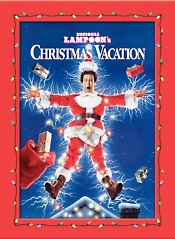
4. National Lampoon’s Christmas Vacation


3. A Christmas Story


2. Scrooged


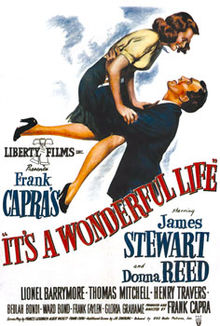
1. It’s a Wonderful Life


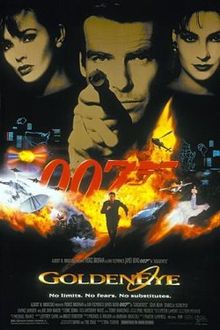
My Name is Bond Series: Goldeneye (1995)

21 12 2011

Copyright 1995 EON Productions

★ ★ ★ ★

A viewing of this film from the other night was probably the first time I had seen this movie in its entirety since soon after its home video release in the mid-1990s.  Being that I was only six-years-old when Licence to Kill came out in 1989, and there was a nearly six year hiatus between films due to various problems and law suits, this was the first Bond movie that I was able to see upon release in theaters.  For that, it does hold a special place in my heart; however, my viewing of this film as an adult has diminished my memories slightly from the grandness it was to my twelve-year-old mind.

The pre-title sequence takes place nine years earlier than the rest of the film and recounts Bond’s loss of good friend Alex Trevelyan, aka 006 (Sean Bean), to Russian General Ourumov while on a mission in Russia.  Fast forward nine years later, while on a bit of a retreat and review, Bond runs into gorgeous Xenia Onatopp (get it? “On the Top”), portrayed by Famke Janssen.  Suspicious of her background, Bond follows her and catches on that she is planning to steal a top secret Tiger Helicopter.  Too late to stop her, she and an unnamed accomplice get away with the helicopter during a publicity event demonstrating the vehicles functions.  Her accomplice turns out to be General Ouromov and, with him, they destroy a military communications base in Russia and steal vital information about the Goldeneye project, which is an electromagnetic pulse device.  The only two survivors of the siege on the communications base are programmers Boris Grishenko (Alan Cumming) and Natalya Simonova (Izabella Scorupco).  Grishenko we find later is assisting the antagonist, and Natalya becomes the good Bond girl figure for the remainder of the movie.  In investigating the destruction of the base, Bond uncovers an villain he would have never presumed and then goes on to save the world as usual.

Whew!  That plot is harder to condense than you would think, but in reality, its not as complicated as it sounds.  I was blown away by this film when I saw it in the theaters in 1995; I’m sure a large degree of this was due to my never having experienced Bond on the big screen, and my age at the time.  Seeing the movie again at 28, I can’t say that it was as pleasing for me as it was when I was younger.  It’s still a good Bond film, possibly still Brosnan’s best, but not near as interesting or exciting of many others in the canon.  Though I will admit, Famke Janssen is as hot to me now as when I was a kid – that might be the only constant variable in the two viewings; what can I say, sometimes I’m a sucker for the bad girl.

In the end, however, it was just a “good” movie to me, rather than “great” as it once was.  Literally every line out of Brosnan’s mouth is a pun or a cute comment, this didn’t bother me years ago, but drove me nuts this time around.  Furthermore, I think I am just too familiar with the story to truly enjoy it, as I saw it in the theatre and on VHS years ago and played the heck out of the Goldeneye video game for the Nintendo 64.  Heck, I still play that game sometimes.  All and all, I chalked the review up to mix my feelings of long ago with my feelings upon recent viewing and feel that I’ve satisfied both my twelve-year-old and 28-year-old opinions on this movie.


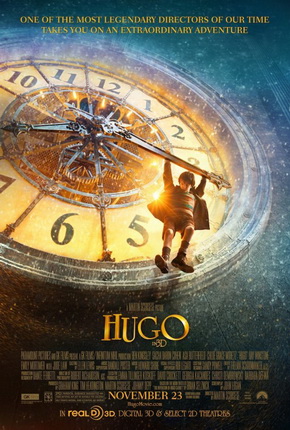
Hugo (2011) Review

19 12 2011

Copyright 2011 Paramount Pictures

★ ★ ★ ★ ★ 

It was a bit perplexing at first, hearing that acclaimed director Martin Scorsese’s new movie would be a children’s fantasy tale in 3-D; however, in the end, I was pleasantly surprised and delighted by the visual and storytelling experience.

The film is based off the part novel, part graphic novel “The Invention of Hugo Cabret” by Brian Selznick.  Young Hugo (Asa Butterfield) lives in the Montparnasse station winding the clocks after the death of his father and desertion of his uncle, the true clock winder for the station.  His father (Jude Law), who was also a clockmaker and mechanical expert, left Hugo an Automaton, a mechanical man that can be wound up and draw pictures or write poems that are pre-programmed in the mechanics, he found at the museum in which he worked.  Prior to his death, he and Hugo were working on fixing the automaton.  Determined to complete the project, Hugo scrounges parts here and there around the station to finish his project; some parts are taken from toy maker and shop owner, George (Ben Kingsley).  Upon getting caught stealing, he develops a sort of relationship with George, but much more so one with George’s granddaughter Isabelle (Chloe Grace Moretz).  The two young children’s adventures together lead them to finding out more and more about George and, eventually, opening up a chapter in his life that he had long put aside.

Without giving too much away about the film, in short, it is a movie about the magic of the movies, the love of illusion, and most of all, the imagination of childlike wonder.  Scorsese, at nearly 70 years old, has beautifully captured the look and feel of what it was like to be a child, and in doing so, created a wonderfully satisfying piece of filmmaking.  Furthermore, if you opt to see the film in 3-D, I would hasten to say that the three dimensional effects in this film are some of the best I have ever seen.  Rather than using the element of 3-D filmmaking to just throw stuff off the screen at the audience, Scorsese uses the medium to full effect in creating an environment that wholly works for the film itself.

Performances by all the lead actors and supporting cast of Sacha Baron Cohen, Richard Griffiths, Jude Law, Christopher Lee, and others are excellent.  The cinematography, set design, editing, script, every part of this film comes together beautifully to create a lasting and timeless piece of filmmaking in my opinion.  It’s films like this that make me see that there is still hope in the world of cinema.