Page One: Inside the New York Times (2011) Review

8 12 2011

Copyright 2011 Participant Media

★ ★ ★ ★

Having worked in the newspaper industry for just under one year in 2008, I am fully aware of the hardships the industry is going through.  The paper where I worked, which was a small tri-weekly 6,000 circulation local paper, had once printed its own papers on site, had a devoted staff and large work area.  During my tenure, the paper was hit with another round of lay-offs, the printing on site was long gone and outsourced to a sister company and we were moved from the town we covered to the sister company’s offices in a larger close-by market.  In the end, our paper was reduced to an editor, sports editor, myself (as News Assistant and later Features Editor) and one full-time devoted reporter.  

This film studies essentially the same problems my little rural North Carolina paper was going through, but at one of the most prominent newspapers in the country, The New York Times.  The Times has long be heralded as one of, if not the, most important newspapers in the world.  Many times, stories that first appear in The Times will appear in other papers two to three days later.  Their reporters have long been the gold standard in the industry and have garnered a slew of Pulitzer Prizes.  In this film, which covers from about 2008-2010, we see the effects of the digital world on this behemoth of a paper.  Lay-offs, uncertainty, astronomical financial loss, all of these are analyzed and touched on by, not only Times reporters, but also people from the digital media industry.  With a focus on The Times’ new media unit, we see the stresses of everyday life in the print industry and how they are trying to cope with what is happening to their industry.  The most important point throughout, however, is that we need good, solid reporting of the news, no matter how it is digested.

When I saw recently that CNN laid off a large number of dedicated photojournalists in favor of free, individual uploaded content on iReport, I almost got sick to my stomach.  A Lamen with a camera phone in their backyard is not reporting.  In these days and times when our country is in dark peril, we need reporters who are going to go out and report our news content with the highest of integrity.  Though it may seem easy to some, good reporting is a skill like any other that takes education, practice and years of trial and error.  To reduce this profession to any 12-year-0ld with a video camera is a disgrace and not the kind of society I want to live in.

I have had two positions since my time at the newspaper and, even though they are more in line with what my degree and core interests are, I think I enjoyed the day to day work of the paper more than either of the other two.  Yet, making a living in the newspaper industry is extremely difficult.  These are trained professionals making less than $30,000 a year much of the time.  I hope a bridge between quality content and the digital spectrum can be reached soon, not only for the sake of my friends in journalism, but for the sake of the content we will receive as the end user.  I realize I have gotten up on a pedestal about this topic, but it is one that is close to the heart.  In regards to the film itself, it is a well done and engaging documentary that I think anyone interested in the state of our newspaper industry should watch.

Music on Film Series: ELO Zoom Tour Live

7 12 2011

Copyright 2001

★ ★ ★ 1/2

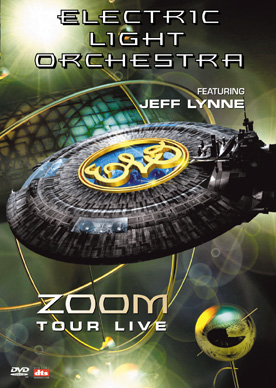
After nearly 15 years away from touring and recording, the Electric Light Orchestra returned with the Zoom album in the early 2000s.  Though at times the band has consisted of nearly 75 musicians on stage, it is truly the brain child of one man: singer/songwriter/multi-instrumentalist Jeff Lynne.  Ever since I began my journey into popular rock music in my early teens, I have loved ELO.  In my opinion, how can you not love ELO?  Just a sampling of their songbook includes: Mr. Blue Sky, Don’t Bring Me Down, Sweet Talkin Woman, Evil Woman, Telephone Line, Showdown, Can’t Get it Out of My Head, Livin’ Thing and Four Little Diamonds.  I could go on and on and triple that list with great songs, but I will digress for now; needless to say, ELO knows how to put out great, pop rock-driven songs with an interesting touch of classical music interspersed.

Anyway, as I was saying, they returned after a prolonged hiatus to release the Zoom album and followed it with a tour to support the album release.  Unfortunately, ticket sales were abysmal and they ended up cutting the tour short.  Before it was over, however, they were able to capture the tour on DVD and released it on home market.  The live DVD features lots of their classic hits, as well as a decent amount of cuts off the new album.  I was thoroughly impressed with how well Lynne’s voice had held up over the years and actually liked a lot of cuts off the new album.  Though the band was scaled back in size from its height in the 1970s, the 8-10 musicians playing on stage for the DVD were more than able to replicate the sounds from the albums.

Apparently, the general public didn’t share my enthusiasm though and after cutting their tour short, Lynne has returned to producing and working on other projects.  It’s a shame that we may never see a return of ELO on stage again because of what happened, but at least we were left with one bittersweet live DVD to hold us over.  There’s no commentary or extra footage really on this DVD, just the band performing their songs and, for that reason, I have given this live DVD three and half stars.  Furthermore, the camera work and lighting is just average.  The music is awesome, but I will agree it’s not the best live production I have ever seen put together.

So, if you are an ELO fan and just want to hear them doing live tracks, I highly recommend this DVD.  If, however, you need lots of extras and behind the scenes footage and things of that nature in your live music DVDs, then I would look elsewhere.  Finally, if you aren’t familiar with ELO and are perplexed about who the heck I am even talking about in this post, then I recommend you get on iTunes immediately and start downloading some of this bands’ greatest hits.


The Tree of Life (2011) Review

6 12 2011

Copyright 2011 Brace Cove Productions

★ ★ 1/2

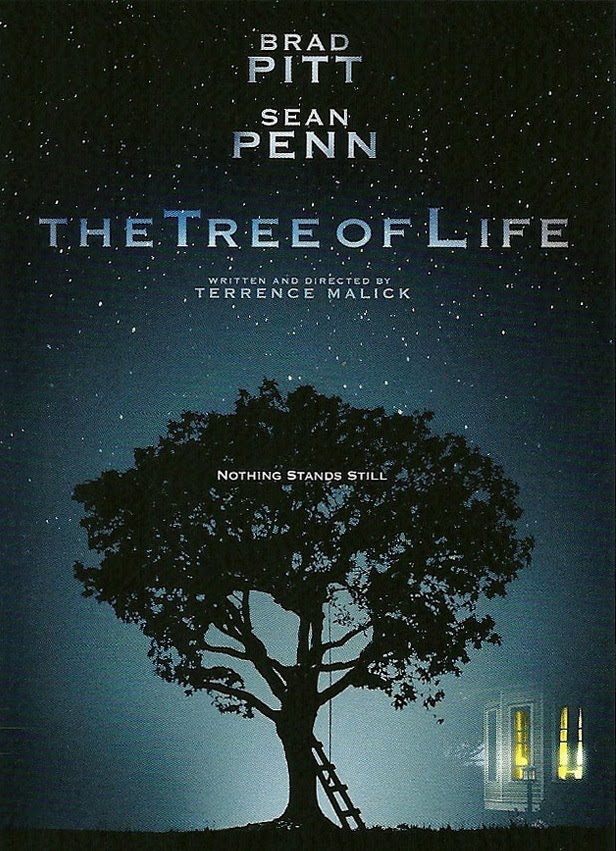
I’ve never been a devoted fan of Terrence Malick, though I have enjoyed a great number of his movies, notably Badlands, Days of Heaven and The Thin Red Line.  However, sometimes his esoteric heavy handedness is just too much for me and this film, I believe, suffers the most from that style.

Oddly enough, there’s really no reason for me to even explain the characters in the story or their names, as this film is less a movie than a visual essay.  Honestly, I don’t think half the characters names were even mentioned during the film.  So, let’s do it this way:  Sean Penn is a grown man meandering through life fixated on the death of his brother many years ago and the lessons, trials and tribulations of his childhood and growth.  Scenes from this part of the film make up about 15% of the film.  The majority of the movie (about 75%) is fixated on his time as a child, growing up in rural Texas with his mother, played by Jessica Chastain, and his father, portrayed by Brad Pitt, and two younger brothers.  The film presents us with a semi-first person collage of his memories as a child, mostly disjointed as childhood memories often are.  The remaining 10% of the film looks like Discovery Channel B-Roll and apparently represents the forming of Earth as a place where complex beings can live and survive.

To me, the movie has its heart in the right place, but doesn’t capture what a I feel a movie’s top priority is: to entertain.  At nearly two and half hours, I was exhausted and ready for the film to be over at the end.  I will commend Malick on presenting us with a beautiful ode to the memories of childhood and the process of growing up and dealing with the decisions and effects of that said childhood.  I will further highly commend Emmanuel Lubezki for his amazing cinematography in capturing the images of this film, which are captured with a wonderful and precise manipulation of mostly natural light.  The choice of wide angles lenses and hypnotic steadicam movements further propelled the visuals into working nicely to put Malick’s vision on screen.

However, in the end, as much as I appreciate a beautiful film, it doesn’t make up for a boring one.  And, yes I can take a “boring” film as well when I can fully appreciate it; this film just felt too pretentious for me and I can’t enjoy boring and pretentious.  In conclusion, I would say that most viewers will either love this and completely understand and relate to Malick’s vision, or they will completely be turned off and not care for this film at all.  I guess that’s testament to Malick’s career, you either like his films or you don’t, there is rarely a “gray” area in his work.


Crazy Stupid Love (2011) Review

2 12 2011

Copyright 2011 Carousel Productions

★ ★ ★ ★

Maddie rented this movie at the Redbox and I knew very little about what the premise was, but was in the mood for something light (our other choice for the night was Tarkovsky’s Stalker which is nowhere near ‘light’).  In the end, I was pleasantly surprised with this film.

In the first scene of the film, Emily Weaver (Julianne Moore) tell her husband, Cal Weaver (Steve Carell), that she wants a divorce over dinner.  After 25 years of marriage, the news is a complete shock to him and he further finds out in the car that she has been having an affair with a colleague from work, David Lindhagen (Kevin Bacon).  Defeated, he eventually moves from the house and begins going to bars, where he runs into the suave lothario Jacob Palmer (Ryan Gosling), who because of Cal’s reminiscence of his father, he decides to “show the ropes” of picking up women.  Without ruining the fun of the film, there are other side stories, all dealing with the notion of love, that interweave and eventually culminate at the end.

Though the film is a bit disjointed at times, it does tie itself up and make for a very pleasing end product.  Though I hate to use the words light in a positive manner, this film is a light, fun and interesting romantic comedy.  There are a few things in the presentation that keep this from being a really amazing comedy, but even with its shortcomings the film still holds a nice amount of charm and wit.


My Name is Bond Series: Licence to Kill (1989)

29 11 2011

Copyright 1989 Eon Productions

★ ★ ★ ★

I hope everyone had a wonderful Thanksgiving and with the four days off, I was able to watch a pretty decent amount of movies.  Some were good, some were terrible and one was Bond, so it gets incorporated into the “My Name is Bond” Series here on the blog.  Yes, I know I said I was going to go in order, but after seeing this one and having it fresh in my mind, I am going to jump around a bit.

Timothy Dalton takes his second and final turn as James Bond in this film.  Longtime friend and CIA agent Felix Leiter (David Hedison) is on his way to his wedding with Bond as the best man.  On the way, however, the DEA intercepts him because of a lead on notorious drug runner Franz Sanchez (Robert Davi).  After an exciting pre-title action sequence that results in Sanchez’s capture, Leiter and Bond arrive for the wedding in epic style.  Under interregation, Sanchez offers $2 million for anyone who will free him.  DEA agent Ed Killifer (Everett McGuill aka ‘Big Ed’ to all you Twin Peaks fans) can’t pass up the offer and frees Sanchez during the transport.  Knowing his captor, Sanchez kills Leiter’s newly wed wife and feeds him  to the sharks, though he does survive in intensive care.  Bond, seeking revenge, plans to go gunning for Sanchez, but his boss M demands he stay on course and head to Istanbul for a field operation.  James resigns and gives up his “Licence to Kill”, instead embarking on a journey into South America to find and kill Sanchez.  Along the way, he garners some convenient help from a CIA operative named Pam Bouvier (Cary Lowell) and receives some help from Q (Desmond Lleweln) under the table.

In addition to being Dalton’s final appearance as Bond, this was also the final Bond film for Albert R. Broccoli in the Executive Producer position, Richard Maibaum as a writer, John Glen as a director (he directed all 5 Bond movies in the 1980s beginning with For Your Eyes Only), title designer Maurice Bender, Robert Brown as M and Caroline Bliss as Moneypenny.  So, in a way, this film marked the end of an era in the EON Productions Bond franchise; because of this and lawsuits that arose in the early 1990s, it was six years before a new Bond movie release, that being Goldeneye with Pierce Brosnan.

A lot of bond fans are not too keen on Dalton as Bond.  A more emotional, sentimental Bond than some in ways, yet more realistic and rough and tough in others.  According to many, Dalton’s portrayal is the closest to the original character in the books by Ian Fleming.  For me, personally, I immensely enjoyed Dalton’s portrayal and hate he didn’t stick around for a third film.  As for the film itself, director John Glen felt this was his best effort of all his Bond films; I have to agree.  It is gritty, it is dark and the action sequences are very well-handled.  Though little attention gets paid to this film in the canon, I really enjoy it.  This was my third time seeing the movie and it hasn’t lost any of the allure it had for me when I first saw it nearly seven or eight years ago.

In short, a great, underrated Bond film.  And no, I didn’t misspell the title; “Licence” is the British way of spelling what we Americans are more familiar with transcribing as “License.”


JFK: The Movie and the Man

23 11 2011

Copyright 1991 Warner Brothers Pictures

Yesterday marked 48 years since that fateful day in Dallas where President John F. Kennedy was assassinated in Dealey Plaza.  When possible, I mark the anniversary with a viewing of Oliver Stone’s 1991 epic JFK, a three-hour ode to the problematic points in the Warren Report and chronicle of New Orleans D.A. Jim Garrison (Kevin Costner) to set the records straight.  Unfortunately, this year I was able to screen the film for the anniversary, but may likely catch up a day late tonight.

Why do I screen this film almost annually in remembrance of a man who died 20 years before I was born?  The answer is simple: I believe that on that day an injustice took place in this country that destroyed the innocence of a nation and propelled a recovering country into a senseless state of war and social mayhem.  With current times seemingly reliving the unrest and anguish of the period after Kennedy’s death, it seems even more so fitting to celebrate the life of a man who wanted to avoid war, avoid discrimination and avoid social injustice.

Not only do I feel that Oliver Stone’s film is an important historical piece, but it is also a brilliant movie.  Rarely do you see a film so perfect, and I think the reason stems from Stone’s own personal feelings on the subject matter.  With an all-star cast, beautiful Oscar-winning cinematography and editing, JFK embodies all the elements that make so many question the “official” findings of the Warren Report, which concluded that Lee Harvey Oswald, acting on his own volition, was the sole gunman from the sixth floor of the Texas Book Depository.  The film, as does the content, urges one to lift the veil from over their eyes and search for the truth.  One or two complications of fact doesn’t warrant a conspiracy, but when you have more contradictions than evidence on any subject, there can be no other way to classify it.

Over the years, I’ve collected quite a collection of books on Kennedy’s death from “Best Evidence” to a fine copy of the Warren Report itself.  Now, even 20 years after Stone’s film, it’s still hard to say whether we’ve come much further in regards to hard evidence on the case.  The real theme, however, of the film is to never give up.  When there is injustice, it takes those who seek the truth to hunt it down and right the wrongs, no matter the length of time passed, no matter the change of era.  As mentioned earlier, now is as good a time as any to carry such a mind set.  We live in times that could make or break our country, and no matter the cost, we have to be willing to fight for justice, equality and what is right.  As the age old quote states, “The only thing necessary for the triumph of evil is for good men to do nothing.”  This film professes that logic and is a great example of how a piece of filmmaking can invigorate and incite people to search for what they feel is right.


Special When Lit: A Pinball Documentary (2009) Review

22 11 2011

Copyright 2009 Steam Motion and Sound

★ ★ ★ ★ (for a pinball lover)

I absolutely love pinball and have since I was very young.  There is something mesmerizing about playing a game that is mechanically based, rather than graphics on a screen; there is more control, more connection with the game and, to me, an overall more enjoyable experience nine times out of ten.  Don’t get me wrong, I have also been a heavy console gamer in my day, but pinball definitely holds a very special place in my heart.  Unfortunately, this beloved arcade classic gets a little less attention with each passing year and more and more are disappearing from store fronts as time goes by.  This documentary chronicles not only the history of this wonderful coin operated machine, but also celebrates its legacy.

Through voice over narration, interviews and on location shooting, the film explores the beginnings of pinball, through its heyday, and now into its decline.  It not only explores the opinions of collectors and avid players, but also those who design the machines and owned the arcades in which they were and are played.  Nothing about pinball is left uncovered in this extensive documentary, which turns out being both a blessing and a curse.  I enjoyed how complete a study the film was on its subject, but even I at times was waning a bit during a few of the interviews.

For me, however, over all it was a very enjoyable experience watching this film and brought back some great memories of some of the wonderful machines I’ve played and mastered in the past.  Now that I am older and pinball machines are no longer in many bars, soda shops and other establishments as they were when I was a young kid (during pinball’s second golden age of the early 1990s), I have decided to, like everything else these days, bring the entertainment home.  I have already ordered my first pinball machine, a Bally Doctor Who that was manufactured in 1992; it is currently being shopped and will be picked up at the end of December to early January.  I’m sure this will be the first of many, knowing my obsessions with things of this nature.  However, there is something lost, as with owning a home theater or pool table, when you don’t have that public environment, the general consciousness, surrounding your playing of the game.


Barbara Kent: Last of the Silent Film Stars

21 11 2011

Barbara Kent (1907-2011)

With all the commotion in my personal life and relatively little amount of coverage it received, I just recently heard of the passing of Barbara Kent at the age of 103.  Her passing signifies the last living connection we had to the dawn of cinema, an era defined solely on the visual content of the medium.  There are a few child actors still alive as of this writing, as well as screenwriter Frederica Sagor Maas who turned 111 this year, but Kent was the last adult silent actor still living, at least in regards to American cinema.

Born Barbara Cloutman in Gadsby, Alberta, Canada, on Dec. 16, 1907, she graduated high school from Hollywood High School and, subsequently, got involved in motion pictures after winning the 1925 Miss Hollywood beauty pageant.  Under contract to Universal Pictures, she mad a few appearances in uncredited roles, before making a strong impression as the protagonist, Hertha, in the 1926 Garbo vehicle Flesh and the Devil.  No Man’s Law followed in 1927 and created a bit of an uproar with a scene that looked like she was swimming in the nude, though it was later revealed that she was wearing a flesh colored bathing suit.

Also in 1927, she was selected as one of the WAMPAS Baby Stars of that year and would eventually make a smooth transition into sound films with the 1929 Harold Lloyd comedy Welcome Danger.  She further appeared with Lloyd in Feet First in 1930 and would continue to appear in various films sporadically until 1935.  Never wanting to become an actor, her interests in the profession waned dramatically in the 1930s and she would make her final appearance on film in Guard That Girl in 1935.

Kent married Hollywood agent Harry Edington in 1932 and remained married until his death in 1949.  She met and married Lockheed engineer Jack Monroe in the mid-1950s and would remain with him until his death in 1998.  She became an avid golfer and even received her pilot’s license following her film career.  For the past decade, she made her home in an assisted living facility in Palm Desert, Calif., and was mentioned by many on various forums online to be in good mind and spirits even well into her 100s.

Never glamorizing her career or having much of an interest in the past, Kent rarely gave interviews or even acknowledged her time in motion pictures.  In the end, I guess it is ironic, yet fitting that one of the last remaining stars of that era remained, for lack of a better word, mostly silent of her time in the industry.


Horrible Bosses (2011) Review

21 11 2011

Copyright 2011 New Line Cinema

★ ★ ★ 1/2

I entertained the idea of seeing this film in the theaters, but it never came to pass.  So, with its recent home video release (weird to even call it that anymore with the amalgam of online streaming options that have seemingly taken over) yesterday, Maddie and I rented it from Redbox and gave it a watch.

The premise is pretty simple, Nick (Jason Bateman), Dale (Charlie Day) and Kurt (Jason Sudeikis) all have bosses they can’t stand, Dave, Julia and Bobby (played by Kevin Spacey, Jennifer Aniston and Colin Farrell, respectively).  After reaching their breaking points, they come up with the idea of killing their bosses.  With the mediocre help of Motherfucker Jones (Jamie Foxx), they head to scope out their prey and plan the eventual kills.  As could be expected, nothing goes as planned.

The film is a very basic premise, but it actually delivers fairly well, much credit being due in my opinion to the high profile cast.  In addition to the main stars and Oscar winners in the movie, cameos are made by Ron White, Donald Sutherland and even Bob Newhart.  Though I can’t say the movie was brilliant or stand out, it achieved what a good comedy hopes to achieve: it made me laugh.  There were many times I found myself chuckling at various comical lines and irreverent behavior displayed throughout, and with the way most comedies these days are, that’s a huge thing.

Final conclusion: This is a fun, silly comedy that has enough meat on it to be worth your hour and half on Friday or Saturday night and for an added bonus for the fellas, Jennifer Aniston looks pretty darn good as a brunette.


Doctor Who: The Movie (II)

16 11 2011

Announced Director David Yates

A couple of days ago Variety, one of the leading trade publications for those working in Hollywood, announced that a big budget Doctor Who movie is in the works in cooperation with BBC Worldwide.  Though no script or actors have been announced, the film will be directed by four-time Harry Potter alumnus David Yates.

According to Yates, the film is planning to be a stand alone venture, separate from the current sixth series of the reboot starring Matt Smith as the eleventh incarnation of the time traveling Doctor.  Furthermore, both American and British writers will be considered for the scripting duties; being a main stay of British culture, an American writer could upset fans.  However, Yates points to the precision of American writer Steve Kloves in capturing the British element of the Harry Potter films expertly as reason for leaving stateside writers in contention for the film.

I find the news to be both exciting, yet also quite worrisome.  In the past, two features starring Peter Cushing in the 1960s were made that are not considered part of the standard canon; in 1996, a telefilm starring Paul McGann was released in cooperation with the FOX Network, which is considered as part of the canon, counting McGann as Doctor number eight.

The excitement lies, of course, in the mere idea of Doctor Who getting royal treatment with a large budget and mass audience release.  Yet, the worry also stems from the same reasons for excitement.  Doctor Who has long been a cult program in some regards, with legions of fateful fans.  As a television series, it is just now somewhat breaking into the mainstream with the popularity of the 2005 reboot and younger, exciting Doctors like David Tennant and Matt Smith.  To fully commercialize on the series, I feel that a sacred aspect of this now nearly 50-year canon of two series and a telefilm might be dismantled.

To be fair, however, if there is one person that can pull this off, I think that the BBC made a wise decision in choosing director David Yates.  Yates, a National Film and Television School graduate, had early success in television before directing his first Harry Potter film, Harry Potter and the Order of the Phoenix.  His adaptation was such a success, that he continued on as the director for the following three films.  He seems to have a good knack for understanding the sacred nature of beloved cultural icons such as Harry Potter or the Doctor.  In my opinion, his idea to split the seventh book into two movies to better serve the source material was an excellent choice.

Though it looks like the project may be three to four years away from release, it will be interesting to see how it is handled.  Hopefully, the production will not stray too far from the 50-year history to upset long-time fans, but will be able to be commercialized enough to recruit more fans for the beloved Time Lord.  After all, the more fans there are for a fictional character, the longer that character seems to stick around in popular culture.  As a huge fan of the series, I know we would all hate to see another nearly 16 year gap with no Doctor on television or film.