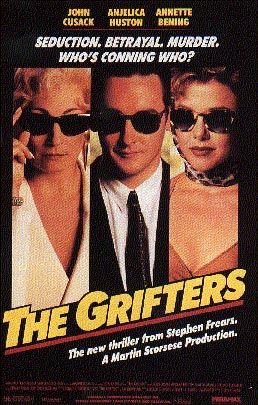
I wasn’t quite sure what to expect when I started watching this movie, as I knew very little about it. However, from what I knew, I thought that it would involve some kind of exciting heist or interesting plot line full of surprises. In the end, it concluded with neither and was a bit of a non-climatic, unmemorable film.
John Cusack plays small-time con man Roy Dillon who has a visit from his estranged con mother from Baltimore, Lilly (Anjelica Huston). Complicating matters between himself and his mother is his girlfriend, a sexually-charged ex large-time con accomplice, Myra Langtry (Annette Bening). The film meanders around with several circumstances confronting each of the main characters: Roy gets hit in the stomach and almost dies which gives him a new lease on life, Lilly is found to be stealing from her mob boss and is sent on the run, and Myra wants to get back into large-time conning with Roy. These complications all affect Roy in some form and, eventually, unravel his life. All the characters are seedy in this film and, though it plays alright and keeps some form of interest, there is really no big pay-off in the finale.
I’ve never been a huge fan of any of these actors; honestly, the only one I can somewhat stand is Annette Bening, and that is only in certain roles. Cusack plays his same laconic self and Huston has just never appealed to me whatsoever for no good reason. I haven’t seen a lot of Stephen Frears’s movies, and won’t say that this was directed bad, but it just didn’t pay off script-wise for me. Maybe some people will like the nostalgic feel or think there is something clever in the plot line that eluded me, but on the whole, this film just fell really flat.
Surprisingly, the movie was nominated for Best Actress in a Leading Role for Huston, Best Actress in a Supporting Role for Bening, Best Director and Best Writing, for material based on another medium for Donald Westlake. Though it won none of these awards, it must have been a pretty mundane year to even garner this many nominations. But, then again, the Best Picture winner this year was Dances with Wolves, so that kind of sums it up for 1990.
About six weeks ago, I put out a post based on my experiences with the 48 Hour Film Project. Subsequently, a few weeks later, I posted on some administrative changes to the Greensboro 48 Hour Film Project that I felt were pertinent for continued success of this filmmaking collaboration in our region. As of yesterday, our entry into the 2011 Greensboro 48 Hour Film Project has been posted online at vimeo.com. I have provided a link below for all those interested in viewing the film in it’s entirety. Do note that a few extra sound effects were added that were not in the original entry; however, other than those minor changes, all is the same.
I hope you enjoy and can’t thank my collaborators enough for a wonderful 48 experience on set! If anyone has any questions related to production of this short or how the 48 works, just post them into the comments section and I will do my best to answer.
Who’s Next consistently ranks as one of my favorite albums of all-time. Because of this, it was only natural for me to be drawn towards what live Who footage there was out there. For many years, my uncle or one of my brothers had bestowed a Best Buy gift card to me for Christmas; being a digital nut, it was always a safe bet. One year, when I was about 16 or 17-years-old, one of those gift cards was cashed in for this two-part DVD.
The footage itself is not so much self-contained as it is an amalgam of footage over the career of The Who. Footage quality varies widely from early black-and-white to slick live color 16mm footage from the late 1970s. Intermixed with the live footage are interviews with the members of the band: Roger Daltrey, Pete Townshend, John Entwistle and Keith Moon. The film encompasses the band’s life from 1964-1978 and includes some of drummer Keith Moon’s final performances. He would die of accidental barbiturate overdose at the age of 32 in September, 1978.
The raw energy of a band like The Who is hard to capture in concert footage, but I feel this film gives a valiant effort. Especially worth noting are the later performances of “Won’t Get Fooled Again”, “Who Are You” and “Baba O’Rilly” in 1978. Iconic footage from these performances have made been integrated into many other media avenues since release including the 2001 Cameron Crowe film Vanilla Sky.
If you are a fan of The Who, then I highly recommend this film. Not only does it capture the band’s life from early success until Moon’s final, tragic days, it also takes a look in a very unobtrusive way into their lives recording together and interacting on promotional tours, etc. It definitely is a gem of compiled footage from a band that will go into the annals of music history as trendsetters and masters of raw emotion, both live and on the album.
Since Doctor Who has been on hiatus for the summer after their mid season break, we’ve been watching the spin-off series Torchwood to bridge the gap. With the new job, it’s a bit difficult to watch features in addition to a series, so I’m going to pull a little known film that I am very fond of from the back log to review: Scarecrow.
It’s been a few years since I’ve seen this film, so I’m not sure how hard the film is to find these days. However, about 10 years ago when I first viewed this movie, it was almost impossible to locate. In one of my cinema history books I saw a picture from the film with a young Al Pacino and Gene Hackman. Being a huge fan of both of these incredible actors, I was immediately interested in finding a copy of this film. This was before Netflix, so I had to make the rounds to all the local video stores; none of the stores had the film. Months went on with no success until I came to a Movie Gallery a few towns away. This was around the time that VHS was being fully phased out to DVDs, so they were having a huge sale on VHS movies. The store literally had hundreds of movies for sale for about $3 a piece. I bought properly 500 movies that summer that were hard to find, rare or foreign, of course all VHS, but still it was some way to view these films at the time. Deep within the droves of cassette stacks, I found a lone copy of Scarecrow. I still have it in my collection today and feel it is one of the most underrated films of the 1970s.
Directed by Jerry Schatzberg, Hackman plays an ex-convict named Max Milian and Al Pacino plays Francis Lionel “Lion” Delbuchi, an ex-sailor. They meet on a path in California near the beginning of the film and form a partnership as friends, with plans to go into business together when they get to Pittsburgh. Hackman’s character has a plan to open a car wash which he is sure will be a success. Francis agrees to be his partner in business, but first wants to stop by Detroit and make well with his wife, Annie, and the child he left behind and never saw. Essentially, the film is a road movie between these two opposite personalities and their weird friendship that develops in their travels from California to Pittsburgh. Max is quick tempered and aggressive in many situations; whereas, Francis is calm, conservative and child-like. Along the way, they visit several different places, get put in a work camp for awhile and go through both personal injury and triumph.
What really works with this film is the true-to-life dichotomy between the characters of Max and Francis’s relationship. They are complete opposites, but in some strange way need each other to survive. They learn from the other and find the only support they have ever known in life in their friendship. The story is shot in a gritty, realist nature which only adds to the believability of the characters and their complex relationship. Needless to say, Pacino and Hackman are absolutely brilliant in this film. It was at the height of both of their professional abilities and the casting choices for their respective roles couldn’t have been better.
The film won the Grand Prix at the Cannes Film Festival in 1973 and has been generally well-regarded by critics since it came out. In looking on Netflix, it seems this film is still hard to locate all these years later. However, if you can find a copy, you’ll be pleasantly surprised with this 1970s gem.
For those of you that know me personally, you are probably already aware of my two greatest passions. For those of you who don’t, one is obviously film and filmmaking, the other is music. I’ve been a guitar player for about 12 years now, have had some success in the local scene over the years with several bands, most notably with Jaxon Jill from 2007-2009. So, to bridge the gap a bit here on the blog I’m starting a new series that will have updates ever so often. The series will be called the Music on Film Series and include popular, and not so popular, films that have either been of live concerts, taped recordings or other instances in which music is the predominant subject of the visual image.
In starting this little ongoing series, I feel it is only fitting to begin with my favorite concert film of all time, The Band’s The Last Waltz. I remember the first time I ever heard The Band, it was truly an hear opening experience, if you will. I was at the local Borders in Winston-Salem, which unfortunately is currently going out of business with the rest of the chain as we speak, and I was listening to various albums they had available with headphones. I was maybe 14 or 15 years old at this time, just beginning an interest in classic rock and roll that would continue to this day. When I came to the CD of The Band’s Greatest Hits, which at the time had just been released on compact disc, I put on the headphones and hit play for a sample of the first track, their classic hit “The Weight”. As I continued sampling the album through “Tear of Rage”, “I Shall Be Released”, “Up on Cripple Creek” and “King Harvest”, I became enamored with their style and musical influences. Their sound is such a perfect blend of Blues, R&B, Rock and Roll, Country and Folk, and the voices of Levon Helm, Richard Manuel and Rick Danko blend so beautifully and harmoniously, that the music itself literally becomes timeless.
Needless to say, I bought the album on the spot and it continued to be a staple of my car CD system for years to come. As I became more and more interested in their music, I caught wind of their final concert, The Last Waltz, which was filmed at the Winterland Ballroom in San Francisco in 1976. The concert film was directed by none other than iconic Italian-American filmmaker Martin Scorsese. Scorsese and The Band collaborating on a celebration of the music at a live concert was too good to pass up. At the time nearing my birthday, it was a first choice for present from my parents; once received, I played it from beginning to end on the big screen TV with the sound system all the way up.
The film features not only a large number of iconic Band tunes, but also has a multitude of musical guests joining the band on stage for one to two songs. Guests include Van Morrison, Neil Young, Dr. John, Neil Diamond, Bob Dylan (who the members of The Band were the backing band for before going out on their own), Eric Clapton and Muddy Waters, among others. There is nothing quite like hearing many of these songs live when the group was at the height of their fame; the energy of the performances are breathtaking. Interspersed between the music are interviews with members of The Band about their life and times with The Band and being musicians in general.
I highly recommend this album to anyone who loves music of 60s and 70s. This is truly a celebration of The Band’s music and the people behind the music, Levon Helm (Drums and Vocals), Robbie Robertson (Guitar), Rick Danko (Bass and Vocals), Richard Manuel (Piano and Vocals) and Garth Hudson (Keys, Organ, Sax, Crazy Musical Genius Extraordinaire). Just to give you a sample of the film, here’s oneof my favorite tracks from the DVD:
In their down time from Doctor Who, current series head Steven Moffat and Mark Gatiss set out to create a modern update on Sir Arthur Conan Doyle’s classic Sherlock Holmes. Season One of the joint BBC and Masterpiece production aired in the summer of 2010 with three episodes, each totaling 88 minutes in length.
The first episode, A Study in Pink (an obvious take-off on Doyle’s “A Study in Scarlett”), lays out the groundwork and exposition for the characters of both Holmes and his associate Dr. John Watson. This episode also introduces the two to each other for the first time, and has them decide to be roommates at the famous 221-B Baker Street address. Staying very true to the books, all the idiosyncracies of the characters and their backgrounds are in tact, just with modern updates. For instance, Watson served in the recent Afghanistan conflict in this version, where he received the bullet that injured his leg.
Benedict Cumberbatch plays Holmes and Martin Freeman plays Watson; they are both excellent in their roles. I especially enjoyed Freeman’s performance as Watson; however, I am a bit bias, as my favorite character in the Holmes’ stories is generally that of Watson oddly enough. I mean how cool would it be to be the companion of a mind like Holmes’s, a crack shot with a revolver and an expert medical doctor all-in-one? Plus, you get the ladies and generally stand as a voice of reason to the sometimes aloof Holmes.
Not only does the series get placed in modern London, but they take expert advantage over the situation by incorporating many technological advances into the scripts. Laptops, cell phones and other digital media devices are made use of in all three episodes extensively, sometimes even as key elements to the plot. In addition, the producers came up with a clever way to visually present the use of such devices. Rather than boring shots of a cell phone screen, they have animated text appear over the image to signify various text messages, etc.
The second series will be broadcast this fall in the same manner as the first, with three hour and a half long episodes. I enjoyed Guy Ritchie’s theatrical version of Sherlock Holmes (2009) and am looking forward to the sequel later this year, but, though fun, it wasn’t a great movie. This modernized adaptation of the classic stories is a different story; I don’t mind at all admitting that it is a brilliant, fresh take on series. I absolutely love it.
For all you Netflix users out there, all three episodes of season one are available on Instant Watch.
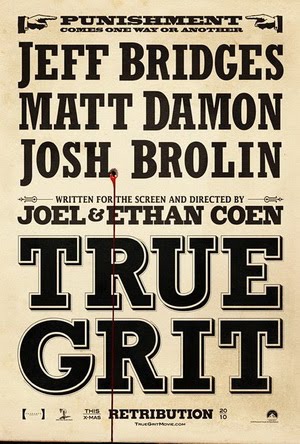
I had high expectations for this film going into it; perhaps, too high. This is the Coen Brothers take on the Charles Portis novel of the same name. As much as it tries to be a quality adaptation of the novel along with keeping the Coen’s quirky edge, it somewhere misses the mark in being a truly great film. It’s not a bad film, and like I said, perhaps my expectations were too high due to all the hype at the end of last year, but this film didn’t strike me as a 10 best of the year by any means. If that’s the case, 2010 was a worse year for filmmaking than I originally thought.
As mentioned above, the film is based on the Charles Portis novel; it is the second adaptation of the book to film, the first being Henry Hathaway’s 1969 version with John Wayne. When an outlaw known as Tom Chaney (Josh Brolin) murders young Mattie Ross’s (Hailee Steinfeld) father over a petty gambling altercation, the young girl seeks justice. A quick witted and intelligent lad, Mattie seeks out a man with “true grit” to help track down Chaney and the outlaw gang he has made acquaintance with in the Indian Territory. She finds her man in dirty, drunk U.S. Marshall Rooster Cogburn (Jeff Bridges). He reluctantly agrees to help her; they are further aided by a Texas Ranger who has a bounty to claim himself for Chaney, LaBoef (Matt Damon). They set out for their man and, eventually, track him down after several various altercations.
The acting in the film was very good. Jeff Bridges delivered, as usual, and the girl, Hailee Steinfeld, who played Mattie Ross was incredible in her debut role. Apparently, the Coen’s auditioned 15,000 girls for the part before deciding on Steinfeld. The source material seems interesting as well; it’s bare bones and fairly straight forward in plot, but seems like a good premise for a western. However, somewhere along the lines, this film just lost steam for me. Primarily, I think, during the final showdown, which I thought should have a level or bravura to it to make it epic. In reality, it seemed rushed and quickly lead into the denouncement.
All in all, I didn’t dislike the film. It was a movie I could watch and say, “Well, that was good.” When many critics put this on their best of lists and a lot of my contemporaries recommended the movie, however, to the point of my expectations growing very high – this movie just doesn’t add up completely.
So, it’s 2:20 a.m. on early Friday morning here on the east coast. I just got back from the midnight screening of Harry Potter and the Deathly Hallows Part II. This is the second part of the two-movie conclusion to one of the most popular movie series of the decade, which, in turn, is based on one of the most popular book series of all-time.
Picking up from where Harry Potter and the Deathly Hallows Part I left off, this film begins at the burial of the free elf Dobby. Without going into too much detail on the synopsis, as I’m sure 90% of you have already read the books and just care if the movie is a good representation or not, the first 20 or so minutes is very much exposition. It recaps a bit from what the previous installment showed and then continues to set-up the next major plot point, the search for another of Voldemort’s horcruxes at Gringott’s Bank. The Gringott’s chase and escape sequence is relatively short compared to what I remember it being in the book. Following this, Harry and friends apparate to Hogsmeade, meet Ableforth Dumbledore, Albus’s brother, and enter into the now Snape-headed Hogwarts. I would say at this point you’re maybe 45 minutes into this two hour and ten minute movie, if that. From this point on is the final battle and showdown at Hogwarts.
The exposition is a bit rushed, but I was completely fine with it. I mean, if you are going to split a massive book into two movies, give me the good stuff! The final battle at Hogwarts and lead up to the showdown between Harry and Voldemort are epic and spectacular; there are many moments where you will find yourself on the edge of your seat. Many popular characters that haven’t appeared in several of the latest movies reappear in this installment, and it’s exhilarating to watch such an grandly staged battle between good and evil for more than the last half of the film.
J.K. Rowling wrote the books intending for each book to become darker and for a more mature audience. I will say that this entry in the movie series is by far the most graphic. There were several scenes that were disturbing, even for an adult; so, for all you parents, be aware that this is definitely not wholly a “kid’s movie.”
The Harry Potter series has already become classic literature to some degree, and in only 14 short years. It’s majestical storytelling, and in the films, well-acted, well-scripted and wonderfully shot, directed and produced. To me, this installment in the film series was a fitting end to an iconic story. I don’t think anyone will walk away from the theater disappointed.
Copyright Richard L. Bare and WIley Publishing 2000
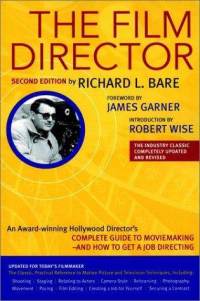
My personal library of books on film history, theory, production process and reference numbers currently at just over 100 books. Of that lot, I would say about 10-15 are books on directing, which include such classics as Making Movies by Sidney Lumet and On Film-making by Alexander Mackendrick. This book, by television and motion picture director Richard L. Bare, was the latest edition to the “library,” and I have to say that I was pleasantly surprised with the information contained within.
Richard L. Bare himself is probably not known to the mainstream by name, but I’m sure you’ve seen his work before. The majority of his professional career was spent in television, where he directed episodes of such classic shows as The Twilight Zone, Petticoat Junction and Maverick, among many others. However, he is probably best known for directing the lions share (168 episodes), and being a driving creative force, behind the popular CBS program Green Acres with Eddie Albert and Eva Gabor.
I came across this book upon reading background information on a recent Twilight Zone episode I had watched. Intrigued, and with the price not being very high from Amazon, I decided to go ahead and buy the book blind and give it a shot. Of all my books on directing, I’ve never really felt like there’s been one that touches on the practicalities of directing in the precise manner in which I had hoped. Some are wonderful personal accounts of a career, some tinged in personal philosophies and many are very existential musings on the process of directing and taming performance. However, none has fully satisfied my desires on practical text until this one.
Of course, you can’t learn all the complexities of directing and how to become a great director from a book; this book will even tell you that! A truly great director takes a certain God given trait, but the ability to learn how to properly make a movie in the director’s chair, can be covered. This is what The Film Director does for you. It lays out every facet of what a director has to do in pre-production, production and post-production to make sure that a picture is produced correctly, on time and how to stay in budget. Bare covers how to deal with difficult actors, short cuts you can utilize when budget is an issue and other inside information that only a learned director could tell you.
In addition, Bare recounts his own experiences becoming a director and some of his other personal trials and tribulations in the field. He makes it clear that it is no easy process as well. An early graduate of the University of Southern California’s film program (he’s 97 and still kicking!), Bare won the coveted Paul Muni award for a short film he did in school, The Oval Portrait, based on the Edgar Allan Poe short story of the same name. This was a national award and he was invited to wine and dine with many of the industry’s top producers and directors. However, in the end, it was still another seven long years before he was able to gain employment from a studio.
In conclusion, I highly recommend this book for someone who hasn’t any idea the role a director plays all the way to a practicing director with many various films under his belt. You’re never too old to learn something, and this is the most practical, straight-forward text on the role of the film director that I have yet to come across. Note that the original text was written in the early 1970s, this 2nd Edition of which I am reviewing was updated by Bare in 2000 to include some of the advances in the process of filmmaking and the industry itself.
Copyright 1967 Chaplin Film Productions and Universal Pictures
★ ★ ★
And so we come to Chaplin’s final completed feature film and our final part of this series, A Countess in Hong Kong. Released in 1967, Chaplin was nearly 80 years old while directing this picture. It was his first and only time that he shot a widescreen presentation and his only feature film outside of 1923’s A Woman in Paris that he was not prominently featured as an actor. In fact, he played the exact same type of small role as he had in A Woman in Paris in this film, that of a steward.
The film stars internationally known Oscar winners Marlon Brando and Sophia Loren. Brando plays Saudi Arabian-designate Ogden Mears, who is on his way home from a world tour aboard a luxury liner. A married man, yet one who is more or less estranged from his spouse, Mears is sailing back alone with his older valet Hudson (Patrick Cargill) and lawyer friend Harvey (Chaplin’s son with Lita Grey, Sydney Chaplin). Loren plays a Russian Countess named Natascha, who sneaks aboard the luxury liner to escape being forced into prostitution. Because she has no passport, she is forced to stay in the same cabin as Mears and hideout from the authorities on board. A flurry of comedic situations between uptight Mears and exotic, outgoing Natascha ensue and an overarching plot of finding a way to get Natascha safely off the ship is followed throughout.
Essentially, the film plays out like a 1930s romantic comedy programmer, which didn’t fit very well into the 1960s. In fact, Chaplin originally had the idea for this film in the 1930s after he sailed on his three month tour around the world. Had the film been completed at this time, Paulette Goddard would have starred in the role of Natascha, and I’m sure Chaplin would have reserved the role of Mears for himself.
Though the potential of the film seems like it would be huge, I mean Chaplin, Brando and Loren on a matinee is enough to make anyone foam at the mouth, in the end, the film just falls flat. Brando and Chaplin apparently despised each other on set. Chaplin was notorious for directing actors exactly the way he wanted them to play a part, many times going to the length of acting the bit out himself and then saying, “Now, do it more like that.” Brando, who was known for his intense dedication to performance through method acting, had a hard time being handled as an actor in this manner and didn’t see eye-to-eye with Chaplin methods at all. The final result on screen is visibly a stilted performance; rather than coming off as funny and light hearted, Brando feels wooden and forcibly tongue-in-cheek. Likewise, Loren’s performance leaves something to be desired, but not to the same degree as Brando’s portrayal of Mears. Honestly, to me, the show stealer was Patrick Cargill as Mear’s aging valet Hudson. I thought he was brilliant as a supporting character.
Like A King in New York, this film was also made in England with rented studios and didn’t afford Chaplin an ideal working environment that he had been accustomed to in California with his own studio. Rather tragically during production actually, Chaplin broke his ankle which delayed production for a couple weeks.
Upon release, A Countess from Hong Kong received generally lackluster reviews and was not a success at the box office. During one of the premieres, the projectionist didn’t set the anamorphic adapter on the projector properly and the film was screened in an improper aspect ratio. The disaster of this film was very difficult for Chaplin, though there were some reviewers who gave high praise to the picture. In my opinion, I feel it was a rather low note to go out on and can see why many people prefer to think of Limelight as Chaplin’s swan song, but once an artist, always an artist and to take away an artist’s ability to create is essentially that of killing him.
Following this film, Chaplin wrote a screenplay for a film that would have been called The Freak. The screenplay, which was about a South American girl who sprouts wings and is passed off by captors as an angel before being arrested because of her appearance, would have starred his daughter Victoria from his marriage with Oona. In fact, test footage was made with Victoria in costume, though Chaplin never got to complete the film.
In the 1970s, Chaplin spent a good deal of time scoring his early silent films and re-releasing them with the completed scores. In 1972, he returned to the United States to accept an Honorary Oscar for his contribution to Motion Pictures; this was his first time back on US soil in 20 years. While in United States, he met with some old friends and even drove by his former studio and other places of interest. Here is the video of his acceptance speech for his Honorary Oscar. The standing ovation has been edited down as it was originally 5 minutes long, the longest any performer has ever received to this date:
Chaplin would go on to be knighted in 1975. He passed away on Christmas Day 1977 at his home in Vevey, Switzerland at the age of 88.
Well, that brings us to the end of our journey through the eleven feature films that Charlie Chaplin made in his lifetime. I hope you have enjoyed my reviews and some of the background information I have provided on each of the films. I have to say that Chaplin is probably my favorite filmmaker of all-time. Though his films were not always the most technically proficient, his ability to tell a story that could make you laugh or cry, or a little of both, was a true gift. I am by no means the foremost scholar on the work of Chaplin, but I do feel like I am better than the average as I have read most of his biographies including the seminal work by David Robinson, Chaplin: His Life and Art (highly reccomended!) and Chaplin’s own autobiography, My Autobiography. In addition, I did extensive research into his affair with Joan Barry for an article that was published on alternativereel.com and also available as a header link here in this blog as Joan Barry Article. Anyway, thanks for reading this series and if you have any questions on Chaplin’s life or films, I will do my best to answer in the comments section.





 notesonafilm