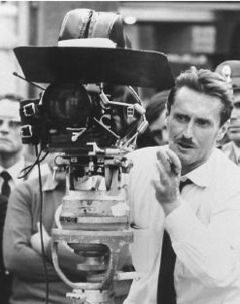
My First (D)SLR

8 04 2011

Panasonic Lumix GH2

So, I’ve worked with DSLR cameras pretty much since they came out.  Most of the projects I have worked on have been with members of the Canon line: 7d, 5d and T2i.  There are definitely some drawbacks to these stills cameras being using for motion capture; however, the quality you get for video is really inspiring in a lot of ways on another level.  They, quite inexpensively, give you the opportunity to utilize a shallower depth of field compared to standard ENG cameras, are better in low-light situations and are compact and durable, though not quite so ergonomic.

I bought my Panasonic HVX-200 in January of 2007 and it’s been a great camera for me.  It’s a solid, prosumer ENG style camera that, at the time I bought it, was a real workhorse for independent productions.  I’ve shot many industrial, commercial, Web promos, live performances, weddings and everything in between on the HVX.  In addition, I’ve lensed seven short films, many award-winning, on this camera.  Yet, I’ve never been necessarily enamored with the picture quality and performance of the HVX.  It’s not bad by any means, but it does leave something to be desired.  For one, you can only truly shoot 24p in 720 mode, not in 1080; the kit lens on the HVX is not high quality; I hate, hate, hate that you can’t manually dial in a color temperature based on Kelvin increments and the LCD and LVF are complete crap.  As with any camera though, there will be downsides.

In working with many DSLRs, I have really come to appreciate the distinctive “look” to some degree.  However, with the Canon line, there have been enough setbacks of one form or another (limited continuous capture, overheating issues, aliasing, bad moire), that I have not yet purchased a DSLR of my own – at least until now.  I caught wind of the Panasonic GH2 late last year when it came out.  It’s a micro 4/3 sensor camera which in sensor size is extremely close to a 35mm motion picture film frame.  In addition, Panasonic had made some major changes that give it an edge over some of the other DSLRs on the market including: the ability to continuous capture indefinitely, no overheating issues and much improved handling of problematic patterns that cause aliasing and moire.

As with anything before I buy it, I spent many an hour watching sample footage, looking at camera tests and reading reviews.  Finally, I was sold; this was the DSLR I had been waiting for (it’s mirrorless so in some regards its not a true DSLR, hence my (D)SLR title).  In looking on Amazon, B&H and other camera suppliers, however, I noticed that this camera is basically impossible to get ahold of right now.  Everywhere had them backordered!  So, of course, I checked eBay to see what they had to offer, but everything was price gouged by about $300.  I wanted the camera, but not that bad.  Finally, a camera company in Washington state listed one with the 14-42mm kit lens on eBay and since they were a Panasonic dealer, they couldn’t gouge the price.  So, I jumped at the auction when I saw it up for a “Buy it Now” at retail value.

I just got the camera in yesterday and have only been messing around a little with it last night and this morning.  I have to say though, I am pretty damn impressed.  Here in the office, I’ve been shooting under available light at 1600 ASA equivalency and the image is way less noisy than the HVX even at that high an ASA.  The color space is impressive, the aliasing and moire have been greatly reduced for a DSLR and it really has a pretty damn good dynamic range.  It was holding highlights at a solid 3 stops over and even holding pretty well into 4 stops, which is not bad for the price.  I’m not getting rid of the old HVX just yet (I did list it prematurely, but then took it down) just because some clients would probably rather see the larger, more impressive looking HVX on a commercial shoot than this little still camera.  All in all, I am very happy I bought this camera.  I can’t wait to outfit it with a Kessler Pocket Dolly, Shoulder rig, follow focus, mattebox and extra lenses.

The HVX still has its place for the time being, but this little camera has a very impressive picture and I can’t wait to test it more.  I’m glad I have the extra camera and have long considered a DSLR; its definitely been well worth the wait for the added video improvements that have come along.  Just for anyone out there considering, with the 14-42mm kit lens (worth getting now as there aren’t a lot of micro 4/3 lenses on the market yet and with the sensor size, 14mm is closer to 28mm, 42mm to 85mm, etc.) this camera is $995.95.  Yes, that’s definitely a big bang for the buck.


My Perception of Violence in “Straw Dogs”

6 04 2011

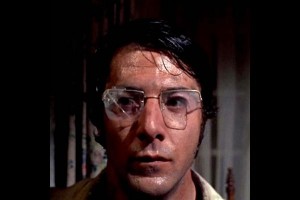
Dustin Hoffman as David Sumner in "Straw Dogs." Copyright 1971 ABC Pictures

* Some spoilers within.

I reviewed this film recently for my place of work’s monthly newsletter after seeing it for a third time.  This, coupled with the fact that a remake from director Rod Lurie will be coming out this year, has propelled me to delve a little deeper into this wonderful character study.  Each time you see a movie like this again, you find things that you didn’t see the first time or with other previous viewings.

For those of you unfamiliar with the film, it was directed by Sam Peckinpah (The Wild Bunch) in 1971 and stars Dustin Hoffman and Susan George.  Narratively, it centers on the character of David Sumner (Dustin Hoffman), a mild-mannered American mathematician, who has come to rural England to live with his newly wedded English wife, Amy (Susan George), while he works on a book with grant money.  From the beginning, David stands out as an anomaly in his newfound living environment.  He hires several locals who grew up with his wife to help rebuild his garage, which is in a state of disrepair; they laze about, stalk his wife and taunt him with jokes and cruel pranks.

As the story progresses, David and Amy’s relationship becomes more constrained due to David’s research and the pressures that ensue from the vicious taunting of the local townspeople.  Restrained frustration in David’s character builds along with that of the audience who omnisciently see further torture in a controversial scene where Amy is brutally raped by several of the men working on the garage.

The tension and frustration build at a steady pace from the very opening frames of the film and culminate in one of the most shocking, character reversals in film history in which violence is unleashed in David as he defends his home from the townspeople.  The cathartic effect of the final climatic scenes offer an interesting question as to whether the violence was fueled and born in David from his frustrations or if it was always within him from the beginning.

The complexities of character in this film are very deep on many different levels.  The first time I saw the film, I focused more on the fact that David was defending his happy home from these intruders and didn’t pick up on many of the minor nuances in his and Amy’s relationship.  In re-watching the last two times, it’s evident that David and Amy’s relationship itself is quite strained by the climax.  Rather than solely seeing David as this mild-mannered American stereotype, I picked up on many instances where there was a deep passive-agression in his demeanor and reactions.

Several of those scenes that I sensed an underlying violence were with Amy when he was trying to work.  Being bored while he works, she pesters him to a degree, even going so far as to change some of his math problems on his blackboard.  Her reactions frustrate David in several scenes to becoming quite verbally agressive.  It’s through a series of these arguments between David and Amy that we see their relationship become more and more constrained and, in turn, David’s overall demeanor more passive-aggressive.  By the time the rape scene happens, well into the film, Amy and his relationship is almost a spiteful one.

Herein lies one of the biggest points of contentions about the film.  Did Amy welcome this rape?  Well, in my opinion, I would say yes and no.  In the original moments, it is very evident that she doesn’t want the sexual agression of her former boyfriend, Charlie.  Yet, upon insistance, it seems that she actually does welcome it and enjoy the act; largely this seems due to her constrained relationship with David.  The part of the rape sequence that I think brought the scene back into her not wanting the advances is when the second man, Riddaway, comes in to have his way.  This is where the trauma of the rape scene fully sets in and where it is quite evident that she is in distress.

David never finds out about the rape.  His violence that explodes in the final scenes is an internal happening.  It’s as if everyone is against him and the only thing he has is his “home” and the violence that has always lived in him slowly boiling over.  Amy refuses to help fend off the townspeople to the point of him slapping her and restraining her to the upstairs.  This is a man that has been pushed and inched forward slowly to the point of having to turn into an animal.

I think this is evident of us all and that’s what is so powerful about this film.  We all have a level of violence that lives within us as, in reality, we are all animals that work off primal instincts at the most basic level.  It’s our conviction, beliefs and upbringing that separate us from other animal species and give us decency.  Many times we don’t know that this fire lives within us and it’s clear from the final line of the movie when Henry Niles tells David, “I don’t know my way home.”  David responds, “I don’t either” and smiles.  David didn’t know he had that level of violence inside of him; it’s a primal reaction to torture, frustration and defense of what you believe is right.

I’m sure many people will disagree with me, but this is the way I perceive the violence in the film and the characters within.  No matter how you interpret this movie, you will have a strong reaction.  For some it is a violent, repulsive opus from Peckinpah; but to me, it’s a very human film.  It shows us at our worst, our most exposed, or most primal.


The Thing (1982) Review

5 04 2011

Copyright 1982 Universal Pictures

★ ★ ★ ★

John Carpenter is a master at low budget horror and science fiction films.  Before watching this, I had seen Dark Star, Assault on Precinct 13, Escape from New York, Escape from L.A. and, of course, Halloween. With most of these films, I have been surprised at the level of enjoyment I’ve experience watching them, being that I don’t necessarily consider myself a huge fan of the genres.

The Thing is a remake of Howard Hawk’s 1951 The Thing from Another World, which itself was based on a novella by John W. Campbell Jr. called Who Goes There? This version takes place at an American research station in Antartica, where the inhabitants are currently waiting out the harsh winter.  They are alerted when a sled dog comes running to their station from across the snow-filled, empty plains; the dog is being chased by two gunmen in a Norwegian helicopter.  They kill the Norwegians for firing at their base and take in this strange dog.  The dog, in classic sci-fi nature, turns out to be an incarnation of a strange extraterrestrial life-form.

It’s a classic science-fiction tale, you have a group of guys who are fighting a strange alien life form in hopes of saving the world.  However, this film is exceptionally well done for the genre.  The tension between the characters, who don’t know which of them is still human and which has been afflicted, keeps the suspense high during the entire film.  Furthermore, Rob Bottin’s special effects in this film are top notch.  This was before the era of CGI, so all the amazing effects are done using makeup, prosthetics and camera tricks.  Sure, there are a couple shots that look a little hokey, but all in all, the effects in this film really sell.

The all male cast is headed up by Carpenter favorite, Kurt Russell, who plays the usual rogue-like character that he seems to excel at.  There’s also a lot of familiar faces in the supporting cast who, you may not know by name, but definitely would know the face.  Supporting characters include Wilford Brimley, Donald Moffat, Keith David and Richard Dysart.  All the cast do a fine job.  These aren’t Oscar worthy performances by any means, but for the story, it’s a perfect group of actors for what was needed.

For those of you who like happy endings and upbeat stories, this is not a film for you.  If, however, you like a thrilling science-fiction film that presents the bleak realities of a possible apocalyptic disaster, then they don’t get much better than this.  This is the type of film Carpenter was born to make.  Upon it’s release in 1982, this film didn’t do very well at the box office and that’s a real shame, because I think it’s a fine example for this genre.


5 Silent Films You Must See

3 04 2011

I love silent films, I really do.  Honestly, I feel like we lost an artform in and of itself when sound came in and totally redirected the entire process of filmmaking.  Unfortunately, many didn’t realize that silent filmmaking and sound filmmaking, though both forms of cinema, were very different in their execution and style.  It’s a shame that both couldn’t co-exist; but as with anything, when something new comes along, the predecessor usually disappears over time.

Many of my friends and colleagues hate silent films (which amazes me how we are still friends/colleagues).  They can’t stand the black and white or the fact you have to read title cards or the jerky motion (which is not due to the films themselves but the haphazard projection and transfer rates we have shown them at in recent years), melodramatics of some of the dramas or slapstick silliness of some of the comedies.

Yet, there are many, many wonderful silent films.  Films that many people won’t even give a chance because of some strange discrimination against them.  So, I’m here to give a starter kit, so to speak; films I can see as being fairly available and enjoyable to the mass audience.  If you watch these five recommendations and still can’t stand silent films, then I can at least give you the “e” for effort.  I still might not understand it, but it will appease my unrest.  Anyway, gear up your netflix queue or drop by the local video store and start here:

5.  Battleship Potemkin dir. Sergei Eisenstein (1925) – If you have ever read a book on film or taken a film class in college, then I’m sure the name Eisenstein is somewhat familiar to you regarding his landmark theories on movie montage.  Eisenstein, outside of his work as a theorist, was even more so a renowned Russian filmmaker.  Wait, what?  You are not only recommending silent films, but foreign ones at that!  Yes, but remember, we are in the silent realm, so the foreign part doesn’t really matter much.

So, what’s this film about?  Well, it’s a propaganda film that dramatizes the mutiny that took place aboard the battleship Potemkin in 1905, during the Russian revolution.  Sounds a little heavy handed from the description, I know.  However, if you can give this film a chance, I don’t think you would regret it.  The style, form and use of his much theorized montage theory creates an exciting and entrancing film.  It will shock you that this film is nearly 90 years old because it will be completed and satisfying before you even realize you just watched a silent film.  Furthermore, once you watch this film, let me know all the movies you can think of who have directly ripped off the Odessa Steps sequence.

4. The General dir. Clyde Bruckman and Buster Keaton (1926) – I’m sure most of you have heard of Charlie Chaplin, he’s been pretty ingrained in pop culture even to this day.  Well, Chaplin was one of three comedians who dominated silent comedies.  The other two were Harold Lloyd (none of his films on this list, but try Speedy or Safety Last for a good taste of his style) and our star of this film, Buster Keaton.  Keaton was referred to as “Old Stone Face,” and if you give this film a chance, you will see why.

This film is set during the American Civil War and has a fairly simple premise.  Keaton, who plays railroad engineer Johnny Gray, has two loves in life – one is his train, The General (title cue), and the other is Annabelle Lee (Marion Mack).  When the Civil War breaks out, he goes to sign up for the Confederate Army, but is rejected because of his critical role in working for the railroad.  Annabelle and her father are let down immensely and feel he is a coward, not understanding the true reason he was rejected.  A year into the war, Annabelle’s father is wounded.  On a trip to see him aboard the General, Union spies sabotage the passengers and steal the General and take Annabelle Lee hostage.  The rest of the film is Gray proving himself as an unsuspecting hero, a feat that no one does as expertly as Keaton.

The acrobatics and physical comedy that Keaton performs in this film are absolutely breathtaking.  The entire film is a joy to watch and has as much action, intrigue and suspense as anything created today (much of the time, more so).  The only difference is that all those stunts are actually Keaton himself doing them, not a stuntman or CGI handy work.  This is real filmmaking, real locations, real stunts, and all that, makes one hell of a great film.

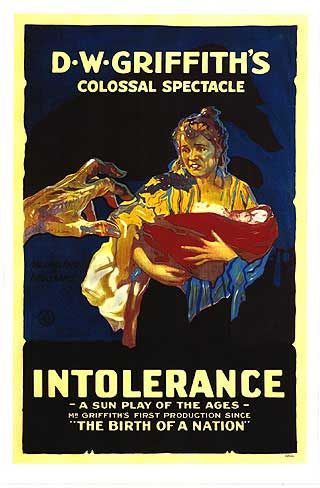
3. Intolerance dir. D. W. Griffith (1916) – I’m sure the name David Wark Griffith probably rings a few bells.  Most of you probably know him for creating what is by-and-large considered the first full-length, modern feature (it wasn’t, but hey, the guy did a lot of amazing things for filmmaking, so I don’t mind credit here) with his controversial film The Birth of a Nation.

Well, after The Birth of a Nation received so much negative feedback, D.W. decided to make a film in retaliation that would even outdo himself.  The result was this film, Intolerance. If you adjust inflation into the mix, it is the most expensive and grandest motion picture ever made.  Yes, that’s right, the most extravagant motion picture ever made is a film that was produced just 20 years into cinema’s existence.

The film deals with varying degrees of intolerance by analyzing four main stories in four different eras: The Babylonian Period and the fall of Babel, the events surrounding the crucifixion of Jesus Christ, The French Renaissance and the failure of the Edict of Toleration and a modern day (1914) story concerning workers rights and the oppression of the everyday American.  A common motif, the “Eternal Mother” (Lilian Gish), artistically serves as a seque between the four different stories.  To go much further into the synopsis of this film would get pretty convoluted and probably just be confusing to you.  In other words, watch the film!

When I saw this film for the first time, it shocked and awed me more than any present day movie I’ve ever seen.  The masterful precision that Griffith used to make this film in scope of story, cinematography, direction, set design and editing between the four time periods is mind blowing.  There are few films like this from any era.  Make sure you have a long afternoon for this one though, as it’s the longest of the five recommendations at 197 minutes for the full version.

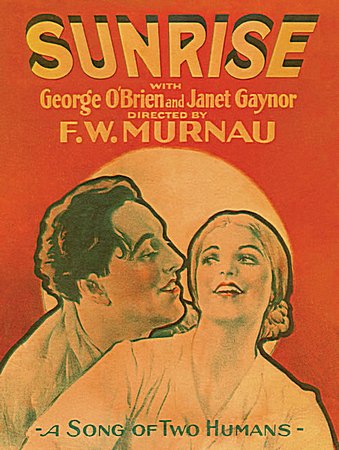
2. Sunrise: A Song of Two Humans dir. F. W. Murnau (1927) – Murnau, a native of Germany, was already extremely well-regarded in his homeland before coming to the United States.  He came to Fox Studios in 1926 to make his first American picture, and this was the film he made.

The film follows the story of a man (George O’Brien) and his wife (Janet Gaynor), whom have a young child.  The man (yes, there are no actual names), is having an affair with a Woman of the City.  One night, while frolicking near the river, the Woman of the City insists the man should murder his wife and make it look like an accident, so that they can live together.  The man is reluctant, but ultimately agrees.  The next day, he and his wife prepare for an outing to the city.  He attempts the murder, but can’t actually pull it off.  He and his wife then continue on to the city and renew the pervious glory of their relationship.  On the way home, however, a strong storm hits and fate seems to bring their worlds into disarray on its own terms.

Sunrise is as human as a motion picture can get.  The lead characters have no names other than “the man” and “his wife.”  Yet, the story itself is so deep, moving and real that you really don’t need a specific identity for these characters.  In regards to direction and cinematography, this film was way ahead of its time.  Murnau took liberties in not only shot selection, but even in title transitions, that were experimental and progressive.  Charles Rusher and Karl Struss co-shot the film, ultimately winning the first Academy Award for Best Cinematography for their combined efforts.   The in camera tricks, lighting and complexities of shots still don’t fail to amaze the eye.  Sunrise is, quite simply, a brilliant, moving film that I feel anyone can enjoy on the most basic level.  Every part of this film just works, and for the joint efforts of cast and crew, it was awarded an Oscar for “Unique and Artistic Production” as a special category.
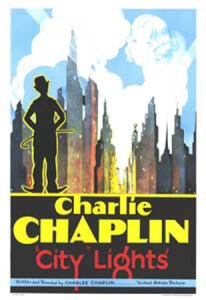
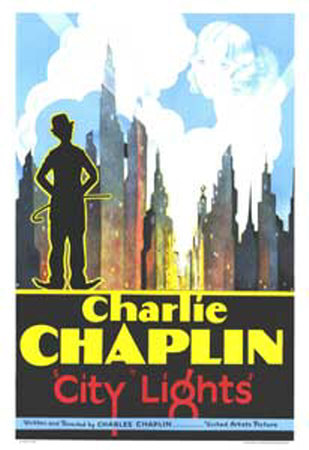
1. City Lights dir. Charles Chaplin (1931) – With the advent of sound in 1928 with The Jazz Singer, silent films started to dwindle.  By the time this film was released in 1931, silent films were generally a thing of the past.  However, Chaplin, one of the greatest stars of the silent era, insisted on keeping this film silent, because he didn’t feel that the world was ready to hear his eternal waif, the Little Tramp, speak.

A master at blended comedy and drama, Chaplin produced a film that continues to bring a world of emotions some 80 years after its release.  The story revolves around Chaplin’s character of the Little Tramp, who falls in love with a poor, blind flower girl (Virginia Cherrill).  Through a hap circumstance, she believes that he is a millionaire and can help her and her mother in their desperate time of need.  Determined to help, he befriends a raucous, party-driven millionaire and does everything he can to help the flower girl and her mother.  In the end, he helps them and she is able to get an eye operation that restores her sight.  But, will she be able to accept the Tramp for his true self?

City Lights is, in my opinion, the best Chaplin film.  It combines all the elements that made him so legendary in perfect array, and being someone who has seen all of his features and most of his shorts, I feel like I have a pretty good judgement in Chaplin’s filmography.  This is a beautiful, moving film that I couldn’t see anyone watching and not thoroughly enjoying.  If there is one silent film that you are willing to give even the slightest chance, then this is the film that I think you should see.  It’s comedy, it’s drama, it’s Chaplin.


Pietro Germi: Unknown Master of Italian Cinema

1 04 2011

Pietro Germi - Italian Film Director

When you think about Italian cinema, several names generally come to mind: Fellini, Visconti, de Sica, Bertolucci and possibly even Benigni.  One name that is rarely mentioned in cinema circles, but whom is one of my favorite Italian directors, is Pietro Germi.  Germi, unlike some auteurs, was able to expertly master the mechanics of both comedies and dramas, while all the time keeping his own style evident throughout.  Even a couple years ago as Wikipedia was becoming very popular, Germi still hadn’t an article on his life and career.  The article that is currently live for him on the site is one that I took the time to write myself.

Germi was born in Genoa, Italy in 1914.  After a brief excursion into nautical school, he decided to enter the film industry.  He attended film school in Rome and performed many functions on various sets including acting, assistant directing and occasionally writing during his youth.  His first film as a director was The Testimony in 1946.  Following this film, he released a film every year or two for the next 25 years as a director and, more often then not, served as either writer or co-writer as well.

Germi’s first films were in the Italian neo-realist style with a deep rooting in dramatic content.  For those of you who are unfamiliar with the neo-realist style, it generally covered topics that were true-to-life and the protagonists were generally the everyman type.  In addition, the films were generally shot in natural locations as opposed to shooting in a studio and the cinematography and direction had a grittier, more realistic style to it than a polished Hollywood film.  Most all of his output during the 1950s was in this style and focused on dramatic content, though he would later be more known for his comedic efforts.  Just to give you a Germi starter kit so to speak, I’ll recommend three of his films that I feel will get you on your way to either liking or deciding that Germi’s work is not for you.

One of my favorite films from Germi’s dramatic material is 1956’s The Railroad Man. In addition to writing and directing, Germi also played the lead role of Andrea Marcocci.  Andrea is, as the title suggests, a railroad worker.  He is happy in his career and spends many a night drinking with his fellow workers after getting off the job.  However, after nearly colliding with another train while trying to avoid someone attempting suicide on the tracks, Marcocci is laid off.  Further misfortune begins to complicate his life after this incident, and between his problems at work, his drinking and troubles in his family life, Marcocci’s mood gets more and more despairing.  However, his youngest son Sandro (Edoardo Nevola), wants to help his father and through Sandro’s love and support his father is able to find some form of peace.  The film is a complex study of the everyman through the life of this common railroad worker.  It touches on the human emotion on every level throughout the film and is an outstanding example of the Italian neo-realist style.

"Divorce, Italian Style" - 1961

In 1961, Germi moved into comedic material and would stay in this genre for the majority of his career following.  The film, Divorce, Italian Style, would be his greatest success, winning him a Best Original Screenplay Academy Award and garnering a nomination for Best Director.  The film tells the story of Sicilian nobleman Ferdinando Cefalù, played with precision by famous Italian actor Marcello Mastroianni, who hopes to marry his beautiful cousin Angela (Stefania Sandrelli).  The problem, however, is that he is already married to Rosalia, and in Sicily at the time it was illegal to get a divorce.  Determined to succeed, Ferdinando tries to manipulate a plan to get his wife caught up in an affair; then, when he “finds” her in the act, murder her and only receive a short sentence for an honor killing.  Mastroianni is brilliant in the part of Ferdinando and the film overall has amazing timing for comedic effect.  Following the international success of this film, many Italian comedies of the 1960s tried to emulate Germi’s style and there were a few direct off shoots of this movie.

The last Germi film I’ll go into detail on is his 1963 film Seduced and Abandoned.  It directly relates in style and mood to his previous film Divorce, Italian Style. Agnese Ascalone (Stefania Sandrelli) is the daughter of a prominent Sicilian miner, Vincenzo.  She is found in the kitchen by Vincenzo and her mother being seduced by her sister’s fiancee, Peppino.  To uphold strict Sicilian mores, Vincenzo demands Peppino marry Agnese instead.  The  resulting demand leads the story through one hilarious situation after another.  Saro Urzi, who plays Vincenzo, was perfect for this role as the frustrated, comical patriarch.  In America, he is probably best known for playing Signor Vitelli in Francis Ford Coppola’s The Godfather.

Unfortunately, Germi would pass in 1974 from hepatitis at the age of 60.  His last film was the mediocre Alfredo, Alfredo with Dustin Hoffman and favorite muse Stefania Sandrelli.  There are many other films in this brilliant Italian director’s repertoire worth seeing, but if you just want a tast of his comedic and dramatic style, then I feel these three films are a good place to start.  In my opinion, Germi’s abilities as a writer and director were as reputable as any of the other illuminaries of Italian cinema and hope his work will reach a wider audience in years to come.


Boyz N the Hood (1991) Review

31 03 2011

Copyright 1991 Columbia Pictures.

★ ★ ★ ★

I know I’m a little late on this one, but last night was the first time I have ever seen this film.  Honestly, it was a lot different then I had always imagined it to be; I thought it would be a glorification of gang life and filled with extreme violence.  However, much to my surprise and delight, this film actually takes an extremely strong stance against violence and hate in the streets.

Boyz N the Hood is the debut film of then 24-year-old writer/director John Singleton.  It follows the story of Tre Styles (Desi Arnez Hines II, young; Cuba Gooding Jr., older) and his life as a teenager growing up in south central Los Angeles.  Styles, whose father (Lawrence Fishbourne) is a strict, yet caring man that works towards instilling good ideals in his young son, encounters many conflicts resulting from the rough and violent neighborhood he grows up in.  Determined to get out of Los Angeles, he tries his best to not get caught up in gang violence and petty theft like his friend and neighbor, Doughboy (Ice Cube).  Likewise, Doughboy’s brother Ricky (Morris Chestnut), a star high school football player, is trying to get out of the hood without involvement in the criminal activity surrounding.  In the end, some of the characters make it out and some end up spending the rest of their lives in the hood or die there on the streets.

I was impressed with the film overall, it highly exceeded my expectations.  In honesty, my background is about as far from south central L.A. as you could possibly get, so I was a bit concerned whether I could relate to the story before watching.  It turned out to be a solid, relatable story on a thematic level to almost anyone though I think.  No matter where you come from, most people have dealt with adversity and decisions they have to make to provide a better life for themselves.  Of course, most people’s adversity and life decisions aren’t as dramatic or impending as the ones that Tre has to make.

Outside of launching a career for director John Singleton, this film also helped launch the careers of many of the young African-American cast members including Gooding Jr., Ice Cube and Chestnut.  The entire cast was top notch in this film and it’s hard to imagine anyone else playing these roles.  The direction and pacing throughout were very well handled, especially considering how young director Singleton was at the time of filming.  My only complaint is that the film bordered on being too preachy in several scenes.  In one scene in particular, Tre’s father, Furious, takes Tre and Ricky to Compton and gives a heavy handed lecture on gentrification.  It’s important information that Singleton was wanting to convey to the young audience, but it came across like an infomercial and didn’t really propel the story at all.  Outside of several instances like this, I felt the story overall was well balanced, entertaining and informative.

This landmark film in urban cinema basically created the blueprint for many films to come.  It was one of the most successful films commercially in 1991 making almost 10 times it’s budget at the box office.  In addition, it was critically well-regarded and garnered Academy Award nominations for Best Director and Best Original Screenplay for John Singleton.  The only thing that is a shame is that many young people have idolized the lifestyle of characters like Doughboy and tried to replicate that style in their own neighborhoods.  If you truly understand this film, you will know that this is the exact opposite response that Singleton wanted viewers to leave the theater with.  The final titles have the moral of the story spelled out for you – “Increase the Peace.”


Anticipated Release: The Rum Diary

30 03 2011

Johnny Depp as Paul Kemp in "The Rum Diary." Copyright 2011 GK Films, Infinitum Nihil and Film Engine.

It was revealed yesterday that writer/director Bruce Robinson’s adaptation of Hunter S. Thompson’s The Rum Diary will be released theatrically through FilmDirect.  The film, which stars Johnny Depp, Aaron Eckart and Amber Heard, is set for an October 28, 2011 release date.

I can’t tell you how excited I am about seeing this film.  For those of you who are unaware of who Bruce Robinson is, he directed the seminal British comedy classic Withnail and I (one of my favorite comedies of all-time).  Following the success of Withnail and I in 1986, he has only directed two other pictures: How to Get Ahead in Advertising and Jennifer Eight. This is his first release as a writer/director since 1992 and, even though his two latest films weren’t as well-received, this new project has some amazing source material and a great cast to accompany.

The Rum Diary, the book, was written by acclaimed gonzo journalist Hunter S. Thompson in the early 1960s (though unpublished until 1998).  It was his second novel following the still unpublished Prince Jellyfish. Like many books by a young writer (Thompson was 22 at the time of writing), it is a semi-autobiographical piece dealing with his time in San Juan, Puerto Rico in 1960.

According to the press release from New York yesterday, the story “…tells the increasingly unhinged story of itinerant journalist Paul Kemp (Depp). Tired of the noise and madness of New York and the crushing conventions of late Eisenhower-era America, Kemp travels to the pristine island of Puerto Rico to write for a local San Juan newspaper run by the downtrodden editor Lotterman (Jenkins). Adopting the rum-soaked lifestyle of the late ‘50s version of Hemingway’s “The Lost Generation,” Paul soon becomes entangled with a very attractive American woman, Chenault (Heard) and her fiancée Sanderson (Eckhart), a businessman involved in shady property development deals.  It is within this world that Kemp ultimately discovers his true voice as a writer and integrity as a man.”

Now, as with any film, there is a possibility that there could be a let down, but this film seems to have some pretty amazing things going for it and I can’t wait until it comes out.  Bruce Robinson adapting a Hunter S. Thompson film starring Johnny Depp  – that just sounds like magic on screen to me.


Missing (1982) Review

29 03 2011

Copyright 1982 Universal Pictures

★ ★ ★ ★ 1/2

Missing is a 1982 film by Greek writer/director Costa-Gavras.  Like many Costa-Gavras films (Best Foreign Film Winner Z, State of Seige, Music Box), it blends strong political overtones with an interesting and exciting story.  In some films it is difficult for this blend to work without getting preachy or heavy handed, but in Missing, it works beautifully.

The film is based on the true life events surrounding the 1973 coup d’états by General Augusto Pinochet (though the film never actually mentions his name).  Charles Horman (John Shea) is a freelance American journalist temporarily residing in Chile with his wife, Beth, before the coup.  His work in Chile, outside of personal projects, was for a liberal leaning newspaper and, in addition, Horman kept extensive notes on the situation involving both Chilean and American involvement in political matters.  While on a short trip to Vina del Mar with a friend from America who is visiting, Terry (Melanie Mayron), Horman hears of the coup that is rising in Santiago.  He rushes to get back to his wife and, on the way home, notices the military brigades, strict curfew laws and dictatorial rule that is taking over the city.  Once home, Beth wants to leave the country immediately; however, all air transportation has been suspended.

In the days following, Beth and Charles get separated from each other.  When Beth comes back to her hoouse in Santiago, she finds it in shambles and can’t find Charles anywhere.  Charles father, Ed Horman (Jack Lemmon), come to Santiago to help find his son who, by the time he arrives, hasn’t been heard from in over two weeks.  The rest of the film deals with the search for Charles by both Ed and Beth.  Ed, a Christian Science conservative, seems to have never really had a deep relationship with his son over their opposing views.  Yet, in the search, it shows how deeply he loved his son and how he wants justice.  Whether they find Charles or not, I will leave open so that it won’t spoil the ending of the film.

The story and direction by Costa-Gavras is top notch.  His ability to make an entertaining film out of such politically infused material is amazing.  The pacing, the shot composition and overal mood for the film is perfect for this story.  Jack Lemmon, what can you say?  This is a man who no matter what role he takes, shines and brings something special to a performance.  I’ve seen many Jack Lemmon films and never once have I seen one where he didn’t amaze me with his abilities as an actor; this film is no different.  His restrained emotion and no-nonsense attitude towards the whole situation, but deep underlying hurt for the disappearance of his son, is so nuanced and perfect for this role that it is hard to see anyone else playing the part.  The rest of the cast works for their roles; however, Sissy Spacek felt a little out of place to me in this film (though she was nominated for a Best Actress Oscar for her role).  Other Academy Award nominations included Lemmon for Best Actor in a Leading Role, Best Picture and Best Adapted Screenplay for Costa-Gavras and Donald Stewart.  Stewart and Costa-Gavras would take home the award for their screenplay.

This is an eye opening film that draws you in on almost every level.  I had never heard about the coup in Chile, so for me, I was quite interested to continue research on the events that took place after watching the film.  As a filmmaker, what more can you ask?  A satisfied, entertained viewer that wants to continue to learn about the topics surrounding the true story you’ve depicted.


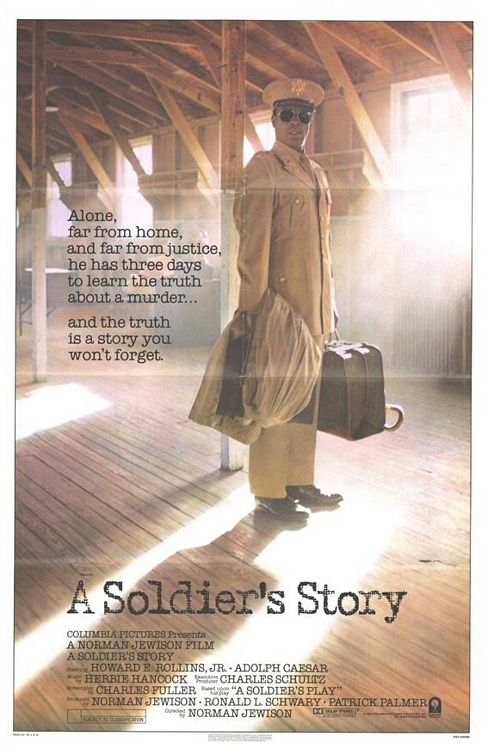
A Soldier’s Story (1984) Review

28 03 2011

Copyright 1984 Columbia Pictures

★ ★ ★ ★

A Soldier’s Story is a 1984 film directed by Norman Jewison.  It is based on the Pulitzer Prize-winning Off-Broadway play A Soldier’s Play by Charles Fuller.

The film centers around the murder investigation concerning an African-American sergeant on a military barracks in Louisiana near the end of World War II.  The victim, Sergeant Waters, is played by Adolph Caesar in an Academy Award nominated role.  He is a found on the side of the road with two .45 caliber bullets in his chest and there is a lot of turmoil over the case due to concern over a race war if it’s found that a white officer had murdered Waters.  To investigate, the army sends a Captain Davenport (Howard E. Rollins) from Washington, D.C.  Davenport, who is a trained lawyer and the first black officer many people at the barracks have ever encountered, presses through racism, deceit and conflicting stories to try to get to the bottom of what happened to Waters.  It is found through multiple interviews that Waters was not that good of a person in general and one who seemed to have many issues concerning his feelings towards both white and black people.  The story unfolds to find a much deeper than originally expected motive in the case concerning Waters’s murder.

Jewison, as a director, is well suited for a script of this nature.  Prior to this film, he had directed films such as In the Heat of the Night and …And Justice for All, both of which make strong statements towards equality and justice.  His handling of delicate issues is always done with a certain air of dignity which really works well for this type of film.  The script is obviously based on a stage play, as the structure is very much limited to certain locations and the majority of the narrative is based around the series of interviews that Davenport conducts.  However, though the structure of the story is confined somewhat to its stage beginnings, the execution of the film helps show more than tell some of the interview sequences and keep the viewer interested in what is happening.

The majority of the film’s actors are African-American and all of them do wonderful jobs in their respective roles.  Early appearances of celebrities such as Denzel Washington and David Alan Grier are made throughout the film.  Caesar, who plays Waters, as earlier mentioned was nominated for Best Supporting Actor for this film for which I guess I found deserving.  There was nothing spectacular to me about his performance aside from a few select scenes, but all in all it was a solid portrayal of the character.  In my opinion, however, if anyone from the film deserved a nomination, it would be Denzel Washington as Private First Class Peterson.  I felt like every second of his time on screen was entrancing and it’s no wonder from this early role that he developed into such a wonderful, well-respected actor.

I would definitely recommend this film to anyone.  It’s one of those films from the 1980s that seems to kind of evaporated a bit over time as far as public knowledge, but who’s story and performances make it a definite must see for anyone who enjoys films with justice and equality as a strong thematic motivator.


The Tourist (2010) Review

27 03 2011

Copyright Sony Pictures Entertainment 2010

★ ★ ★

The Tourist is the sophomore effort of German director Florian Henckel von Donnersmark.  His debut film, Das Leben der Anderen (The Lives of Others), in 2006 was one of the best films of that year and won countless awards including the Oscar for Best Foreign Language Film.  Needless to say, I think anyone anticipating this movie had high hopes.  It was a chance for this brilliant director to work with two of the world’s foremost leading actors and with a budget 50 times that of his debut film.  Unfortunately, it seems that something was lost in translation.

The film focuses on the girlfriend  (Angelina Jolie) of a man named Alexander Pierce, whom has stolen several billion dollars from an English gangster (Steven Berkoff).  Law enforcement organizations from all over the world are trying to locate him for back taxes in the neighborhood of $800 million, primarily the British government.  So, in hopes he will make contact with Jolie’s character, they keep a very close watch on her at all times.  As a diversion, she pawns the Interpol official into thinking unsuspecting American math teacher Frank Tupelo (Johnny Depp) is Pierce (as Pierce has supposedly had a multi-million dollar facial reconstruction recently).  Without giving too much away, the plot goes back and forth in much the manner of a Cary Grant vehicle such as Charade. While trying to keep action and suspense high, there are the ever-present moments of comedic effort and surprise.

The problem is, however, that Depp’s character doesn’t sell the same charisma that Grant was able to pull off and, in turn, Jolie doesn’t have the same cool style that Audrey Hepburn exuded in similar roles.  I really appreciate the ode to those wonderful films of the 1950s and 1960s and The Tourist has some really interesting parts to it, but the execution just doesn’t work.

I know this sounds like a pretty bad review, but I wouldn’t say that the film is not worth watching.  It’s not a terrible film by any means, it’s just with the talent involved, the script and the budget accompanying, I feel like a much better product should have come out in the end.  Every major director has their hits and misses, so I don’t want to lambast Donnersmark much for making a film that didn’t live up to my expectations.  I hope his next effort is closer to the glory of Das Leben Der Anderen, but in reality, I think any director would be happy to have just one film of that caliber to their name in an entire career and Donnersmark, at 37, can’t complain with his current track record.