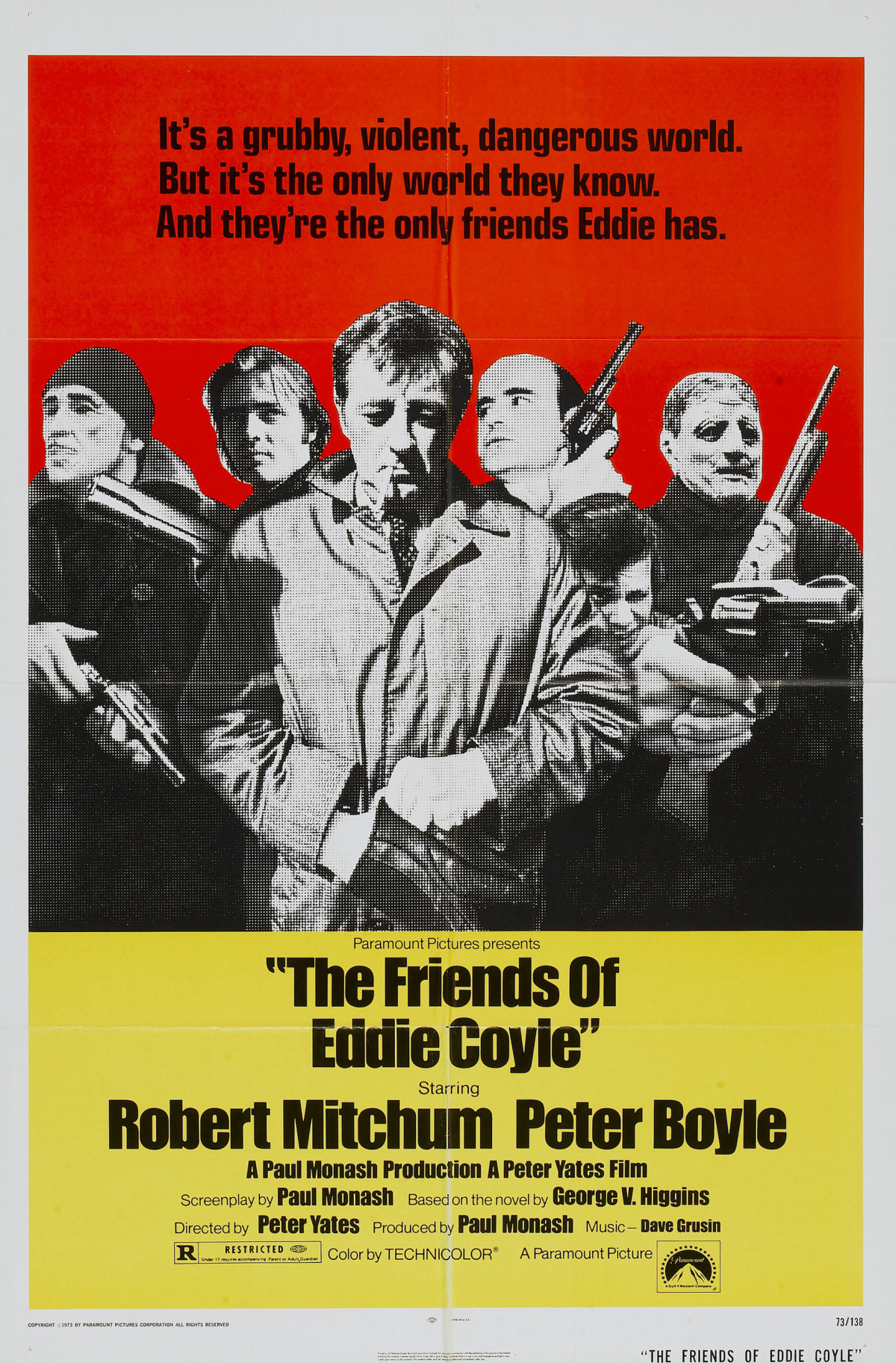
Directors who Started in Other Departments – PART II

25 03 2011

As we move into the second part of this series, we will focus on directors who originally started as cinematographers.  The focus again will be prominent directors who were prominent cinematographers, which excludes one-timers like Christopher Nolan on Following or Gordon Willis’s one foray into directing with 1980’s Windows. Being a cinematographer first and foremost and having recently directed a short of my own, this entry in the series will be the closest to home for me.  As one of the more well known cinematographer-turn-directors, Nicholas Roeg, quoted about directing, “And later I thought, I can’t think how anyone can become a director without learning the craft of cinematography.”

The Cinematographers:
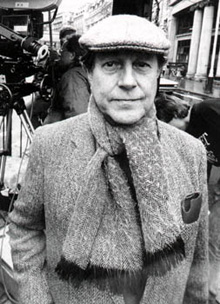
Nicholas Roeg (1928- ) – Roeg began his career in the early 1950s as a clapper-boy, quickly moving up to camera operator by the end of the decade.  In the early 1960s, he continued to work as a camera operator and also had the opportunity to shoot 2nd unit photography on David Lean’s epic Lawrence of Arabia under head DP Freddie Young.  He moved into the role of cinematographer during the 1960s as well, shooting such stark classics as The Masque of the Red Death and Farenheit 451, as well as lighter material such as A Funny Thing Happened on the Way to the Forum. His first film as a director came in 1971 with his breakthrough debut Walkabout, a film he also took a cinematography credit on.  His directing career would continue with my personal favorite of his Don’t Look Now, the eerily surreal Man Who Fell to Earth with David Bowie and Insignificance. After the mid-1980s, his output became more sporadic though he has continued to make films as a director, his latest being in 2007.

Andrzej Bartkowiak (1950 – ) – Bartkowiak trained at the esteemed Polish Film School in Lodz, Poland where many well-known Polish and international directors and cinematographers train.  He immigrated to the United States in 1972 and began working in commercials before working on his first feature as a cinematographer, Deadly Hero. His real recognition, however, came in a series of films he shot with one of my favorite directors, Sidney Lumet.  Bartkowiak’s first film with Lumet was the dark cop tale Prince of the City, and followed this with Deathtrap, The Verdict and Daniel with Lumet.  Other notable films as a cinematographer include Oscar winner Terms of Endearment, Prizzi’s Honor, Twins and The Devil’s Advocate. Bartkowiak moved into directing with Romeo Must Die; his following films as director have all been in the action film genre.  He spent the entire decade of the 2000s directing, though it looks like he is moving back into the cinematographer’s seat for the upcoming Joel Schumacher film Trespass.
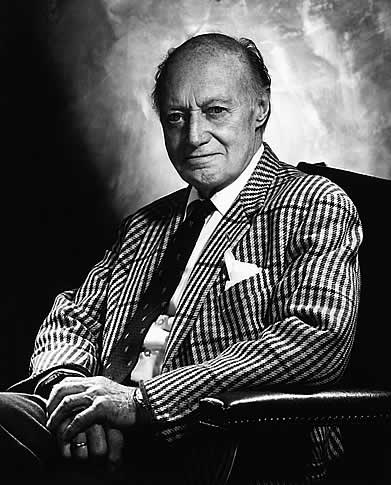
Jack Cardiff (1914-2009) – Cardiff is, in my opinion, one of the best cinematographers who has ever lived.  His work in early Technicolor is astounding and his ability to manipulate hues to fit the perfect mood for the story is astounding.  Cardiff began his career as a clapper-boy (in the camera department at least, he originally began as a child actor) and moved into being a camera operator a few years later.  His work as operator on Pressburger and Powell’s The Life and Death of Colonel Blimp, led to a relationship with the two directors that would later allow him to be the cinematographer on two of their best known films, Black Narcissus and The Red Shoes. He won an Academy Award for the former.  Following Oscar nominations included War and Peace in 1956 and Fanny in 1961.  His first feature as a director was Intent to Kill in 1958; his most well known feature, however, was Sons and Lovers in 1960.  Sons and Lovers was nominated for seven Academy Awards including a nomination for Cardiff as director.  Coincidentally enough, fellow cinematographer-turned-director Freddie Francis shot Sons and Lovers and received his first of two Academy Awards for it.   Cardiff continued to direct intermittently into the 1970s, but it seems his true passion was his first love of cinematography; this he continued to do into his 90s with shorts and documentary subjects.

Ernest Dickerson (1951- ) – Dickerson began his career shooting music videos and, as a cinematographer, is probably best known for his collaborations with Spike Lee on such films as She’s Gotta Have It, Do the Right Thing, Mo’ Better Blues and Malcolm X. The same year he shot Malcolm X, he began his career as a director with the film Juice. After several features in the 1990s, Dickerson as has gone on to become a prolific television director.  His television directing credits include episodes of E.R., Heroes, The Wire, Weeds, Burn Notice, Dexter and The Walking Dead, among many others.

Freddie Francis (1917-2007) – Francis spent a short time as a camera assistant in the 1940s before becoming a camera operator and operating through the mid-1950s.  At this point, he began his career as a cinematographer and would go on to win an Oscar for Jack Cardiff’s Sons and Lovers in 1960 for Best Black-and-White Cinematography.  Following his win, he only shot a few more films before moving into directing with 1960’s Two and Two Make Six. Though most of his directing career was limited to horror and low-budget features, Francis said in an interview, “I got a lot of fun out of being a cameraman, but obviously directing is more interesting. One thing wrong with being a cameraman in Britain is that from the financial point of view you have to keep working all the time and you often have to work with people whose work, frankly, doesn’t excite you. When I got the opportunity to direct I decided to try it and if I wasn’t excited with what I did, well, that would be my own problem and no one else’s. But basically I love making films. If someone asked me now to photograph a film I still would.” (1976).  Interestingly enough, he did return to cinematography in 1980 with the popular film The Elephant Man. This return to cinematography must have revitalized his interest greatly as he continued to shoot films from then until his final feature Straight Story in 1999.  In his second wave as a DP, he would win another Academy Award almost 30 years after his first for the 1989 film Glory.
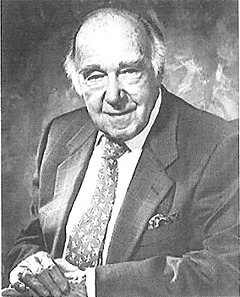
Ronald Neame (1911-2010) – Neame’s credits as a cinematographer were fairly extensive through the 1930s with Happy until the mid-1940s with David Lean’s Blithe Spirit. His directorial career began in 1947 with Take My Life. He continued his varied career as a director until the short The Magic Balloon in 1990.  His most known films as a director include 1960s Tunes of Glory (his personal favorite film of his own), The Prime of Miss Jean Brodie, Scrooge and The Poseidon Adventure. Over his career he received three Oscar nominations which, oddly enough, were not for cinematography or direction; they were two for writing and one for special effects.
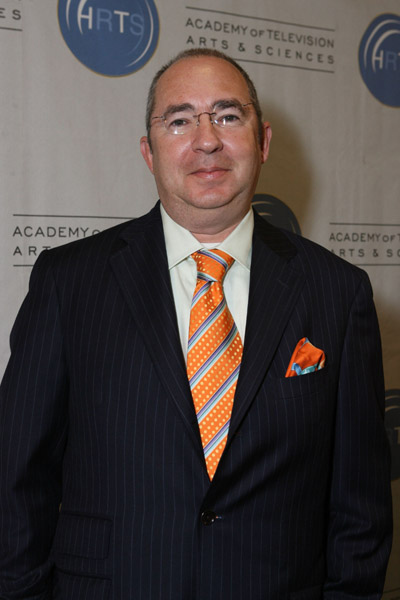
Barry Sonnenfeld (1953- ) – Sonnenfeld is probably best known, in cinematography at least, as being the Coen Brothers’ first regular DP before their longtime collaboration with British Cinematographer Roger Deakins.  His credits with the Coens included their debut Blood Simple, Raising Arizona and Miller’s Crossing; other notable credits as a cinematographer are When Harry Met Sally…, Misery and Big. He moved into directing in the early 1990s with the first Addams Family movie and continued with the sequel, Get Shorty and both Men in Black films, among others.  He also dabbled in television with the creation and an Emmy award for the television show Pushing Daisies.

There are certainly other cinematographers who moved into direction from shooting, but none so with the success of these listed.  An honorable mention for this category can be Steven Soderbergh who shoots many of his own films under the pseudonym “Peter Andrews”.  However, I have never been a huge fan of Soderbergh’s personally shot movies and being that he didn’t actually begin as a cinematographer, I can’t add him to the main list.  Another honorable (much more so than Soderbergh) mention is Stanley Kubrick who began as a stills photographer for such magazines as Look! in the 1950s and shot his first film Fear and Desire.  Rumor has it Kubrick was also largely responsible for shooting Spartacus after not agreeing with Director of Photography Russell Metty on the look of the film.  As an interesting side note, Metty won an Oscar for Best Cinematography for Spartacus.


Timecrimes (2007) Review

24 03 2011

Copyright 2007 Magnolia Pictures

★ ★ ★ ★

I will be the first to admit that I am a sucker for movies that deal with time travel.  Ever since I was a child the concept has interested me and I am always immediately drawn to watch any movie, read any book or play any video game that revolves around the idea.  When I was cued in to this movie from a co-worker, I immediately put it on my instant queue on Netflix and am very glad I did.

The film is the debut feature from Spanish director Nacho Vigalondo, who had previously received an Oscar nomination for his short musical film 7:35 a.m. (which is conveniently located in the Special Features section of this film in its entirety).  The story focuses on the character of Hector who has just bought a new home in the Spanish countryside with his wife Clara.  When Clara goes to get groceries from the local store, Hector is left sitting in the back yard with his binoculars looking over the lush, mountainous landscape.  Something he spots through his binoculars leads him to further investigation which, in turn, spawns a series of events that lead him to a research facility containing a time machine.  Without giving too much away, the film contains many intricacies dealing with the problems of time travel, primarily the causation paradox.

Being a primarily plot-based film, character building is minimal.  However, for the type of film that it is, I didn’t feel like it detracted much from my viewing experience.  Films that deal with dreams, time travel or other complex happenings have to spend a certain amount of running time explaining the theory behind the plot motivation and, to me, this almost becomes a character in itself.  And, let’s face it, when we go to see or rent a film that deals with one of these complex topics, we are specifically watching for the mind bending phenomena of the plot, so it’s hard pressed for me to get too excited about two dimensional characters.

Timecrimes is a low budget feature.  There is nothing really flashy about the photography, set design or locations.  It’s a breath of fresh air in this era of filmmaking to see something that is organic like this though.  Everything you need for the story to be conveyed is in place and works smoothly without extra millions being thrown into digital effects.  Granted, I strongly oppose most digital effects in movies unless it is absolutely pertinent to the telling of the story.  I feel too many films over the past 10 years have worried more about their effects value then about how well the story structure evolves.

In conclusion, if you get a chance to catch this one, I would definitely recommend it.  If you are a time travel junkie like myself, then it is a must see and you need to sign on to Netflix or go by the local video store and get it right now.  Vigalondo’s sophomore effort will be coming out soon entitled Extraterrestre. I hope this budding director continues to make films as good as this one, because if so, then he’ll definitely be someone to keep an eye on over the next few years.


Remembering Elizabeth Taylor (1932-2011)

23 03 2011

Elizabeth Taylor, one of the few true living Hollywood legends passed away today at the age of 79 from congestive heart failure. Having been ill for the past several years, she had spent the last month in a Los Angeles hospital. Taylor, who began her acting career as a child actor in the 1940s, went on to win commercial and critical acclaim as an actress, as well as becoming an astute business woman.

Her film career encompassed a nearly 60 year span and included classic films such as Giant, A Place in the Sun, Cat on a Hot Tin Roof and Who’s Afraid of Virginia Woolf?, among many others. She was nominated for 5 Academy Awards and won twice for Best Actress in a Leading Role for her work in Butterfield 8 and her electrifying performance as Martha opposite then husband Richard Burton in Who’s Afraid of Virginia Woolf?.

Her career and elegance as a leading actress made her one of the top billing actresses of the 1950s and 1960s. For Cleopatra in 1963, she became the first actress to receive one million dollars for a film role. However, unfortunately, her private life became as much news as her public roles with several tumultuous affairs and multiple marriages (eight in all, twice to actor Richard Burton).

In addition to her acting career, Taylor also helmed a successful business with her perfume line which included “Passion”, “White Diamonds” and “Black Pearls”, as well as being a lifelong lover and collector of diamonds.

There aren’t really any actresses these days that stand on the same legendary platform as Taylor, especially during her heyday. As one article put it, “it’s the end of an era”, and I don’t think they could be more right in saying so. The style and ability that exuded from the top actresses of Taylor’s era is something that is much more unachievable in our globally connected world.

Now, that being said, I am not one to place much merit on glitz, glamour and star status. What I will remember Elizabeth Taylor for is her screen performances; in spite of her larger-than-life public status, she was an amazing actress who’s abilities far out-weighed any other facet of her career. She could perform loving, kind, caring, restrained, electrifying, mad, maniacal and so many other emotions with exacting precision; her legacy of films is testament to her amazing abilities. She will be missed, but her screen legacy will live on.


Directors who Started in Other Departments – PART I

22 03 2011

Some film directors start out knowing that all they really want to do is direct.  Others, for various reasons, have started in an array of other departments and moved into direction along the way at some point.  So, as a series of posts, I’m going to compile a list for your viewing pleasure of directors who started out being known for something other than directing.  Now, of course, many directors wear multiple hats, but the ones I list in this post and the ones following will be only directors who were prominently known for a role other than directing BEFORE they became directors.  To start the series, we’ll begin with editors turned directors:

THE EDITORS:

Robert Wise (1914-2005) – Before winning Oscars for West Side Story and The Sound of Music, among nominations and accolades for many of his other films, Robert Wise was an editor.  Some of his editing credits include 1939’s The Hunchback of Notre Dame and The Magnificent Ambersons, Orson Welle’s infamously cut classic.  However, probably his best known editing credit is for the film that constantly ranks among the best ever made, Orson Welles’s 1941 classic Citizen Kane. Interestingly enough, out of Wise’s eight Oscar nominations, his first was for editing Citizen Kane.

David Lean (1908-1991) – Before being at the helm of such epic masterpieces as The Bridge on the River Kwai, Lawrence of Arabia and Dr. Zhivago, Lean was working in the cutting room.  He started cutting his teeth in newsreels in the early 1930s before moving into cutting features such as Pygmalion and Pressburger and Powell’s 49th Parallel. By the time he moved into directing in the early 1940s, Lean had cut some two dozen features.  As a fitting ode to his former career, Lean would edit his final picture A Passage to India in 1984, ending one of the most impressive careers in cinema.

Hal Ashby (1929-1988) – Ashby started in the editorial department and would eventually only end up as primary editor on six features.  Though his quantity as an editor was not high, he was awarded an Academy Award in 1967 for cutting Best Picture winner In the Heat of the Night. Norman Jewison, the director of the film, would go on to let Ashby direct a picture he passed on, 1970’s The Landlord. What followed would be, in my opinion, one of the most underrated careers of any director in mainstream cinema.  During the 1970s, Ashby would direct a slew of well-received motion pictures which includes Harold and Maude, Shampoo, The Last Detail, Bound For Glory, Coming Home and Being There. Though drugs and irrationality would end his career essentially in the 1980s, his film output the decade before is testament to a unique auteur of American cinema.

John Glen (1932- ) – Glen is probably best known for directing more James Bond films than any other, having directed all 5 Bond movies produced in the 1980s (For Your Eyes Only, Octopussy, A View to a Kill, The Living Daylights and License to Kill).  Before being at the top of the super spy franchise, Glen started in editing.  His editing credits, outside of three prior Bond movies (On Her Majesty’s Secret Service, The Spy Who Loved Me and Moonraker), included British films Murphy’s War and The Sea Wolves, among many others.  To add to his already impressive resume, he also served as 2nd Unit Director on several of the films he edited including being in charge of the thrilling ski chase at the beginning of The Spy Who Loved Me.

Peter R. Hunt (1925-2002) – The Bond series liked to grow their directors from the inside it seems, as On Her Majesty’s Secret Service director Peter R. Hunt was also an editor on the series before turning to directing.  Hunt, whose credits as an editor started in 1954, cut such Bond classics as Dr. No, Goldfinger and From Russia with Love. In addition to George Lazenby getting an opportunity of a lifetime upon Connery’s departure from the series, Hunt was able to move up as well in 1969 with Her Majesty’s Secret Service. It would be his only Bond film as director, though he did continue a directing career until 1991.

Anthony Harvey (1931- ) – English Director/Editor Harvey began as an assistant editor in the early 1950s.  During the decade he moved to full editor and in the 1960s edited several iconic films including a collaboration with famed director Stanley Kubrick on Lolita and Dr. Strangelove: Or How I Learned to Stop Worrying and Love the Bomb. He served also served as editor on his debut film as a director, Dutchman.  His second film would become his most well-known and revered, 1968’s The Lion in Winter. For this film, Harvey would receive an Academy Award nomination for Best Director and both leads, Peter O’Toole and Katherine Hepburn, would receive nominations.  Hepburn would go on to win (her third of four).  Harvey has continued a sporadic career as a director with his last film to date being 1994’s This Can’t Be Love.

Robert Parrish (1916-1995) – Parrish’s career began first as an actor while still an adolescent.  He made appearances in several John Ford films, as well as the Oscar-winning All Quiet on the Western Front  and as one of the newspaper boys in Charlie Chaplin’s City Lights.  Through his work with Ford, Parrish became an assistant director and later, and more prominently, an editor.  His editing credits include: The Battle of Midway, December 7th, Grapes of Wrath (assistant), Body and Soul and All the King’s Men.  He won an Oscar for Best Film Editing for Body and Soul in 1947 and was nominated for All the King’s Men in the same category as well.  In the 1950s, Parrish moved into directing with such films as Cry Danger, The Purple Plain and Fire Down Below, as well as working in television for such shows as The Twilight Zone (check the Twilight Zone Master Guide above for episodes he worked on).  He continued directing through the 1960s, being one of the five directors of the James Bond spoof Casino Royale (1967), and into the mid-1970s.  He had one credited film for a documentary in the 1980s, entitled Mississippi Blues.  Parrish died in Long Island, N.Y. at the age of 79.

Well, those are the ones I know of who began prominent careers as directors while first serving as editors.  If you can think of more people to be added to this compilation who began their careers as editors before turning to directing, then please comment and I will review and add to the list!


5 Things I’ve Learned Making Short Films

21 03 2011

I’ve had the opportunity to be a part of a variety of short films and, in doing so, have had the chance to wear many hats from production assistant all the way up to director (even acted in a few, but I will never tell the names of those to protect innocent eyes from my sub par acting abilities).  Having been a part of a lot of productions, as with anything, I’ve been able to crew on some amazing films that have won awards and screened at international film festivals and I’ve also been part of some films that I wish “Allan Smithee” could take my credit on.  In my nearly 10 years in independent filmmaking, I’ve learned a few things along the way and hope these few tips will help you in your endeavors in making a short film on a little to no budget.

Me on set of a recent short I directed. My very talented DP, Jeff Stepp in blue shirt and the multi-talented Dan A. R. Kelly, a great writer/director who was kind enough to AD/Co-Produce for me on this film in the hat.

1. Short Films DO NOT make money

This is a statement that I can’t stress enough to anyone looking to make a short film.  If you think it is going to bring you fame and fortune, you are completely wrong.  So, why take the time to make a short?  Well, firstly, if you have the drive to tell stories then you need an outlet to do so.  Most of us won’t get several million dollars to put our stories out there the first few times we attempt to make films, but like a sickness, we still have the need to express our creative desires and find said desires an audience.  Secondly, you are not going to make an amazing film the first time at bat.  Making films is a deeply collaborative effort that takes practice like anything else.  Each film you make you will learn something from your mistakes and be better for the next project you work on.  So, in a world where practice makes perfect, financially speaking, short films are a lot more viable a training ground.  Finally, the people who will give you several million dollars to make a feature aren’t going to give it to you on a script alone.  They need to see what you are made of from a visual standpoint, and what better way than a fragment of the feature you want to make or a reel of visual work?  The more festivals you enter, the more awards you win, the more buzz you acquire will all lead you a step closer to those dreams of one day making a feature (and obtaining fortune, fame, etc.).

2. Multiple Locations = Multiple Headaches

Whenever I get a script for a short film, the first thing I look at outside of whether I actually like the story is what it’s going to take to produce/make the film in relation to shooting, special effects, production design and many other factors.  The more locations that need to be dressed, moved to and lit, the more money you are going to have to spend to make that happen.  If you are wanting to make a short, do everything you can to take the amount of locations to produce the film down to as low as possible.  What’s a magic number for a short film’s number of locations?  In my mind: one.  If you can stick to one location then you are going to have the extra time and funds available to focus on performance, shot composition and story structure rather than worrying how you are going to get 10 people working for $75 a day (or less) and a meal for 16 hours a day to commit to a few more days because you cant do enough company moves in time.

What if there is no way to tell my story without multiple locations?  I can see this point, some stories need more than others.  My advice would be to consider whether this is a good story to try to tackle at the time and on the budget you are limited to or do your best to consolidate as much as possible.

3. Films are a Visual Medium, Who Needs Sound?

What’s the number one thing that usually sucks in a short film?  The sound and sound design.  Why?  Because most people are too concerned with the visuals and figure sound won’t be too big a deal to “fix in post.”  Well, you’re wrong.  Yes, we work in a visual medium and as a cinematographer at heart, I feel this more than about anyone you’ll find (hell, I think we should still be making silents!).  However, no one is making silent movies anymore and, if they are, it’s probably not a very serious one; it’s probably an homage to a certain look with sepia tone and 16fps projection.

No matter how good your film looks, if listening to it sounds like the whole thing was recorded in a turbine one minute and a wood box the next, then people won’t be able to properly enjoy it and give your story the chance it deserves.  ADR (automatic dialogue replacement) is always an option, but I can’t tell you how many times I’ve thought, “well, we’ll just ADR this” and then in post-production greatly regretted the decision.  ADR is a difficult process that still needs to be done by an audio specialist and it’s something difficult to mix properly with on set sound unless done under a very controlled environment.  Not to mention, it’s a timely process that will probably push your production’s final cut date back dramatically.  So, in short, don’t skimp on sound!  Hire someone who knows what they are doing, even it is a boom op/mixer all-in-one type.

4.  Don’t go with the Cheapest Camera (or DP)

It’s hard to write a great, engaging story.  Look at most of the films even on multi-million dollar budgets, only a few of them are truly great stories.  If you can have a real hit screenplay every time you sit down to write though – more power to you.  However, more often than not, our stories aren’t as great as we usually think they are in the end.  What’s this got to do with cameras?  Well, if nothing else, you can at least make that short film look damn good.  How do you go about doing this?  Don’t go with the cheapest camera or DP available (the DP part is more important).

For those of you new to film, what’s a DP?  The DP is an abbreviation for Director of Photography. This is the guy (or gal) who will help the director define the visual look of the film.  On set, the DP is in charge of both the camera and lighting crews and choses the lighting schema, camera lenses, filters, instruments and makes a plethora of other decisions that will get what the director wants to see on screen to the audience.  Being on a low budget makes it easy to go with the cheapest person for the job.  But, this is who will define the look of your film.  If they aren’t qualified or don’t have a good visual sense, then your film will not come out looking good at all and, this element of making short films, I think can be one of the easiest to achieve.

Furthermore, once you have the right DP in place, give him the proper instruments he needs to complete the job.  I know on a low budget you can’t always shoot 35mm with a full lighting and grip package, but on the other hand, don’t give him a K-Mart camera and a few incadescents from Lowe’s Home Improvement either though.  Talk with your DP and figure out what he feels he needs to complete the shoot and achieve the look you want.  If it’s too much, tell him, compromise – it’s what low budget filmmaking is all about.

5.  As a Director, Always be in a Good Mood

If you are directing a short film, then you likely are the writer and producer as well (and editor, special effects, composer, cinematographer, etc. sometimes).  Being on a low budget, you probably have a lot of people working for little or nothing to help you tell the story that you want to tell.  These people are doing you a favor and the least you can do is treat them with respect and keep the mood light on set.  There are going to be long days, difficult decisions and times you wish you could pull your hair out, but you always have to remember that you are the heart of the set.  A great director is someone who understands the whole art of filmmaking, every facet, from the photography to the acting to the way its cut together.  They are a foreman, a manager, a psychiatrist, a friend, a confidant and a believer.  Your attitude alone will affect the whole set and everyone involved.  If you are angry and difficult to please, then it will show readily to everyone on set and not help your picture get made.  Likewise, if you are friendly and can face the challenges of independent filmmaking with a good heart, then you will likely have collaborators that will stick with you for a long time to come and be happy to help you create your vision for low pay, meals, copy and credits.

There are obviously many other facets of short film production that could be covered, but I feel that these five simple truths are the ones that I found to be the most important.  If you are wanting to take the dive into short film making (for the first or hundredth time) then I think that if you can remember these words of advice, your life will probably be a lot easier through the grueling pre-production, production and post-production processes.  I wish you luck and feel free to share your experiences or “life lessons” in this crazy business with me too.  You’re never too old to learn something new.


Reversal of Fortune (1990) Review

21 03 2011

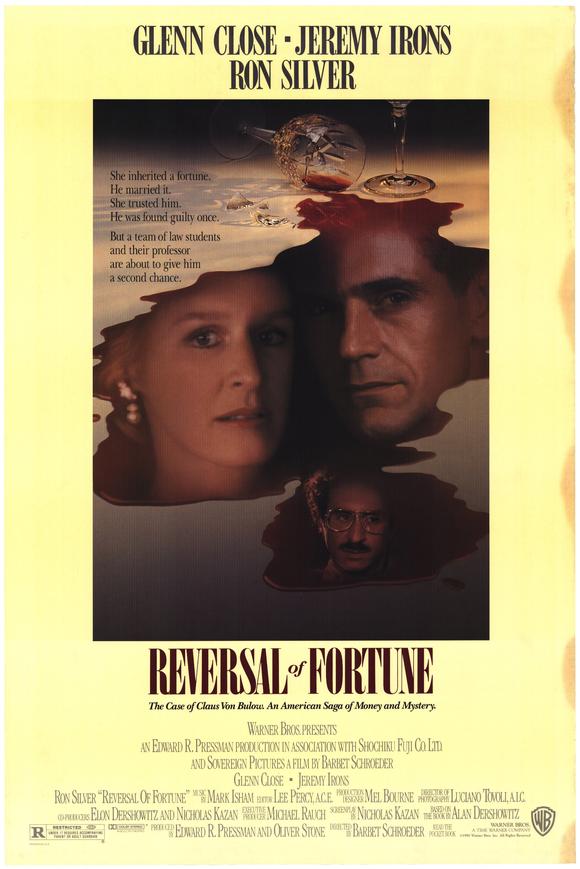
Copyright Warner Brothers

★ ★ ★

Reversal of Fortune, directed by Barbet Schroeder, is based on the true life events of wealthy socialites Martha “Sunny” and Claus von Bülow.  Sunny (portrayed by Glenn Close), who was the heiress to utilities magnate George Crawford’s and her mother’s family International Shoe Company fortunes, slipped into a coma in December of 1979.  Suspicious circumstances on behalf of her husband Claus (Jeremy Irons) were aroused, but she was eventually to come out of the coma a short time following.  Nearly a year later, she was found on the bathroom floor of her stately Newport, R.I. estate, again comatose with a deathly low body temperature and pulse rate.  She would never awaken from this second coma and suspicious activity again on behalf of Claus eventually led to his conviction of attempted murder by result of insulin injection in 1982.

Claus would subsequently hire famed Harvard law professor Alan Dershowitz (who wrote the book the film is based on) to represent him in his appeal.  The appeal would be granted and during a second trial Claus was acquitted on all charges.  Sunny went on to stay in a persistent vegetative state until her death 28 years later at the age of 77 in 2008; Claus is still alive and well living in London as a staple of the wealthy social scene.  Due to Sunny’s massive wealth in comparison to his own and the multitude of suspicious circumstances in relation to the case, many still wonder whether or not justice was served (or averted).  Jim Cramer, of Mad Money fame, was one of the law students who helped Dershowitz during the appeal and has been on record saying several times that Claus was “supremely guilty”; either way, the only two entities that can really know the truth are Claus himself and Clarendon Court, the massive Newport estate in which the circumstances occurred.

To me, this film was an instance where the source material itself is much more enticing than the film presented it.  I think the case is extremely interesting and was very excited to look deeper into the circumstances surrounding the trials after watching the film; however, the film itself lost steam about midway through and meandered enough for me to drop it down in rating.  Both Glenn Close and Jeremy Irons did tremendous jobs in their respective roles which, for Irons, resulted in an Academy Award for Best Actor.  Ron Silver portrayed Alan Dershowitz with a certain level or vigor, but the performance sometimes went over the top and became a little melodramatic for my taste.

I thought Schroeder’s direction was handled well, though there was nothing stand out about any of the shot selections; all in all, it was fairly textbook direction for this type of film.  The one unique form to the story telling schema in my opinion was having a voice over narration from Sunny in the coma describing certain parts of the story in the beginning.  I thought this was an interesting and novel way to get the opinion of a character that otherwise had been silenced eternally.  There were also many different interpretations of events based on different character’s alibis and opinions throughout the film that at first was a nice touch, though these became a little drawn out after we saw the same events happen about 15 times.

In conclusion, I enjoyed the film decently and don’t regret watching it, but felt that the material they had to work with could have been presented in a more entertaining manner.  In relation to the actual events, it reminded me of why I decided to drop out of law school after one semester: I don’t want to be a part of any system where the truth can be altered to fit one side over the other on a technicality or fancy presentation.


The 5th Quarter Premiere in Winston-Salem

19 03 2011

The 5th Quarter was shot entirely in Winston-Salem and premiered at the Grande 18 theatre on University Parkway last night.  It was an invite only event which included many staples of the local film industry and many of the cast/crew who worked on the film from out of state.  I was lucky enough to get an invite for my minor part in working on the film in late 2008.

My involvement with the film began rather unexpectedly.  I had heard that this film was coming to the area, but at the time, I was busy playing in a band and working as a Features Editor for a small newspaper.  My good friend and associate Dan A. R. Kelly ended up being hired as a casting associate through extras casting agency Altair Casting.  Two days out from the first day of filming, the production had yet to find a suitable stand-in for lead actor Ryan Merriman.  Being at the pre-filming party with Dan, someone suggested I might fit the bill.  I laughed a little thinking to myself how drastic a change that would be from the roles I usually play on a set, but they insisted I come down and check with the AD department to see if I would work.  I did and, sure enough, they wanted me for the entire shoot (25 days) to be on set as Ryan’s stand-in.  The pay wasn’t bad and the opportunity to be close to the camera/lighting crew headed by A-list camera operator Craig Haagensen was very nice; so, I jumped on the offer.

This was my first time seeing any part of the film cut together.  The story itself is based on actual events and was scripted and directed by Rick Bieber (no relation to Justin). It focuses on Wake Forest University line backer Jon Abbate (Ryan Merriman) and his family (Aidan Quinn as the father, Andie MacDowell as mother, Matthew McGrath and Mandy Manis as other siblings) who lost their youngest brother/son in a tragic car accident during the 2006 season. The young son, Luke’s, organs were donated following the accident and his spirit was the inspiration for his brother Jon switching from Jersey “40” to Luke’s number “5”.  The switch and remembrance of Luke brought on a phenomenon at Wake Forest calling the 4th quarter the 5th quarter and the 2006 season went on to become one of the best in the university’s history.

I enjoyed the film.  It definitely pulls at the heart strings and knowing it is a true story makes that all the more difficult.  It’s great seeing a film like this made in the area because it really shows some of the wonderful locations for filming that are available here in the Piedmont Triad area, puts money into the local economy and shows some of the pride of Wake Forest.  The film will open to the masses on March 25 at 120 screens.  More information on the film is available at http://the5thquartermovie.com/.


The Friends of Eddie Coyle (1973) Review

17 03 2011

Copyright Paramount Pictures

★ ★ ★ ★ 1/2

The Friends of Eddie Coyle revolves around the low-life underworld of Boston, Mass.  The protagonist, Eddie Coyle (Robert Mitchum), is a greying gun runner and small-time crook who is currently awaiting an indictment in New Hampshire that might put him away again for several years; time he doesn’t feel he can afford to let go at his age.  In an effort to help save face for his indictment, Eddie strikes up a relationship with a member of the Treasury Department, Dave Foley (Richard Jordan).  Eddie then has to decide whether to rat on accomplices and business partners to save his own or play it cool with Foley, all the while keeping money coming in for himself and his family the only ways he knows how.

The film is a perfect example of the nitty, gritty crime dramas that were becoming popular in the early 1970s.  The atmosphere, cinematography and locations exude a seediness that really makes the perfect setting for the tone of the story.  Directed by Peter Yates, of Bullitt and Breaking Away fame, the pacing and shot selections are impecable.  There are multiple moments in the film that keep you on the edge of your seat and evoke an overwhelming sense of tension.  The cinematography by Victor J. Kemper is equally fitting for the film.  Most shots are dominated by natural lighting as opposed to a stylized approach, and the graininess of the stock mixed with the unmistakable Technicolor  palette make it feel almost documentaryesque (without the “shaky cam”, thank goodness).

The cast all around is excellent, but I think special note should be made about Robert Mitchum’s performance as Eddie.  Mitchum, whom I consider one of the most underrated actors in Hollywood history, has a subtlety to his approach in playing this old time crook that makes his performance extremely natural and believable.  The character of Eddie is a storyteller and there are several drawn out stories he tells throughout the film.  Most of these stories stays on a static shot of Mitchum and the commanding presence during them is amazing.  If you are unfamiliar with Mitchum, make sure to watch this film, Cape Fear, The Yakuza and Night of the Hunter at the very least to experience some of the amazing performances by this grossly underrated actor.

Though the story seems pretty straight forward in a synopsis review, there are multiple mini-plots that are going on throughout the film.  Unlike some films, all of these mini-plots are intertwined and drive the story forward.  For some reviewers, the ending becomes problematic and detracts from their enjoyment of the film and I can understand to a degree and appreciate their opinions.  I don’t want to ruin it, but it’s not your standard Hollywood ending by any means.  You have to keep in mind the tone of the story; for me, the ending fits the type of story that is being told.  This is not the feel good movie of the year, but if you are looking for a deeply introspective look into the seedier circles of urban areas and a wonderful character study, then this is a film you need to see.


Inside Job (2010) Review

16 03 2011

Copyright 2010 Sony Pictures Classics. Dir. Charles Ferguson

★ ★ ★ ★

Over the weekend I had the opportunity to see this year’s Academy Award winner for Best Documentary Feature, Charles Ferguson’s Inside Job.  The film deals with the events and practices that lead to the economic crisis of 2008-2009 that we are still recovering from.

First and foremost when I watch a documentary, I am interested in how well the film presents the information on the topic it is focusing on.  The shady practices of Wall Street and our capitalist system were presented in great detail in this film from the beginning of Iceland’s financial collapse all the way to our present situations.  Secondly, I watch for how entertaining this educational material is to actually watch and the film’s ability to keep a viewer engaged with the material.  It seems the filmmakers of this film borrowed a bit from Michael Moore with some of the “shock and awe” ways of presenting information and the fun, tongue-in-cheek musical selections interspersed throughout (including Big Time by Peter Gabriel and New York Groove by Ace Frehley).  Some audiences don’t like this approach to a documentary and prefer a straighter, less enhanced presentation of material, but for me personally, I think it helps create a stronger impact and keeps the watchability at a high.

Technically, the film looked great.  It was shot on the RED One digital cinema camera in 4k mode, so the resolution and dynamic range of the interview sequences are quite high for a documentary.  A lot of the “run and gun” segments were shot on the Sony EX-1 which still retains a high visual quality, but not to the level that the beautiful sweeping intro shots of Iceland are on the RED One.  As previously mentioned, I really loved the musical picks they decided to use throughout the film and many of the montage sequences had a nice, machine gun paced editing flow that keeps true to the music video age documentary style we have become accustomed to in the last 10 to 15 years.

Without getting too political in the review, the film’s content is hard hitting and definitely ignited a strong response against how our system is currently run.  However, I will be honest and admit that I am a liberal and this film was made by liberal filmmakers, so there is a certain level of bias.  However, I don’t think anyone could argue after seeing this film that what was happening in our financial markets was right.  Essentially, a few super rich decided to take their greed to a new level which, in turn, has collapsed a global economy.  If nothing else, I think the film wants the viewer to take away one encompassing theme: that the system as it stands today HAS to be changed.  We can’t continue going on in a crippling financial system that, as the Who would say, is “in with the new boss, same as the old boss.”

I haven’t seen many of the other documentaries that came out in 2010, but I can see why the Academy chose this film as the Best Documentary Feature this year.  It’s not perfect and not the best documentary I’ve ever seen, but it’s a good, solid film that deals with a subject that is probably the single most important topic of our time in relation to global tranquility.


A Trend that Needs to Break

14 03 2011

Is cinematography a dying craft?  No, not yet.  However, I am greatly concerned by certain trends that seem to be taking place in the current market and, no, I don’t think it is solely due to the evolution of digital cinematography (though this plays a hand).  It is no new development that making motion pictures is a business and, like all businesses, to be successful one must make a profit.  In days past, a production generally had one of two options in regards to the camera department: a 35mm motion picture film camera or a 16mm motion picture film camera.  Yes, there are lots of shapes and sizes from a fully outfitted Panavision Platinum all the way down to a modded Bolex H-16; the quality, however, between one 35mm to another and one 16mm to another with proper lenses is not drastic.  It was almost always generally assumed that the camera itself, whatever the make and model, would be rented as most Directors of Photography didn’t own a package and the Director of Photography himself would be chosen because of his technical and creative ability in forming an image, not in what gear he could bring to the production to help lower rental costs.

Today’s market, with the prominence of digital cameras in the production of motion pictures, makes things decidedly different.  Hi-Definition and Digital Cinema cameras come in an array of shapes and sizes as well, but also a plethora of sensor sizes, recording codecs and image capturing capabilities.  This is not necessarily a bad thing, it’s always nice to have many options available for all sizes of budgets.  However, the problem arises in the fact that producers don’t really know that much about cameras.  Their main concern is the bottom line in the budget and to them, “We’ll shoot digital” means that any of the above cameras are fine, right?  Canon 7d is just as good as the ARRI Alexa, isn’t it?  I mean the one is just a little more flashy, but the image quality can’t make a $1,000 a day difference, can it?  Well, yeah it can.  Furthermore, there seems to be a growing trend that producers don’t want to actually rent a camera package anymore; they want a DP with a package (and lots of times one with lights and grip equipment as well).

So, what does this mean for cinematographers?  Well, it means that the best person is no longer getting picked for jobs.  The Director of Photography who is hired is the one who has the nicest camera package and the cheapest day rate.  This leads to many subpar cameramen being the busiest and making the best livings, while excellent DPs are struggling to keep food on the table.  Of course, not everyone who owns a package is not “the best” person for the job; many people with great packages are excellent.  The decision of who shall or shall not shoot the film, however, should not be dictated by package.  Believe me, in the end, your film will have a much better chance at being profitable by hiring a proficient DP and supplying said DP with the equipment needed to capture the essence of the story visually.  In short, quality into a production usually means quality out of a production.

I’m not sure how prominent this phenomenon is on larger productions, but I have a feeling many cinematographers on lower budget productions will agree that this is a common occurrence and, obviously, not everyone has $40,000-70,000 to invest in camera and lighting gear.  Even if they do, most lower budget productions aren’t union and the day rate is not enough to keep up the package, insurance and provide for yourself or a family.

Where do most of the DPs on larger budget productions come?  They come from these lower budget productions that do well at festivals.  Sure, if some of these DPs who own great packages aren’t great to begin with, they may evolve just from constant practice and opportunity to work.  Yet, what becomes of the guys who don’t own large packages who have great eyes and can make beautiful, fitting images?  It’s no longer a common (or necessarily viable) alternative to start as a 2nd AC and work your way up to being a Director of Photography, at least if you would like to be shooting or operating films before you are 40.  Most of these cinematographers either end up working on below par projects just to make a living, leaving the field entirely for something more profitable or struggling from job to job trying to get the productions they can on their merit alone.

I think it’s a terrible trend in the industry and producers need to realize that the camera/lighting department is not the best department to try to save money on.  This is the department that produces your image on screen and what’s the first thing that everyone will comment on after seeing a film?  Whether it looked good or not.