Gear Review: Zeiss Compact Prime .2 Cine Set

20 09 2011

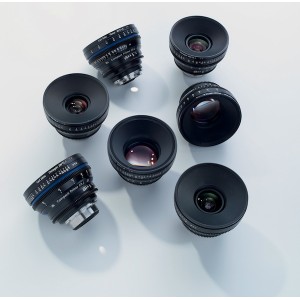
Stock Photo from Zeiss who owns Copyright

Make: Zeiss

Model: CP.2 Set

My use: I ordered the 7 lens set while at UNC-Greensboro.  Primarily, this lens set was to be used for the Panasonic AF-100; however, the lenses were also perfectly compatible with the 7d, 5d and RED One.  In fact, I got the Canon mounts on the lenses, as adapter rings on the AF-100 or RED One would sustain the weight better than on a DSLR.

Average Price: $26,700 (for 7 lens set; they are sold in a 5 lens set or individually as well)

My thoughts: To date, these are my favorite lenses that I have used.  They are compact, precise and an excellent quality of glass.  At UNC-Greensboro, we had a set of RED Pro Primes with the RED One package which included a 35mm, 50mm, 85mm, 300mm and 18-85mm zoom; these Zeiss CP.2 blew them all out of the water.  Not only are they smaller and easier to handle, but more precise in measurements and calibration.  The 7 lens set includes an 18mm, 21mm, 25mm, 28mm, 35mm, 50mm and 85mm prime lenses and two sturdy, well-padded hard plastic carrying cases with rollers.  Though the price sounds high, in terms of good lens cost, it’s actually very reasonable.  If I had the cash on hand and one lens set to buy, it would likely be these wonderful cine lenses.  Though I love Cookes S4s and ARRI Master Primes, these little guys can stand their own and are a fraction of the cost.  If you’re shooting regularly and have the cash on hand, these would be a wonderful investment.

Technical Specs from the Manufacturer (for 35mm Prime as representational of other 6 prime lenses included): 

Mount Interchangeable PL
Focal Length 35mm
Aperture T2.1
Elements/Groups 9/7
Front Lens Diameter 114mm
Minimum Object Distance (M.O.D.) 12″ (0.3m)
Length 3.15″ (8cm)
Weight 2.2 lbs (1kg)

Bottom Line: If you are ready to make the jump to professional grade cine glass, but want to do so at a fraction of the cost in regards to some of the competitors, then I highly recommend the Zeiss CP.2s.  In a perfect world, going with the 7 lens set complete with carrying cases, is a great buy.  But, these are still expensive lenses for small companies and individuals and can be bought separately and built into a nice set over time.  Either way, you will not be disappointed in the sharpness and quality of the image these lenses produce.  Furthermore, you won’t be breaking your back to lug these primes around on set.


Five Cinematographers Who Shaped Me

16 09 2011

It’s getting later on a Thursday night and for some reason I’m feeling kind of sentimental, so I’ve decided to write a fairly personal post for you guys.  For of those you who don’t know, my passion and calling in the world of film production is cinematography.  I have lensed a variety of commercials, award-winning shorts, promotional videos, weddings (video and 8mm film, believe it or not), industrial films and live music acts.  In short, you name it, I’ve probably shot it at some point.  In the commercial world, there are times of true creative ingenuity, but for the most part, you are limited by what the client or employer desires.  For that reason, this post definitely relates more to my shaping as a cinematographer narratively.  Who are the five most influential cinematographers to me personally?  It’s going to be hard to narrow it down and I won’t be so daring as to try to put them in any order, but here are five true artists who helped change the way I looked at motion pictures.

1. Gianni di Venanzo (1920 – 1966)
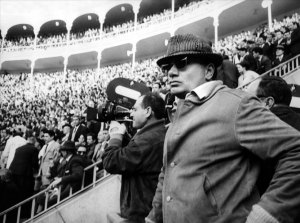
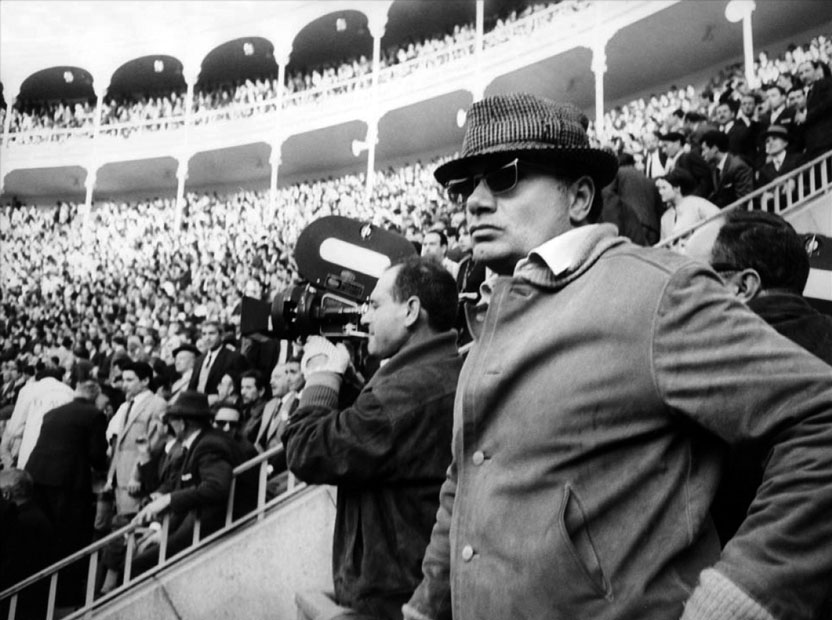
Di Venanzo with camera; Francesco Rosi in foreground

Many cinematographers will tell you that one of the primary goals in perfecting the look of an image is finding the perfect balance between light and dark.  Perhaps no other cinematographer achieved this more exquisitely than di Venanzo.  The man who shot Antonionni’s La Notte and Fellini’s 8 1/2 had amazing control over the contrast of black and white negative.  The darkness of the blacks and blazing white highlights, coupled with his distinctive mood influenced lighting style, give all of his films a certified dream-like quality.  In looking through the nearly two dozen features he shot over the last 20 years of his life, you can see his personal stamp as an artist and technician indelibly printed.  Though the bulk of his work was with black and white negative, di Venanzo proved himself equally as awe-inspiring and versatile in his color work on Fellini’s epic Juliet of the Spirits.  Di Venanzo’s work has had such a hold on me that, when filming my directorial debut last fall (which was filmed black and white), his notable style was the only cinematographer’s body of work that I mentioned to our DP in helping define the mood and style of the film.  Di Venanzon died in a car accident in Rome while shooting a picture in 1966; it’s a wonder what other wonderful images he could have provided us with had his life not been cut so short.

2. Robert Surtees (1906 – 1985)
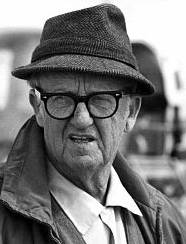
Robert L. Surtees

Whereas di Venanzo’s work brightly illuminated his personal flourish, Surtees was that of a chameleon.  Whether black and white, color, a bright musical or dark drama, Surtees could handle it all.  Many say that the best shot movies are the ones where the images don’t stand out; meaning, the visual beauty is not so much that it distracts from the story.  If this could be said of any cinematographer, I think Surtees is a fine example.  He was versatile and talented, giving each one of his narratives their own distinct feel.  A three-time Oscar winner and fourteen time nominee, Surtees’ work spanned over four decades and included Ben-Hur, The Last Pictures Show, Oklahoma!, King Soloman’s Mines, The Bad and the Beautiful, The Sting and The Graduate.  As testament to his versatility in an ever changing industry, when he shot The Graduate in 1967, critics and fans alike heralded it as new, innovative and cutting edge in its look and lighting design; Surtees was 60 years old when he shot this film.  A brilliant, brilliant cameraman, I will go out on a limb and say that if I could aspire to any style of another artist, I would like to be as good and versatile as Surtees behind the camera.

3. Jack Cardiff (1914 – 2009)
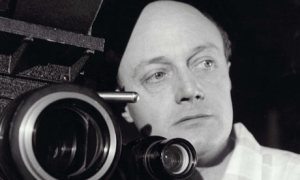
Jack Cardiff

Another artisan whose work stands out with his personal touch stamped on each and every frame.  I have elaborated fondly on the work of Cardiff on this blog in two other posts: Directors who Started as Cinematographers and in my review of the film Cameraman: The Life and Work of Jack Cardiff.  To save those loyal readers the pain of my continued adoration of this wonderful cinematographer, I will keep his segment brief.  Working his way up from clapper boy in the 1920s, Cardiff became one of the most skilled, if not the most skilled, Technicolor lighting cameraman in the business.  His work with the Archers demonstrates some of the most brilliantly colorful palettes of filmmaking in existence.  When I think of the correalation between a great painter like Vermeer or Caravaggio in the film business, I think of Cardiff.

4. Gordon Willis (1931 –   )  
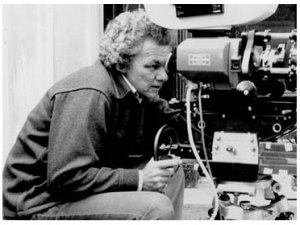
Willis behind the camera

People call Willis the “Prince of Darkness” due to his insatiable desire to push the bottom end latitude to the hilt in exposing his image.  His repertoire during the 1970s is almost unmatched with films like both Godfather movies, All the President’s Men, Annie Hall, Klute, The Paper Chase and Manhattan.  His style is evident in each and every one, a gritty, dark and moody negative that puts the viewer directly in the story, but still holding a visually stunning image.  His style remains very unobtrusive, yet retains a certain classic beauty that leaves viewers pondering the visual panache of the film long after viewing it.  Though you may not recognize him by name, his images have all been a strong part of our cinematic histories.

5. Sven Nykvist (1922 – 2006)  
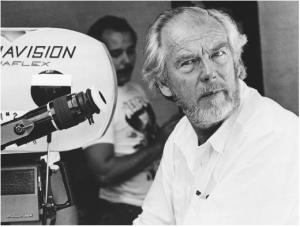
Sven Nykvist

The second and longest collaborating Director of Photography with famed Swedish filmmaker Ingmar Bergman, Nykvist is best known for his muted colors and soft lighting approach.  His work with Bergman alone is enough to solidify him in the annals of the best cinematographers of all-time with films like Persona, Cries and Whispers, Fanny and Alexander and Scenes From a Marriage.  But then, he came to work for American and English directors and provided us with further visual gems in films like Chaplin, What’s Eating Gilbert Grape, The Sacrifice and Celebrity.  The muted, autumn-esque color palette and diffused, yet controlled lighting style that Nykvist incorporated create some of the richest and satisfying, yet subtle images ever put to screen.  His work is not necessarily flashy and he was a large proponent of natural lighting, but this minimalist nature, under his control, produced images that are in my opinion works of art.

Of course, there are many more DPs that I love and admire including, but not limited to, Roger Deakins, Robert Richardson, Freddie Francis, Guiseppe Rotunno, Nestor Almendros, Charles Lang, Vittoro Storaro, Gregg Toland, Lazlo Kovacs, John Alonzo and on and on.  However, if I have to narrow my influences due to personal taste and whose work most comes to mind when I think of shaping my own images, then these are the gentleman that come first.


Shorts and Festivals

13 09 2011

Copyright Walk in the Park Pictures, LLC

At Walk in the Park Pictures, LLC, where I serve as the Technical Director, we currently have two films that are making their festival runs.  The first is Dan A. R. Kelly’s Banks of Vltava which, based on folklore, tells the story of a young Rabbi during World War II who uses ancient mysticism to rise up against the Nazis and protect a group of Czechoslovakian Jews.  The second is my directorial debut, Beyond the Door, which is an adaptation of Philip K. Dick’s short story of the same name.

Banks of the Vltava has screened recently at the Cape Fear Independent Film Festival and ConCarolinas.  Just yesterday, we found out that it has been nominated for four CLAW awards at the Terror Film Festival in Philadelphia.  The nominations were for Best Actor for our leading actor Rami Rothstein, Best Special Effects for Shane Smith, Best Director of Photography for myself and Best Horror Film.  Writer/Director Dan A. R. Kelly and family will be in attendance at the festival and we are all excited about the opportunity of presenting this wonderful short to audiences up north!

Beyond the Door received its first Official Selection from the ITSA Film Festival this past week.  This festival takes place in Groveland and Sonora, California over Sept. 30 to Oct. 1, 2011.  We are also very excited about this film’s acceptance to the festival and look forward to submitting this short to more festivals in the near future.

It’s an exciting time at Walk in the Park Pictures, LLC (www.walkintheparkpictures.com)!  I’m glad to be a part of such a wonderful collective here in the Triad region of North Carolina and look forward to future opportunities to screen these films, as well as produce new projects in the future.


Magic Beyond Words: The JK Rowling Story (2011) Review

12 09 2011

Copyright 2011 Lifetime Movies

★ ★ ★ (Non Harry Potter fan)/★ ★ ★ ★ (Harry Potter fan)

I just got cable recently for the first time in 8 years, so I’m still in the process of oogling over the station selection like I was seeing a flying car.  Maddie and I came across this movie on the Lifetime Movie Network; yes, that is correct, it is a Lifetime movie and I watched it.  Why, you ask?  Well, it is a biopic of one of my favorite authors of all-time, JK Rowling.  If I have to fill you in on her claim to fame, then you probably have been oblivious to pop culture for longer than I went without cable.

Story-wise, as you can imagine, it follows the natural flow of a biopic.  The first scene takes place in a limo after she has become famous.  She is talking with her husband about her nerves and how surreal it all is before the premiere of the first Harry Potter movie.  From there, we move into her child and go through the events of her life from about age 9 through the publication of the first book.  Throughout, there are flourishes of details in which she got ideas that were subsequently incorporated into the book series.  For instance, the character of Ron seems to be based partially on a good friend from her high school days.  Following college, there is a decent amount of focus on her time as a teacher in Portugal, her first marriage, which ultimately ended in disaster, and her time as a struggling single mother in Edinburgh.  Following the progression of her famous cafe writings, the film closes with a bookend where it began – at the premiere of the first film.

The story flows like a stereotypical biopic and it is really fun to see the fairy tale-like rise to fame and fortune on the screen.  Technically, it’s also a really polished movie for a made-for-tv film.  I’m not certain what camera was used for this production, but judging by look, I would say the RED One.  It seemed to have that RED-like warmth to the image.  It’s a wonder what cameras like the RED One and Alexa are doing for these lower-budget television movies.  It allows them to have all the polish and finesse, visually, of a major motion picture, and I think that is a wonderful thing for producers and audiences alike.

All three actresses who played Jo Rowling over the course of the film did a great job.  However, I was most impressed with Poppy Montgomery (who played Jo from around age 25 on in the film).  She really sold the part 110%, not just in looks, but she really picked up on a lot of the mannerisms you see from Rowling in interviews and the like.

In short, if you really love Harry Potter like I do, then you will likely enjoy this made-for-tv biopic.  If, however, you are not big into the series, I doubt you will find much here.  Her life definitely has some interesting parts, but not necessarily enough to keep a non-fan viewer fully engaged.


The City of Lost Children (1995) Review

11 09 2011

Copyright 1995 Club d'Investissement Média

★ ★ 1/2

One word can easily describe this movie: bizarre.  But, if you look at the front of the DVD case, then you can probably deduce that you are in for a film that is not going to be exactly normal.  Most of what I have seen by co-director Jean-Pierre Jeunet I have enjoyed, but this film I found less than appealing.

The story takes place in a steam punk-esque atmosphere that is never completely disclosed where or when it is.  Every character in the film is somewhat grotesque and quirky.  Daniel Emilfork plays a weirdo named Krank who runs a compound with a series of other freakish creations in the middle of the ocean.  Krank, among the others he lives with which include six men that look the same, a dwarfish woman and a brain inside a fishtank called Uncle Irvin, were apparently all created by a currently absent mad scientist.  Unfortunately, all of his creations had some deformity including Krank’s inability to dream.  To experience dreams, he steals children and tries to tap inside their minds with an odd looking machine.  One (Ron Perlman) is a circus strong man who travels with his little brother and some other guy.  When his little brother is stolen from their circus caravan by a blind cult, One goes after them.  Along the way he befriends a group of child pickpockets including the strong-minded little Miette (Juliet Vittet).  In their search for his little brother they encounter more odd characters and circumstances until they finally find the compound where Krank and gang are residing.

Now, after reading that synopsis, does any of it make much sense to you?  Probably not.  That is my problem with this film.  Stylistically, it is top notch; the cinematography, direction and production design all add up to create a lusciously weird atmosphere.  However, the story itself is so contrived and bizarre that the novelty of the style quickly fizzles out.  The one shining piece about the film outside of its beautiful design is Juliet Vittet as Miette.  She did a wonderful job in the role and I’m surprised we haven’t seen her in more productions in the years since.  This phenomena seems to be fairly standard for child actors though; for instance, whatever happened to the boy who played young Toto in Cinema Paradiso?  He was amazing in that.

In conclusion, if you like dazzling production design and enough odd characters to put Tod Browning’s Freaks to shame, then you may love this movie.  For me, however, I thought it lacked too much in the most important areas of film production: story and character.


Gear Review: Lowel Rifa-Lite EX 500w Soft Light

30 08 2011

Stock Photo from Lowel

Make: Lowel

Model: Rifa-Lite EX55

My use: I’ve used these lights on an array of projects and ordered two of these during my tenure at UNC-Greensboro.  I used them primarily for a key light for interviews and green screen shoots.  Chances are, I will buy one for my personal kit in the near future.

Average Price: $488.50

My thoughts: I love this light.  Absolutely love it.  It is compact, easy to carry and works as a wonderful soft key source for interviews and green screen shoots.  In larger productions, it’s useful for bringing up the ambiance or a small fill.  The light is soft, flattering and has a nice warm tinge (which I prefer).  I bought these lights primarily as replacements for what I was using Kino-Flo lamps for work.  To me, Kino-Flos have always burned a little cool (the 3200 lamps) and never match properly with the rest of a tungsten set.  Now, to be honest, I do love Kino-Flos under certain conditions, especially if time is of the essence or for small doses daylight fill, but for interviews and the like, they are hard to control, burn cool and bulky.  With a Kino-Flo you need to mount on C-Stands, plug the header in the ballast and then the ballast into the wall, which is just a pain in the butt in a small office or the like.  The Lowel Rifa 55 comes in a carrying case that contains the head with folded chimera, stand and power cable; furthermore, it’s about two feet long.  Setting these up takes no time at all and the tungsten filament, though it does get hot, provides a pleasant glow.

Technical Specs from the Manufacturer: 

Rating 500 watt maximum
Socket (Lampholder) 2-Pin
Lens (Condenser) Not Applicable
Reflector (Mirror) Silver interior softbox
Mounting Fits any standard 5/8″ stand or stud
Yoke Not Applicable
Cable 4′ Captive cable, 120V power cable, line switch, 120V Grounded Edison Plug
Focusing Not Applicable
Weight 2.5 lbs (1.1 kg)
Dimensions Collapsed length: 24″ (61 cm)
Face: 21 x 21″ (53 x 53 cm)


Bottom Line
: If I’m traveling light and shooting interiors, then chances are I have one or two of these instruments with me.  They are a versatile, compact soft light that provides a beautiful warm glow, perfect for interior interview setups, lighting talent on green screen shoots and easy-to-tuck away fill/ambient lights on larger sets.  For the price, you can’t beat it.


The Informer (1935) Review

24 08 2011

Copyright 1935 RKO Radio Pictures

★ ★ ★ ★ 1/2

When you mention the name John Ford, most people are going to think of westerns.  However, this film, which gave the famed director his first of four subsequent Oscars for directing, was not a western at all.  Far from it in fact.

Victor McLaglen plays down on his luck Irishman Gypo Nolan.  A tall, strong fellow, he makes his way as a swindler and all around low-life for the most part.  However, he wants to get out of Ireland and find a better life in the United States with his girlfriend, prostitute Katie Madden (Margot Grahame).  The only problem is that tickets to a better life cost 10 pounds each, an astronomical sum for the broke Gypo.  When delinquent friend Frankie McPhillip (Wallace Ford) arrives in town to visit his family, Gypo sees an opportunity in the 20 pound reward for his relinquishment to the authorities.  After deliberation, Gypo informs on Frankie, who is killed during the assault on his house.  The Sinn Fein realize that Frankie must have been pointed out by an informer and they quickly begin their pursuit for the culprit.  Meanwhile, Gypo spends the evening partying and drinking with his new found riches.  As the money dwindles on his escapades, Gypo becomes more and more caught up in something much worse than he originally expected.

The film won four Academy Awards; they were for Best Director, Best Actor, Best Writing and Best Score.  At first, I thought this movie wasn’t going to be very interesting.  It seemed like a fairly cliched story (at least by today’s standards) and seemed a bit heavy-handed and melodramatic during the first ten or so minutes.  However, as the narrative progressed, I realized how wonderful a film it was.  John Ford’s direction is precise and provides the right amount of suspense for the story.  In return, the script has many surprises and moments of true intrigue.  My favorite part of the film, however, was Victor McLaglen’s amazing turn as Gypo.  He really nails the part and definitely deserved his Oscar statuette for this performance.

Even though this picture is over 75 years old at this point, it still retains all of it’s entertainment value.  I would recommend this movie to classic and modern film lovers alike.


Doctor Who: The Movie (1996) Review

19 08 2011

The Eighth Doctor, played by Paul McGann. Copyright 1996 BBC

★ ★ ★ 1/2

Ever since starting the 2005 reboot of Doctor Who earlier this year, I have been a super fan boy to the series.  It’s great!  So great, in fact, that I may actually purchase cable through the devil (Time Warner) soon so that I can watch the rest of season six as it airs live.  That aside, after catching up and having this break in the series this summer, I have tried to go back and watch some of the classic series serials.  The classic series spans some 600+ episodes, so I am sure it will be many years to come, if ever, for me to finish it; however, I am on a quest to at least watch serials of all the eleven doctors, so that I can see how each respective actor handled the role.  So far, I have seen serials with first, third, fourth, fifth, eighth, ninth, tenth and eleventh doctors.  Some of the episodes included regenerations, so I have actually briefly seen Colin Baker and Sylvester McCoy in the role as well.

Anyway, for those of you who don’t know, Doctor Who is about a Time Lord (alien) who travels through time and space in a machine that has stuck on the look of a 1960s police box called the TARDIS (Time and Relative Dimension in Space).  The original series ran in serials from 1963-1989 and encompassed the first through seventh incarnations (he regenerates when he dies into a new form that retains some basic traits and memories, but wholly new personalities).  Following the end of the original series, there was a US/UK joint effort at rebooting the series in the form of a television movie; this is the movie in question, and it was released in 1996.  Due to many Americans being unfamiliar with the classic British show, it received abysmal reviews in the US and no further episodes were made.  In 2005, the series rebooted with the ninth doctor and continues to this day, currently with the eleventh incarnation portrayed by Matt Smith.

The television movie here up for review begins with the seventh incarnation of the Doctor, Sylvester McCoy, transporting the remains of longtime enemy and fellow Time Lord, the Master, back to their home planet of Gallifrey.  The Master’s spirit, though locked and concealed, manages to escape the box causing the TARDIS to spin out of control and “crash land” in San Francisco in 1999.  When the Seventh Doctor exits the TARDIS, he is shot by a gang of hoodlums chasing down another Asian hoodlum, Chang Lee (Lee Jee Tso).  The Doctor is rushed to a local hospital and, while in the ambulance, the Master’s spirit begins the process of taking over a temporary body; this being the body of the EMS employee.  In the hospital, because of his alien anatomy, heart surgeon Dr. Grace Holloway (Daphne Ashbrook) accidentally kills his seventh form on the table.  This sets the regeneration process in motion until the Doctor regenerates into his eighth form, played by one of my favorite (and most underrated) British actors, Paul McGann.  A bit amnesiac from the regeneration, the Doctor has to remember exactly who he is and starts a friendship, and slight romance, with Dr. Holloway who becomes his companion for this movie.  The Doctor has to stop the Master from destroying the fabric of the universe and stop the Master from taking over the Doctor’s body, since the Master’s temporary human body can’t handle the soul of a Time Lord.

Compared to the lower budget effects of the original series, this television movie is extremely high tech.  The camera moves, direction and editing are all much better than many of the older serials, just because of larger budget.  Unfortunately, the story isn’t as good as it could be.  It is oddly almost like a Terminator meets Doctor Who, as the Master in human form (played by Eric Roberts) is very reminiscent of T-1000.  I also hated the acting of Eric Roberts in this role, it was just too over-the-top and campy for me.  Yet, the worst actor in the lot, I think is Lee Jee Tso; he is just awful.  However, I liked Daphne Ashbrook as Dr. Holloway and actually really enjoyed Paul McGann as the doctor!  It’s a shame the script wasn’t better and that he didn’t have further chance to solidify himself in the role after this one televised appearance.  Furthermore, I have no idea why they allude to the fact that the Doctor is half human; it does nothing for the story and has never been alluded to before or after.  I just pretended that they didn’t say this about the Eighth Doctor, he is all Time Lord in my mind and that helps me enjoy the film more.

All complaints aside, I did enjoy the movie.  Yes, it could have been better, but it wasn’t a train wreck, especially for any true Doctor Who fan.  There are many nostalgic moments and lots of inside “jokes” for fans, and like I said, I really enjoyed Paul McGann as the Doctor.  Then again, Paul played in my all-time favorite British comedy, Withnail and I.  So, maybe I’m a bit biased.


The Adjustment Bureau (2011) Review

16 08 2011

Copyright 2011 Universal Pictures

★ ★ 1/2

I had high expectations for this film when it came out earlier this year.  Honestly, it had been one of the few movies I was actually really excited to see once it came out on DVD.  Using a free credit through Vudu on my Playstation 3, Maddie and I rented this and watched it over the weekend.  My expectations were definitely not met, not in the least.

Matt Damon portrays junior congressman David Norris, who looses out on his bid for Senate.  On the night of his lose, he runs into free spirited dancer Elise Sellas (Emily Blunt).  A connection is immediately felt between both Norris and Sellas, but their time is cut short by his losing speech and her being chased by guards for wedding crashing.  However, the next day, they coincidentally run into each other on the bus.  Following this second occurrence, and a slip up one of the “bureau’s” agent’s part, Norris sees some happenings at his office that he wasn’t supposed to see.  He finds out about an organization that works for a God-like entity known as the “Chairman,” who controls almost every facet of freewill on Earth.  They warn him to never let anyone know what he has seen; if he does, he will be reset.  Furthermore, they tell him it is not in the plan for him to be with Sellas and that he will never see her again.  They even go so far as to burn the paper she had given him that had her phone number on it.  As you can imagine, Norris becomes determined to get back with Sellas and there are repercussions with the “bureau” for such meddling and actions of free will.

That was kind of a quick written synopsis, wasn’t it?  Well, you know why?  Because the movie was abysmal.  That is a perfect word for this film and I wish I could alter my rating on this to just reflect that word.  It’s not a terrible film, it just isn’t anything we haven’t seen before.  In fact, we’ve probably even seen it before with Matt Damon!  In addition, the character of Sellas to me was just annoying, childish and two-dimensional.  I didn’t like the written character one bit, nor did I like the performance from Emily Blunt.

This is standard fare filmmaking; not one thing makes this movie unique or interesting.  I know I am being harsh, and probably wrongly so, but this is a movie I was excited to see and was utterly disappointed in the execution.  Don’t waste your time on this one, unless you have a low standard for films and don’t mind cliched science fiction rubbish.  I’m done ranting now.


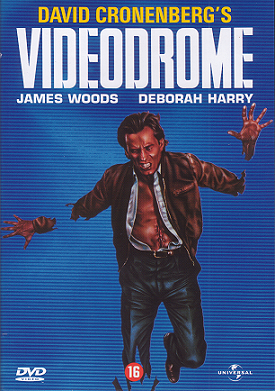
Videodrome (1983) Review

9 08 2011

Copyright 1983 CFDC

★ ★ ★ ★

In looking over Netflix’s streaming selection, Maddie and I rather haphazardly happened upon this film.  The synopsis looked very intriguing and, knowing it was a David Cronenberg film, I had an idea as to the tone and mood the film would have.

A young James Woods plays a sleazy television programmer named Max Renn.  His television station, Channel 83, televises mod content, softcore pornography and the likes over the cable airwaves.  With the enlistment of “satellite pirate” Harlan (Peter Dvorsky), Renn scours the airwaves for edgy content to show on his station.  One day, Harlan shows him a fuzzy broadcast he receives that takes place in a small room and includes very realistic sadomasochism and even murder.  Intrigued, Renn wants to find out more and see about broadcasting this risky program entitled “Videodrome.”  Around this time, during an interview on a talk show, he strikes up a relationship with a fellow interviewee, radio personality Nicki Brand (Deborah Harry).  Being a sadomasochist herself, Nicki is excited about the idea of “Videodrome” airing on Channel 83.  However, Renn has problems locating the source content makers and is warned by his agent to not look any further into the matter.  With curiosity growing, Renn continues to search for the makers of “Videodrome” and winds up having some bizarre encounters with an odd personality known as Brian O’Blivion (Jack Creley).  From this point on, the film becomes a very psychological and bizarre look at the strange effects that the “Videodrome” signal has upon an individual.

Woods does a great job in this role, and I was pleasantly surprised by Harry whom I had never seen act before.  For those of you who don’t know, her real claim to fame is as the lead singer of Blondie, who had hits with “One Way or Another” and “Heart of Glass,” among others during the punk/new wave revolution of the late 1970s.  Cronenberg’s shot selections were very inspired and dreamlike, which worked perfectly for the subject matter.  The contrasts between gritty, natural lighting and highly stylized mood lighting throughout by cinematographer Mark Irwin also fit the story very well.  Most impressively, however, were the incredible make-up effects by makeup effects designer Rick Baker.  Unfortunately, in today’s world, these amazingly well done makeup effects would probably have gone to a CGI department.

I will admit that I haven’t seen a large amount of Cronenberg’s work; however, this film has been the most bizarre entry of his repertoire that I have yet seen.  Maddie was at first interested, but then totally put off by the path the film took midway through.  I, on the other hand, was happily amused throughout.  So, in short, this film is not for everyone.  It is weird, hallucinatory and bizarre, but if that’s your cup of tea, then you will not be disappointed.